
Best Time to Apply Glycolic Acid — Morning or Night?
Are you confused about when to use glycolic acid in your skincare routine? You’re not alone. The best time to apply glycolic acid is one of the most debated topics in skincare, and getting the timing wrong can reduce its effectiveness or even cause skin irritation.
Best Time to Apply Glycolic Acid
The best time to apply glycolic acid is at night, before bed. This recommendation is backed by dermatologists and skincare experts worldwide for several compelling reasons:
- ✓ Eliminates UV exposure risk during the most vulnerable hours post-application
- ✓ Allows uninterrupted absorption without interference from makeup, sunscreen, or environmental pollutants
- ✓ Syncs with skin’s natural repair cycle when cell turnover peaks between 11 PM and midnight
- ✓ Reduces photosensitivity concerns since you’re indoors and away from sunlight
- ✓ Provides adequate time for the acid to work without immediate sun exposure
Why Night Is the Best Time to Apply Glycolic Acid
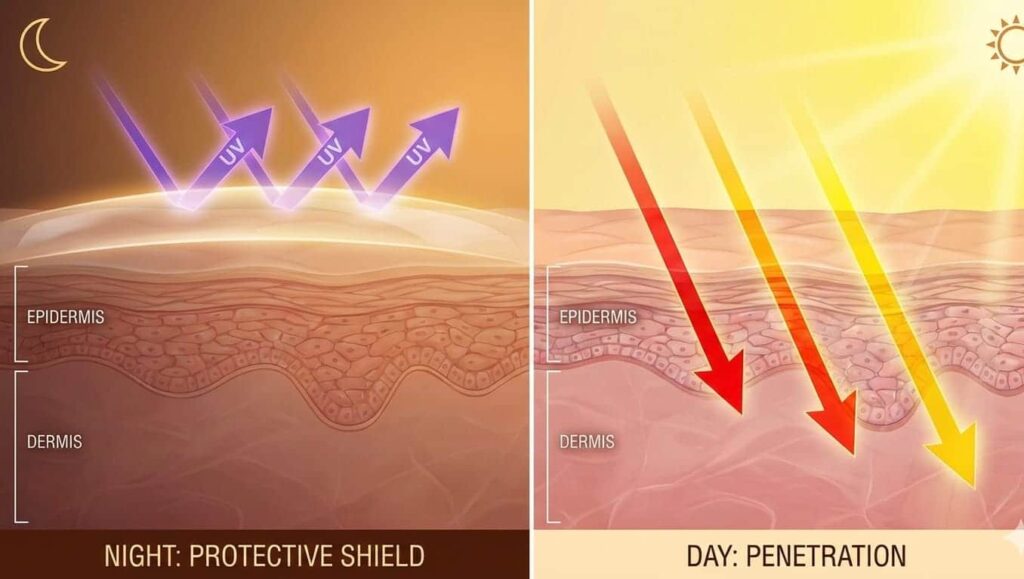
Understanding the science behind nighttime application reveals why this timing delivers superior results with minimal risk. Here’s a detailed breakdown of the key advantages:
Photosensitivity and Sun Protection
Glycolic acid works by dissolving the bonds between dead skin cells, revealing fresh, new skin underneath. This newly exposed skin is significantly more sensitive to ultraviolet radiation, increasing your risk of:
- Sunburn even with minimal sun exposure
- Hyperpigmentation and dark spots (the opposite of what you want)
- Premature aging from accelerated UV damage
- Increased skin cancer risk with prolonged unprotected exposure
Key photosensitivity facts:
- ⚠️ Skin sensitivity increases up to 18% after AHA use
- ⚠️ Heightened vulnerability lasts 5-7 days post-application
- ⚠️ UV damage occurs even on cloudy days or through windows
- ⚠️ SPF 30+ becomes mandatory, not optional
According to the American Academy of Dermatology, alpha hydroxy acids like glycolic acid increase photosensitivity, making daily broad-spectrum sunscreen essential even when using these products at night.
By applying glycolic acid at night, you eliminate 8-12 hours of potential UV exposure during your sleep. This protective window allows the acid to work its magic while your skin remains safely indoors, dramatically reducing photosensitivity risks.
Enhanced Skin Repair During Sleep
Your skin doesn’t rest when you do—it actually works harder. Research shows that skin cell regeneration peaks between 11 PM and 4 AM, making nighttime the optimal window for active ingredients like glycolic acid.
During sleep, your skin:
- Increases cell turnover rate by up to 3 times compared to daytime
- Boosts collagen production as growth hormones peak
- Enhances blood flow to facial skin, improving nutrient delivery
- Reduces cortisol levels, allowing better repair and recovery
- Increases skin permeability, allowing deeper product penetration
When you apply glycolic acid before bed, you’re essentially working with your body’s natural rhythms rather than against them. The acid accelerates the exfoliation process while your skin is already in repair mode, creating a synergistic effect that maximizes results.
Reduced Environmental Exposure
Daytime brings constant assault from environmental aggressors that can interfere with glycolic acid’s effectiveness:
- UV radiation that counteracts the anti-aging benefits
- Air pollution (particulate matter, ozone, heavy metals)
- Free radicals from exhaust fumes and cigarette smoke
- Makeup and sunscreen that may reduce acid penetration
- Sweat and oil production that dilutes the formula
Night-time application means your glycolic acid works in a controlled, protected environment. There’s no competition from other products, no environmental interference, and no risk of the formula being compromised by sweat or outdoor exposure.
Can You Use Glycolic Acid in the Morning?
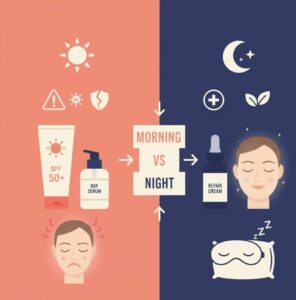
Yes, you can use glycolic acid in the morning, but it requires strict precautions and isn’t ideal for everyone. Morning application works best for experienced users who maintain rigorous sun protection habits.
When morning use is acceptable:
- ✓ You apply broad-spectrum SPF 50+ without exception
- ✓ Using lower concentrations (5% or less)
- ✓ You reapply sunscreen every 2 hours when outdoors
- ✓ Your routine includes antioxidant serums (vitamin C) for added protection
- ✓ You spend most time indoors with minimal sun exposure
Morning application rules:
- Wait 15-20 minutes after applying glycolic acid before sunscreen
- Avoid other actives like retinol, vitamin C, or benzoyl peroxide in the same routine
- Skip it entirely on days with prolonged outdoor activities
- Use hydrating products to counteract potential dryness
- Start with 2-3 times weekly rather than daily use
Who should avoid morning application:
- ✗ People with sensitive or reactive skin
- ✗ Those with melasma or hyperpigmentation concerns
- ✗ Anyone who forgets sunscreen regularly
- ✗ Outdoor workers or athletes with extended sun exposure
- ✗ Beginners new to chemical exfoliation
How to Apply Glycolic Acid at Night (Step-by-Step)

Proper application technique maximizes benefits and minimizes irritation. Follow this dermatologist-recommended routine for optimal results:
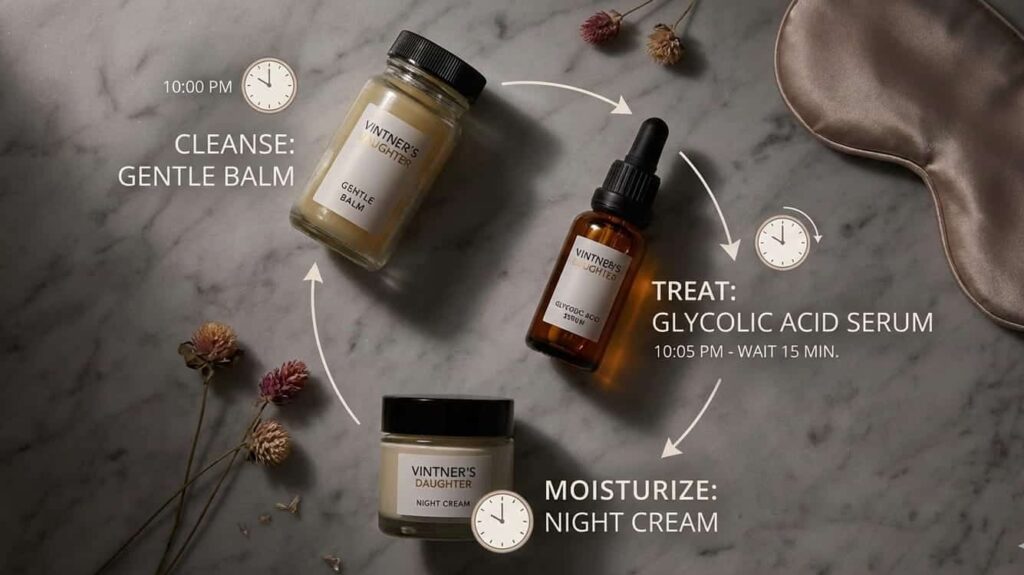
Step 1: Double Cleanse (7:00 PM – 9:00 PM)
- Remove makeup with an oil-based cleanser first
- Follow with a gentle water-based cleanser (pH 5.5-6.5)
- Pat skin completely dry—glycolic acid works best on dry skin
Step 2: Wait Time (Critical)
- Allow skin to dry for 5-10 minutes after cleansing
- Applying to damp skin increases penetration and irritation risk
- Use this time for other grooming tasks
Step 3: Apply Glycolic Acid
- Dispense a pea-sized amount for the entire face
- Apply in upward, outward motions
- Avoid the eye area, lips, and any broken skin
- Start with the lower neck if tolerated
Step 4: Wait Before Layering (15-20 minutes)
- Allow the acid to fully absorb and work
- Don’t rush this step—premature layering reduces effectiveness
- pH needs time to normalize before adding other products
Step 5: Follow With Hydration
- Apply hyaluronic acid serum to damp skin
- Layer with ceramide-rich moisturizer
- Add facial oil if you have dry skin
Step 6: What to Avoid That Night
- ✗ Retinol or retinoids (too irritating combined)
- ✗ Vitamin C serums (pH conflict)
- ✗ Other acids (salicylic, lactic, mandelic)
- ✗ Benzoyl peroxide (causes excessive dryness)
- ✗ Physical exfoliants (scrubs, brushes)
Frequency guidelines:
- Beginners: 1-2 times weekly
- Intermediate: 3-4 times weekly
- Advanced: 5-6 times weekly (with tolerance)
- Sensitive skin: Once weekly maximum
Common Mistakes When Timing Glycolic Acid Application
Even with the best intentions, these timing errors can sabotage your results and damage your skin:
❌ Using Without Adequate SPF Protection
- Applying glycolic acid (even at night) without daily SPF 30+ the following morning
- Thinking cloudy days don’t require sunscreen
- Using SPF only on the face, neglecting the neck and décolletage
- Result: Hyperpigmentation, sunburn, and reversed anti-aging benefits
❌ Mixing With Incompatible Actives
- Combining with retinol in the same routine (double irritation risk)
- Layering with vitamin C immediately (pH conflicts neutralize both)
- Using benzoyl peroxide simultaneously (extreme dryness)
- Result: Redness, peeling, compromised skin barrier
❌ Over-Exfoliating From Poor Timing
- Using glycolic acid morning AND night without building tolerance
- Adding physical scrubs or brushes on glycolic acid days
- Not allowing a 48-hour recovery between treatments for beginners
- Result: Raw, irritated skin with increased sensitivity
❌ Wrong Concentration for Time of Day
- Using 10-30% concentrations in morning routines
- Starting with high percentages (15%+) without patch testing
- Ignoring product instructions for maximum frequency
- Result: Chemical burns, persistent redness, damaged skin barrier
❌ Skipping the Waiting Period
- Applying moisturizer immediately after glycolic acid (dilutes its effectiveness)
- Not waiting for skin to dry completely before application
- Rushing through routine without proper product absorption time
- Result: Reduced efficacy and wasted product
❌ Ignoring Seasonal Timing
- Using strong concentrations during peak summer months (June-August)
- Forgetting an increased UV index requires a higher SPF and reapplication
- Not adjusting frequency based on seasonal dryness or humidity
- Result: Increased photosensitivity damage and seasonal irritation
❌ Inconsistent Application Schedule
- Using glycolic acid randomly without establishing a routine
- Skipping for weeks, then applying multiple days consecutively
- Not tracking usage to monitor skin’s tolerance levels
- Result: Unpredictable results and difficulty identifying triggers
Expert Tips for Maximum Glycolic Acid Results
Dermatologists and skincare professionals share these advanced strategies for optimizing your glycolic acid routine:
Start Low, Go Slow With Concentration
- Begin with 5-8% glycolic acid formulas for 4-6 weeks
- Gradually increase to 10-12% once tolerance builds
- Reserve 15-30% treatments for professional settings or experienced users
- Never jump to high concentrations immediately
Choose the Right Product Format
- Toners (5-10%): Daily use, gentle exfoliation, prep for other products
- Serums (10-15%): Targeted treatment, 3-4 times weekly, deeper penetration
- Peels (20-30%): Weekly maximum, intense exfoliation, requires experience
- Cleansers (8-10%): Brief contact, suitable for sensitive skin, rinse-off formula
Layer Strategically for Enhanced Benefits
- Hyaluronic acid immediately after: Locks in moisture, prevents dehydration
- Niacinamide 30 minutes later: Calms irritation, strengthens skin barrier
- Peptides in moisturizer: Boosts collagen production synergistically
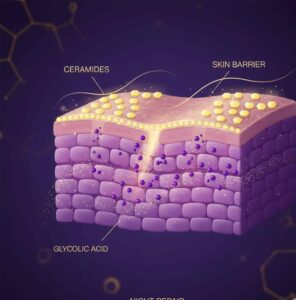
- Ceramides to seal: Repairs barrier, prevents trans-epidermal water loss
Adjust for Your Skin Type
- Oily/Acne-prone: Use 4-5 nights weekly, toner or serum format
- Dry/Mature: Limit to 2-3 nights weekly, follow with rich moisturizer
- Sensitive/Reactive: Once weekly maximum 5% concentration only
- Combination: Target T-zone 3-4 nights, full face 2 nights weekly
Time It With Your Menstrual Cycle
- Follicular phase (Days 1-14): Skin tolerates higher concentrations better
- Ovulation (Days 14-16): Peak tolerance, ideal for stronger treatments
- Luteal phase (Days 17-28): Reduce frequency, skin is more sensitive
- Menstruation (Days 1-5): Skip or use minimal concentration
Monitor and Document Progress
- Take weekly photos in consistent lighting to track improvements
- Keep a skincare journal, noting concentration, frequency, and reactions
- Watch for signs of over-exfoliation: persistent redness, tightness, burning
- Adjust routine based on seasonal changes and lifestyle factors
Professional Treatment Timing
- Schedule in-office glycolic peels during the fall or winter months
- Allow a 2-week buffer before vacations or outdoor events
- Discontinue at-home glycolic acid 3-5 days before professional treatments
- Wait 7-10 days post-procedure before resuming regular glycolic routine
Glycolic Acid vs Azelaic Acid vs Kojic Acid: Quick Comparison
Understanding how glycolic acid compares to other popular brightening and exfoliating acids helps you choose the right ingredient for your skin concerns:
| Feature | Glycolic Acid | Azelaic Acid | Kojic Acid |
| Acid Type | Alpha Hydroxy Acid (AHA) | Dicarboxylic Acid | Natural Compound (from fungi) |
| Primary Function | Chemical exfoliation, anti-aging | Brightening, anti-inflammatory, acne treatment | Skin lightening, hyperpigmentation |
| Best For | Fine lines, dull skin, uneven texture | Rosacea, melasma, acne, sensitive skin | Dark spots, age spots, melasma |
| Exfoliation Power | ⭐⭐⭐⭐⭐ Strong | ⭐⭐⭐ Moderate | ⭐⭐ Gentle |
| Photosensitivity | ⚠️ High (requires strict SPF) | ✓ Minimal | ⚠️ Moderate |
| Best Time to Use | Night strongly recommended | Morning or night (flexible) | Night preferred |
| Skin Sensitivity | Can cause irritation initially | Well-tolerated, gentle | Generally gentle, rare irritation |
| Works On | Surface dead cells | Bacteria, inflammation, pigment | Tyrosinase enzyme (melanin production) |
| Pregnancy Safe | ⚠️ Consult doctor | ✓ Generally safe | ✗ Not recommended |
| Results Timeline | 2-4 weeks visible | 4-8 weeks | 4-6 weeks |
| Can Combine With | Hyaluronic acid, niacinamide | Glycolic acid, retinol, vitamin C | Vitamin C, niacinamide |
| Typical Concentration | 5-30% | 10-20% | 1-4% |
| Price Range | $ – $$ Affordable | $$ – $$$ Moderate | $$ Moderate |
When to choose each acid:
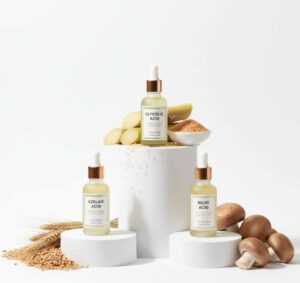
- Choose Glycolic Acid if: You want powerful anti-aging effects, dramatic texture improvement, and can commit to daily SPF 50+. Read here in detail Glycolic Acid for Hyperpigmentation: Ultimate Guide
- Choose Azelaic Acid if: You have sensitive skin, rosacea, active acne, or prefer daytime application flexibility (Learn more about azelaic acid benefits)
- Choose Kojic Acid if: Your primary concern is stubborn hyperpigmentation, melasma, or post-inflammatory marks (Complete guide to skin brightening ingredients)
Can you use them together?
Yes, but with proper timing and caution:
- ✓ Glycolic + Azelaic: Alternate nights or use azelaic in AM, glycolic in PM
- ✓ Kojic + Glycolic: Use kojic in AM, glycolic at night for maximum brightening
- ✗ All three together: Too aggressive—choose two maximum and space them out
For comprehensive information on layering multiple acids safely, check out Glycolic vs Azelaic vs Kojic Acid: Complete Guide 2025
and AHA vs BHA vs Azelaic Acid: Which Is Right for You?
Conclusion: Timing Your Glycolic Acid for Best Results
The best time to apply glycolic acid is undeniably at night. Night time application eliminates photosensitivity risks, syncs with your skin’s natural repair cycle, and delivers maximum results without environmental interference. While morning use is possible with strict SPF protection, the margin for error makes it a riskier choice for most users.
Start with 5-8% concentrations 1-2 nights weekly, wait for completely dry skin before applying, and always follow with SPF 30+ the next morning. Patience and consistency are key—give your skin 6-8 weeks to reveal noticeable improvements in texture, tone, and radiance.
Frequently Asked Questions
Can I use glycolic acid every night?
Beginners: 1-2 nights weekly for the first month. Experienced users: 5-7% concentrations can be used nightly, while 10%+ formulas should stay at 3-4 nights maximum. Stop if you notice persistent redness or flaking.
Should I apply glycolic acid to wet or dry skin?
Dry skin only. Wait 5-10 minutes after cleansing for the skin to dry completely. Wet application increases irritation risk significantly.
How long should I wait after applying glycolic acid before moisturizer?
Wait 15-20 minutes. This allows proper pH levels and full absorption before layering hydrating products.
Can I use vitamin C with glycolic acid in the same routine?
No. They require different pH levels and neutralize each other. Use vitamin C in the morning, glycolic acid at night, or alternate on different evenings.
What percentage of glycolic acid is best for nighttime use?
Beginners: 5-8%. Intermediate: 10-12%. Advanced: 15-20%. Use 20-30% concentrations weekly only or in professional settings.
Does glycolic acid work better with retinol at night?
Never use together—too irritating. Alternate nights: glycolic acid Monday/Wednesday/Friday, retinol Tuesday/Thursday/Saturday.
Can I use glycolic acid during the summer months?
Yes, with caution. Apply only at night, use SPF 50+ daily, reapply every 2 hours outdoors. Consider reducing frequency to 2-3 nights weekly.
How soon will I see results from nighttime glycolic acid use?
Initial brightness: 2-3 weeks. Texture and tone improvements: 6-8 weeks. Deep wrinkles and stubborn pigmentation: 12-16 weeks with consistent use.
What should I do if glycolic acid causes irritation at night?
Reduce to once weekly with 5% concentration. Apply ceramide cream and skip all actives for 3-5 days. Discontinue if irritation lasts beyond one week.
Is glycolic acid safe to use at night during pregnancy?
Debatable. Low concentrations (5-8%) at 1-2 nights weekly are generally considered safer than retinoids, but avoid high-strength peels. Consult your obstetrician first.
Does glycolic acid help with hyperpigmentation?
Yes. Glycolic acid helps reduce hyperpigmentation by exfoliating pigmented skin cells and boosting cell turnover, which fades dark spots and evens skin tone with regular use.