
Best Time to Take Biotin: Morning vs Night
Staring at your bottle of biotin supplements, wondering what is the best time to take biotin for maximum results? You are not alone. The timing question confuses many people who want to optimize their hair, skin, and nail health. Understanding when to take biotin can make the difference between consistent supplementation and forgetting your daily dose.
Understanding Biotin’s Water-Soluble Nature
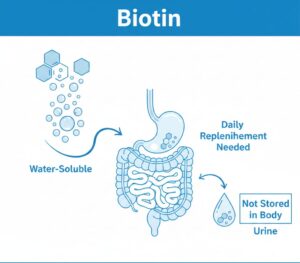
Biotin, also known as vitamin B7, is a water-soluble vitamin that dissolves in water and is not stored in your body for extended periods. According to research published by the National Institutes of Health, water-soluble vitamins like biotin are generally excreted through urine when consumed in excess, making regular daily intake more important than perfect timing.
This water-soluble characteristic means your body processes and eliminates biotin relatively quickly, typically within 24 hours. Unlike fat-soluble vitamins that accumulate in tissues, biotin must be replenished daily through diet or supplements to maintain optimal levels.
Key Facts About Biotin Absorption:
- Absorbed primarily in the small intestine through specific transport mechanisms
- Absorption remains consistent throughout the day
- Excess amounts are eliminated through urine
- Does not require fat for absorption
- Consistency matters more than specific timing
Should I Take Biotin in the Morning or at Night?

Should you take biotin in the morning or at night? The honest answer is that biotin can be taken at any time of day with similar effectiveness. Research indicates that biotin absorption does not significantly vary based on time of day, giving you flexibility in choosing when to supplement.
However, most experts recommend morning supplementation for practical rather than biological reasons. Morning intake aligns with your body’s natural metabolic rhythms and makes establishing a consistent routine easier.
Morning Advantages:
- Easier to remember as part of morning routine
- Aligns with breakfast for optimal absorption
- Supports energy metabolism throughout the day
- Less likely to be forgotten during busy schedules
- Can be paired with other morning vitamins
Evening Advantages:
- Works for people with busy morning schedules
- May suit those who experience morning digestive sensitivity
- Convenient for shift workers or non-traditional schedules
- Can be paired with dinner for consistent timing
The most effective biotin timing is the one you can maintain consistently every single day.
Can I Take Biotin on an Empty Stomach?
Yes, biotin can be absorbed effectively without food due to its water-soluble nature. However, taking biotin with food offers several practical benefits that make it the preferred approach for many people.
According to Mayo Clinic guidelines, water-soluble B vitamins can be taken with or without food, though consumption with meals may reduce the risk of gastrointestinal discomfort. Studies suggest that taking biotin with food can improve absorption by up to 25% compared to empty stomach dosing.
Benefits of Taking Biotin with Food:
- Reduces risk of nausea or stomach upset
- Slows digestive process allowing better nutrient utilization
- Provides complementary nutrients that support biotin function
- Prevents rapid transit through digestive system
- Improves tolerance for higher doses
Best Foods to Pair with Biotin:
- Protein-rich breakfast containing eggs or Greek yogurt
- Whole grain toast or oatmeal providing B-complex vitamins
- Nuts or nut butter offering healthy fats
- Fresh fruit providing vitamin C and antioxidants
- Balanced meals containing multiple food groups
If you experience any digestive discomfort when taking biotin, always consume it with a substantial meal rather than just a light snack.
What Time of Day Should I Take Biotin for Hair Growth?
Consistency trumps timing when it comes to supporting hair health. Hair growth is a slow process requiring months of consistent nutrient supply, making daily supplementation far more important than the specific hour you take biotin.
That said, morning supplementation with breakfast provides practical advantages for hair growth goals. Taking biotin in the morning ensures the vitamin is available when your body’s metabolic processes are most active, potentially supporting optimal utilization throughout the day.
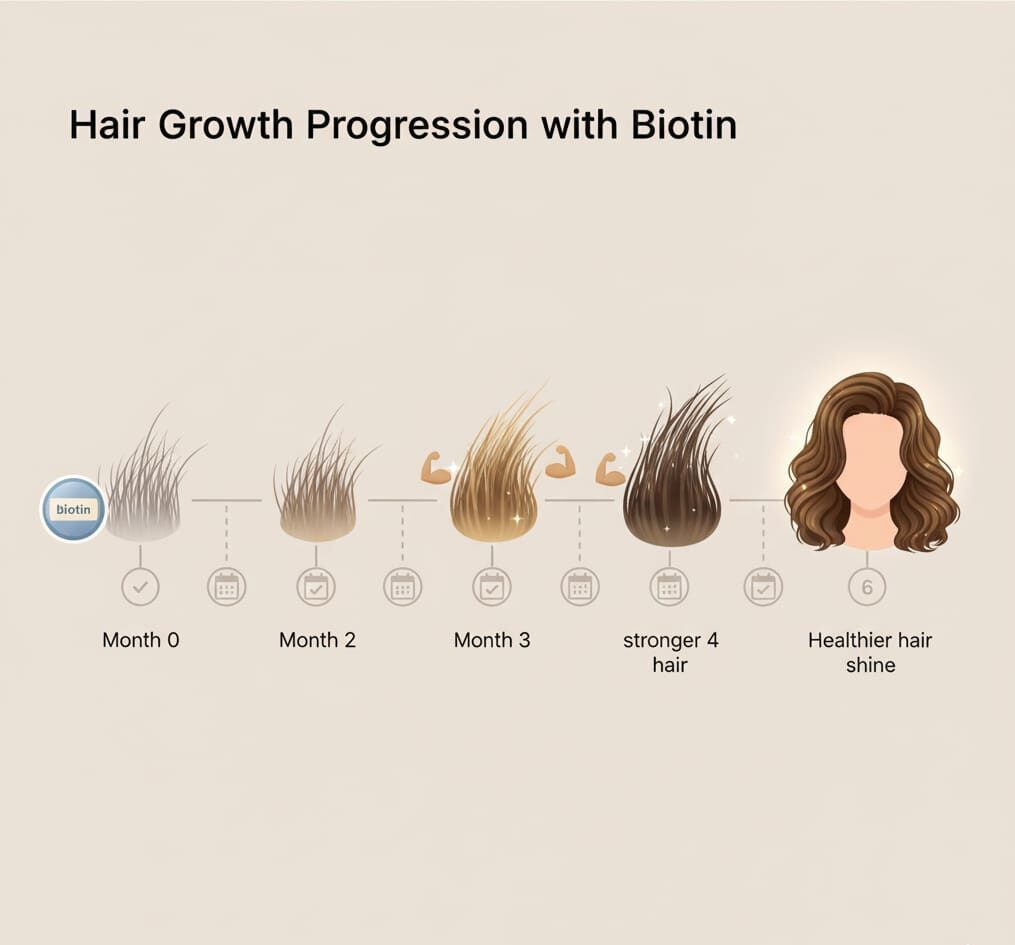
Hair Growth Timeline with Biotin:
- 0-4 weeks: No visible changes (establishing baseline levels)
- 4-8 weeks: Possible reduction in hair shedding
- 3-4 months: Potential improvements in hair texture and strength
- 6+ months: Maximum visible benefits if effective
For detailed guidance on how long biotin takes to show results, read about biotin dosage and timing recommendations to understand realistic expectations for hair growth.
Does Biotin Keep You Awake at Night?

Generally no, biotin does not cause sleep disturbances or interfere with sleep patterns in most people. However, biotin’s role in energy metabolism may make some individuals feel slightly more alert, which is why morning dosing is often preferred.
Unlike stimulants like caffeine, biotin does not directly affect neurotransmitters or brain chemistry related to sleep-wake cycles. If you choose evening supplementation, take biotin at least 2-3 hours before bedtime to allow for digestion and avoid any potential alertness effects.
Signs You Might Prefer Morning Dosing:
- You feel unusually energetic after taking biotin
- You notice difficulty falling asleep on evening dosing days
- You have sensitive sleep patterns
- You consume other B vitamins that provide energy support
Most people experience no sleep-related effects from biotin regardless of timing, making this a personal preference rather than a universal concern.
Should Biotin Be Taken with Food or Water?
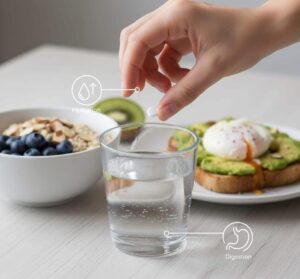
While biotin dissolves in water and can be taken with water alone, combining it with food offers multiple advantages. The presence of other nutrients from meals enhances biotin’s metabolic functions and improves overall tolerance.
B vitamins work synergistically, meaning they function better together than in isolation. Consuming biotin with a balanced meal provides complementary vitamins, minerals, and macronutrients that support biotin’s role in metabolism, energy production, and tissue health.
Optimal Hydration Practices:
- Drink at least 8 ounces of water with your biotin supplement
- Stay well-hydrated throughout the day (8-10 glasses)
- Water helps transport biotin through your bloodstream
- Adequate hydration supports elimination of excess biotin
- Proper fluid intake enhances overall nutrient absorption
Staying hydrated is crucial for maximizing biotin’s effectiveness since it is a water-soluble vitamin that requires proper fluid balance for optimal transport and utilization.
Can You Take Biotin with Other Vitamins?
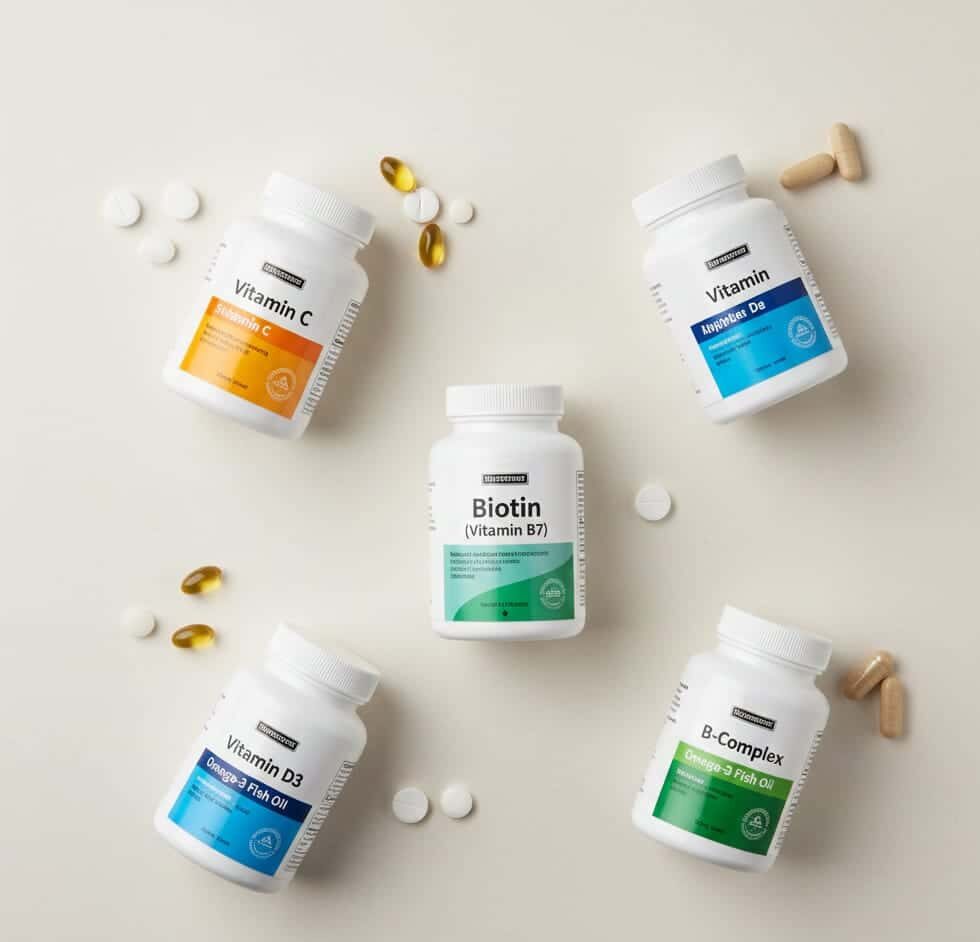
Yes, biotin can generally be taken alongside most other vitamins and supplements. However, understanding potential interactions helps optimize absorption and prevent interference.
Safe Combinations:
- B-complex vitamins (work synergistically together)
- Vitamin C (no interaction concerns)
- Vitamin D (different absorption mechanisms)
- Omega-3 fatty acids (complementary benefits)
- Multivitamins containing biotin
Timing Considerations: Space biotin at least 2 hours apart from calcium, magnesium, or zinc supplements, as these minerals can compete for absorption pathways. High doses of pantothenic acid (vitamin B5) may interfere with biotin uptake since they share the same transport system.
For women taking biotin alongside other beauty supplements, understanding biotin vs collagen differences helps create effective supplementation strategies without redundancy or interactions.
Foods and Substances to Avoid with Biotin
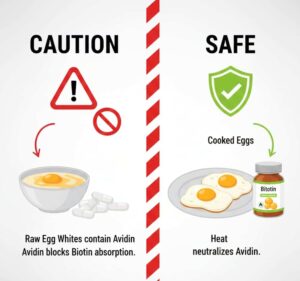
Certain foods and substances can interfere with biotin absorption or utilization, making timing and dietary choices important considerations.
Avoid Taking Biotin With:
Raw Egg Whites Raw egg whites contain avidin, a protein that binds tightly to biotin and prevents absorption in the gastrointestinal tract. Research shows that cooking denatures avidin, making cooked eggs safe and actually beneficial sources of biotin. Never consume raw egg whites within 2-3 hours of taking biotin supplements.
High-Dose Alpha-Lipoic Acid Alpha-lipoic acid supplements may compete with biotin for cellular uptake. If taking both, space them several hours apart for optimal absorption of each nutrient.
Certain Medications Long-term use of antibiotics or anti-seizure medications can interfere with biotin levels. If taking prescription medications, consult your healthcare provider about optimal biotin supplementation timing.
To understand how biotin interacts with various nutrients and what foods naturally provide this vitamin, explore biotin-rich foods for natural supplementation as dietary alternatives.
Special Timing Considerations for Different Groups
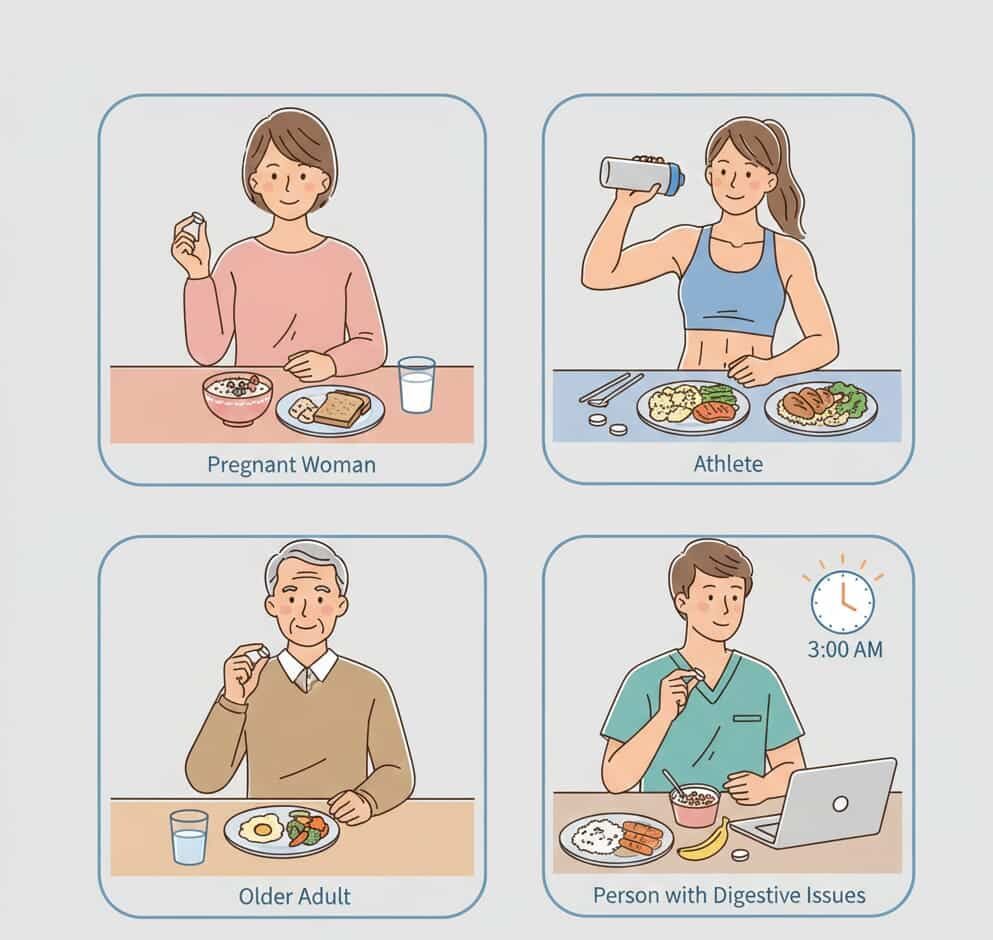
Different populations may benefit from adjusted biotin timing based on their unique circumstances and health goals.
Pregnant and Breastfeeding Women Take biotin with prenatal vitamins in the morning to establish routine and reduce risk of forgetting. Biotin requirements increase during pregnancy and lactation, making consistent supplementation especially important.
Athletes and Active Individuals Morning dosing before workouts ensures biotin is available to support energy metabolism during exercise. Athletes may benefit from splitting doses if taking higher amounts.
People with Digestive Issues Take biotin with your largest meal of the day when digestive enzymes are most active. This reduces risk of upset stomach and improves tolerance.
Shift Workers Choose a consistent time based on your schedule rather than clock time. Take biotin with your main meal regardless of whether that falls at traditional breakfast, lunch, or dinner hours.
Older Adults Morning supplementation with breakfast supports consistent routine and pairs well with other daily medications or supplements typically taken at this time.
Creating Your Optimal Biotin Schedule
Developing a personalized biotin supplementation schedule ensures consistency while accommodating your lifestyle and preferences.
Step 1: Choose Your Primary Timing Decide whether morning or evening works better for your schedule. Most people find morning supplementation easier to maintain consistently.
Step 2: Pair with a Regular Meal Link biotin intake to a meal you never skip. Breakfast works for most people, but lunch or dinner can be equally effective.
Step 3: Set Reminders Use phone alarms, pill organizers, or habit-tracking apps to establish consistency. Place your biotin bottle where you will see it daily.
Step 4: Monitor Your Response Track how you feel at different times to identify any patterns. Some people notice subtle differences in energy or digestion based on timing.
Step 5: Adjust as Needed If morning dosing causes nausea, switch to evening. If you frequently forget evening doses, return to morning supplementation.
The goal is finding a sustainable routine you can maintain for months to see biotin’s cumulative benefits.
Laboratory Testing Considerations
One critical timing consideration involves medical testing. High-dose biotin supplementation can interfere with certain laboratory tests, particularly thyroid function panels and cardiac biomarkers.
Important Testing Guidelines:
- Discontinue biotin supplements 72 hours before blood work
- Inform healthcare providers about all supplement use
- Request alternative testing methods if biotin discontinuation is not possible
- Resume supplementation after testing is complete
- Keep documentation of supplement doses and timing
This interference occurs because many laboratory tests use biotin-streptavidin binding in their assay systems, and high circulating biotin levels can cause falsely elevated or decreased results leading to misdiagnosis.
FAQ Section
What is the best time to take biotin for maximum absorption?
The best time to take biotin is in the morning with breakfast. This timing aligns with your body’s natural metabolic rhythms, makes establishing a consistent routine easier, and allows you to pair biotin with food for optimal absorption. However, biotin can be taken at any time with similar effectiveness.
Can I take biotin on an empty stomach or should it be with food?
You can take biotin on an empty stomach, but taking it with food is recommended. Food reduces the risk of stomach upset, improves absorption by up to 25%, and provides complementary nutrients that support biotin’s metabolic functions. Pair biotin with protein-rich meals for best results.
Does it matter if I take biotin in the morning or at night?
Timing does not significantly affect biotin absorption since it is water-soluble and absorbed consistently throughout the day. Morning intake is preferred for practical reasons including easier routine establishment and alignment with energy metabolism. Choose whatever timing you can maintain consistently every day.
Should I take biotin with water or food?
Take biotin with both water and food for optimal results. Water helps dissolve and transport the vitamin, while food slows digestion allowing better utilization and reduces risk of stomach upset. Drink at least 8 ounces of water with your supplement and consume it alongside a balanced meal.
Can you take biotin before bed?
Yes, you can take biotin before bed, though most experts recommend morning supplementation. Biotin does not typically interfere with sleep, but its role in energy metabolism may make some people feel slightly alert. If taking at night, consume it 2-3 hours before bedtime with dinner.
How long does biotin stay in your system?
Biotin typically stays in your system for approximately 24 hours before being excreted through urine. As a water-soluble vitamin, biotin is not stored in body tissues and must be replenished daily through diet or supplements. This short duration makes consistent daily supplementation essential for maintaining optimal levels.
Can I take biotin with my multivitamin?
Yes, biotin can be taken with multivitamins safely. Many multivitamins already contain biotin, so check labels to avoid excessive intake. B vitamins work synergistically, making combined supplementation beneficial. Take both with food in the morning for optimal absorption and to establish consistent routine.
What foods should I avoid when taking biotin?
Avoid raw egg whites, which contain avidin that binds biotin and prevents absorption. Excessive alcohol interferes with biotin absorption and increases excretion. Space biotin 2 hours apart from high-dose calcium, magnesium, or zinc supplements. Cooked eggs are safe and actually provide additional biotin.
Does biotin timing affect hair growth results?
Biotin timing does not significantly affect hair growth results. Consistency matters far more than specific timing. Hair growth requires months of steady nutrient supply, so taking biotin at the same time daily (whether morning or evening) produces better results than perfect timing with inconsistent supplementation.
Should I take biotin supplements every day or skip days?
Take biotin supplements every day without skipping for best results. Biotin is water-soluble and not stored in tissues, requiring daily replenishment to maintain optimal levels. Skipping days creates fluctuations that may reduce effectiveness. Missing occasional doses is not harmful but consistency produces the best outcomes for hair, skin, and nails.
How much biotin per day should I take for hair growth?
Most adults should take 30-100 mcg of biotin daily, which is close to the adequate intake level. Therapeutic doses range from 300-3,000 mcg for documented deficiency or hair loss concerns. High doses (5,000-10,000 mcg) are common in supplements but offer no proven additional benefits and may interfere with lab tests.
Does the amount of biotin affect when I should take it?
Yes, higher doses may cause mild digestive upset, making it more important to take with food. Lower doses (30-300 mcg) can typically be taken anytime with or without food. If taking mega-doses (5,000+ mcg), always consume with a substantial meal to improve tolerance and absorption.
Conclusion
The best time to take biotin ultimately depends on your personal schedule, preferences, and ability to maintain consistency. While morning supplementation with breakfast offers practical advantages for most people, biotin can be effectively absorbed at any time of day. The most important factor is establishing a routine you can sustain long-term.
Focus on taking your supplement at the same time each day with food and adequate water. Whether you choose morning, afternoon, or evening supplementation, pair biotin with balanced meals, stay well-hydrated, and inform healthcare providers about your supplement use before any laboratory testing.
Related Read
Explore more biotin insights to optimize your supplementation strategy:
- How Much Biotin Should I Take Daily? Complete Dosage Guide
- Biotin Side Effects: Does Biotin Cause Acne & Breakouts?
- Biotin Deficiency: Signs You Might Not Be Getting Enough
- Top 15 Biotin Rich Foods for Hair Growth Naturally
- Biotin vs Collagen: Which is Better for Hair & Nails?