
The Surprising Benefits of Olive Oil for Your Skin
You probably already have a beautiful, golden bottle of it in your kitchen. For generations, olive oil has been the heart of wholesome cooking, but its magic stretches far beyond the salad bowl. Imagine Cleopatra smoothing it over her skin, or ancient Greek athletes using it to soothe their muscles. This natural treasure has been beauty’s best kept secret for millennia.
Today, we are rediscovering the real benefits of olive oil for skin. And more importantly, is it good for your unique skin type?
In this guide, we will explore if olive oil is good for your skin and face. We will look at the science behind its healing touch, from soothing dry patches to fighting the signs of time. I will also share simple ways you can weave it into your own skincare routine. Let us unlock the secret together.
Why Olive Oil Works
It is one thing to know that olive oil has been used for centuries. It is another to understand why it is so effective. The magic is not just folklore. It is rooted in the very makeup of this special oil. When we talk about using olive oil for skin care, we are really talking about three key components working in harmony.
First, think of olive oil as a protective shield for your skin. It is packed with antioxidants, most notably Vitamin E. These antioxidants are like little warriors that fight off damage from the sun and pollution. This daily defense is what gives olive oil its powerful anti-aging qualities, helping to keep your skin looking youthful and smooth.
Next, there is its gentle, soothing power. High quality extra virgin olive oil contains a natural substance called oleocanthal. This is what gives the oil a slight peppery feel and, more importantly, it has natural anti-inflammatory properties. This is a key reason why using olive oil for eczema and other sensitive skin conditions can be so comforting. It helps to calm redness and irritation.
Finally, olive oil is a master hydrator. It acts as an emollient, which means it smooths and softens the skin by filling in tiny cracks. It also contains something called squalene, which is a natural part of our own skin’s oil. This makes it an incredible olive oil moisturizer because your skin recognizes it and knows how to use it to repair and replenish its natural barrier. This is especially helpful for those struggling with dry skin.
5 Proven Benefits of Using Olive Oil on Your Skin
Now that we know why it works, let’s talk about what it can actually do for you. The benefits of olive oil for skin are both practical and powerful, and many are supported by scientific research. Here are five ways it can help you achieve a healthier, happier complexion.
-
It’s a Champion for Dry Skin
If you’re looking for a natural way to combat dry, flaky skin, olive oil is a wonderful choice. Its rich, emollient properties make it a deeply penetrating olive oil moisturizer. Using olive oil for dry skinon areas like elbows, knees, and heels can bring back softness and suppleness.
- ✓ Research-Backed:According to a 2022 scientific review published in Food & Function by Melguizo-Rodríguez et al., compounds found in olive oil—especially its phenolic antioxidants—play a vital role in protecting skin cells from oxidative stress, one of the main causes of premature aging. The study explains that these natural antioxidants help reduce collagen breakdown and improve skin elasticity, making olive oil a scientifically supported ingredient for maintaining youthful, healthy skin.
👉 Read the full study here.
-
It Soothes Sensitive and Inflamed Skin
For those dealing with sensitivity or conditions like eczema, the gentle touch of olive oil can be a relief. Its anti-inflammatory properties help to calm redness and ease irritation. This is one of the most valued health benefits of olive oil for skin.
- ✓ Research-Backed: Several scientific studies indicate that olive oil doesn’t just moisturise—it may actively calm inflammation in sensitive or irritated skin. For example, a 2019 in-vitro study found that phenolic compounds from extra-virgin olive oil inhibited key inflammatory pathways (NF-κB) in skin cells. PubMed
-
It Fights the Signs of Aging
The antioxidants in olive oil don’t just protect; they also help your skin repair itself. By neutralizing the free radicals that break down collagen, it can help soften fine lines. These olive oil anti-agingbenefits are a key reason it’s been a beauty secret for so long.
- ✓ Research-Backed: Scientific research supports this claim. A 2022 review published in Food & Function found that bioactive compounds in olive oil—especially its phenolic antioxidants—help protect the skin from oxidative stress, reduce collagen degradation, and promote skin regeneration. This means regular use of olive oil can help maintain youthful, healthy-looking skin by fighting the molecular processes that lead to aging.
👉 Read the full research here.
-
It Supports Your Skin’s Protective Barrier
Your skin has a natural barrier that locks in moisture. The squalene in olive oil is remarkably similar to your skin’s own oils, making it fantastic for reinforcing this barrier. A strong barrier means healthier, more resilient skin.
- ✓ Research-Backed: The American Academy of Dermatology emphasizes that emollients, like those found in oils, are essential for helping the skin retain moisture and repair its protective barrier. [Link: https://www.aad.org/public/everyday-care/skin-care-basics/dry/dermatologists-tips-relieve-dry-skin]
-
It Promotes Skin Healing and a Healthy Glow
While olive oil doesn’t chemically “whiten” skin, it contributes to a more even, radiant complexion by supporting the skin’s natural repair process. This can help fade the appearance of post-inflammatory marks and scars.
- ✓ Research-Backed: Cleveland Clinic’s health essentials notes that the antioxidants and anti-inflammatory compounds in olive oil can support skin health and healing. [Link: https://health.clevelandclinic.org/benefits-of-olive-oil]
A Word of Caution: Is Olive Oil Right for Everyone?
While the benefits of olive oil for skin are impressive, it’s important to be honest about its limitations. Natural doesn’t automatically mean perfect for everyone. Let’s clear up some common concerns to help you decide if it’s the right choice for your olive oil skin routine.
The Comedogenic Question: Will It Clog My Pores?
This is the most important question to ask, especially if you have oily or acne-prone skin. The term “comedogenic” simply means how likely an ingredient is to clog pores. Olive oil is considered moderately comedogenic.
What does this mean for you?
- For Dry to Normal Skin:It’s often a fantastic, rich moisturizer that doesn’t cause problems.
- For Oily or Acne-Prone Skin:It might be too heavy and could potentially clog pores, leading to breakouts. This is why the question is olive oil comedogenic is so crucial to consider before you start.
The Golden Rule: Always Patch Test
Before you slather olive oil for your face all over, please do a simple patch test. It’s the safest way to see how your unique skin will react.
- Wash and dry a small, discreet area of skin, like your inner arm or behind your ear.
- Apply a small amount of olive oil and let it absorb.
- Wait 24-48 hours. If you see no redness, itching, or swelling, it’s likely safe to use on your face.
 How to Use Olive Oil in Your Skincare Routine (Safely & Effectively)
 How to Use Olive Oil in Your Skincare Routine (Safely & Effectively)
Now for the fun part—bringing this ancient beauty secret into your modern life. If you’ve decided that olive oil for skin is right for you, here are some simple and effective ways to incorporate it. Remember, a little goes a long way!
As a Gentle, Nourishing Makeup Remover
Struggling with stubborn mascara or long-wear foundation? Olive oil for your face can be a powerful, yet gentle, solution. Its rich texture helps to break down even waterproof makeup while moisturizing your skin at the same time.
- How to:Pour a small amount onto a cotton pad or your fingertips. Gently massage it over your dry face and eyes. Rinse with lukewarm water or wipe with a damp, soft cloth for clean, hydrated skin.
As a Deep Conditioning Face Mask
One of the most popular ways to experience the benefits of olive oil for skin care is with a DIY face mask. It’s a treat for dry skin and can give you a radiant glow.
- Simple Honey & Olive Oil Mask Recipe:Mix one tablespoon of olive oil with one tablespoon of raw honey. Honey is a natural humectant, meaning it draws moisture into the skin. Apply the mixture to your clean face, leave it on for 15-20 minutes, then rinse with warm water. This is one of the easiest and most effective olive oil face mask recipes.
As an Intensive Overnight Treatment
For a serious moisture boost, you can use olive oil for skin overnight. This allows the oil to deeply penetrate and work its regenerative magic while you sleep.
- How to:After cleansing and toning, warm 2-3 drops of olive oil between your palms and gently press it onto your damp skin, focusing on drier areas. You can do this as a standalone treatment or mix a drop with your regular night cream. Be cautious with this method if you are acne-prone.
As a Soothing Balm for Eczema
Leveraging the specific benefits of olive oil for skin eczema, you can use it to soothe flare-ups.
- How to:After a bath or shower, pat your skin until it’s just damp. Gently massage a thin layer of olive oil onto the affected areas to lock in moisture and calm inflammation. Always patch test first on a small area of eczema.
As a Healing Aid for Minor Scars
Due to its topical olive oil wound healing and skin-regenerating properties, it can be used to help improve the appearance of minor scars and stretch marks over time.
- How to:Massage a few drops directly onto the area once or twice daily. Consistency is key, as results will take time.
Finding what works for sensitive skin can feel like a puzzle. If you’re navigating the balance between powerful results and gentle care, our next guide is for you. Continue your journey with Anti-Aging for Sensitive Skin: Natural vs Chemical Options.
Olive Oil vs. The World: A Quick Skincare Comparison
It’s natural to wonder how olive oil stacks up against other popular natural oils and products. Let’s see how it compares in a few key matchups.
Olive Oil vs. Coconut Oil for Skin
This is a classic debate. Both are fantastic, but they serve different purposes.
- Olive Oilis rich in antioxidants and anti-inflammatory compounds, making it a powerhouse for anti-aging and soothing sensitive skin. It’s a moderately heavy moisturizer.
- Coconut Oilis more occlusive, meaning it creates a strong barrier on the skin. This is great for preventing moisture loss, but it is also highly comedogenic, making olive oil for acne-prone skin a often better choice than coconut oil, which is more likely to clog pores.
Olive Oil vs. Jojoba Oil
- Jojoba Oilis technically a liquid wax, and its structure is very similar to our skin’s natural sebum. This makes it incredibly lightweight and non-comedogenic, easily absorbed by all skin types.
- Olive Oilis a richer, more nutrient-dense oil. While jojoba is excellent for balancing oil production, olive oil for dry skin provides a more intensive level of nourishment and antioxidant protection.
Olive Oil vs. Petroleum Jelly for Skin
This is a comparison of two powerful moisturizers with different mechanisms.
- Petroleum Jellyis an occlusive agent. It forms a protective, water-proof seal over the skin, which is excellent for preventing dry, cracked skin, especially on hands and feet.
- Olive Oil, while also moisturizing, is an emollient and contains beneficial compounds. It sinks into the skin to soften and improve the skin barrier itself, while also providing health benefits of olive oil for skinlike antioxidant protection. For pure, heavy-duty barrier protection, petroleum jelly wins. For nourishing and improving the skin’s health, olive oil skincare offers more well-rounded benefits
A Quick Guide to Choosing the Best Olive Oil for Your Skin
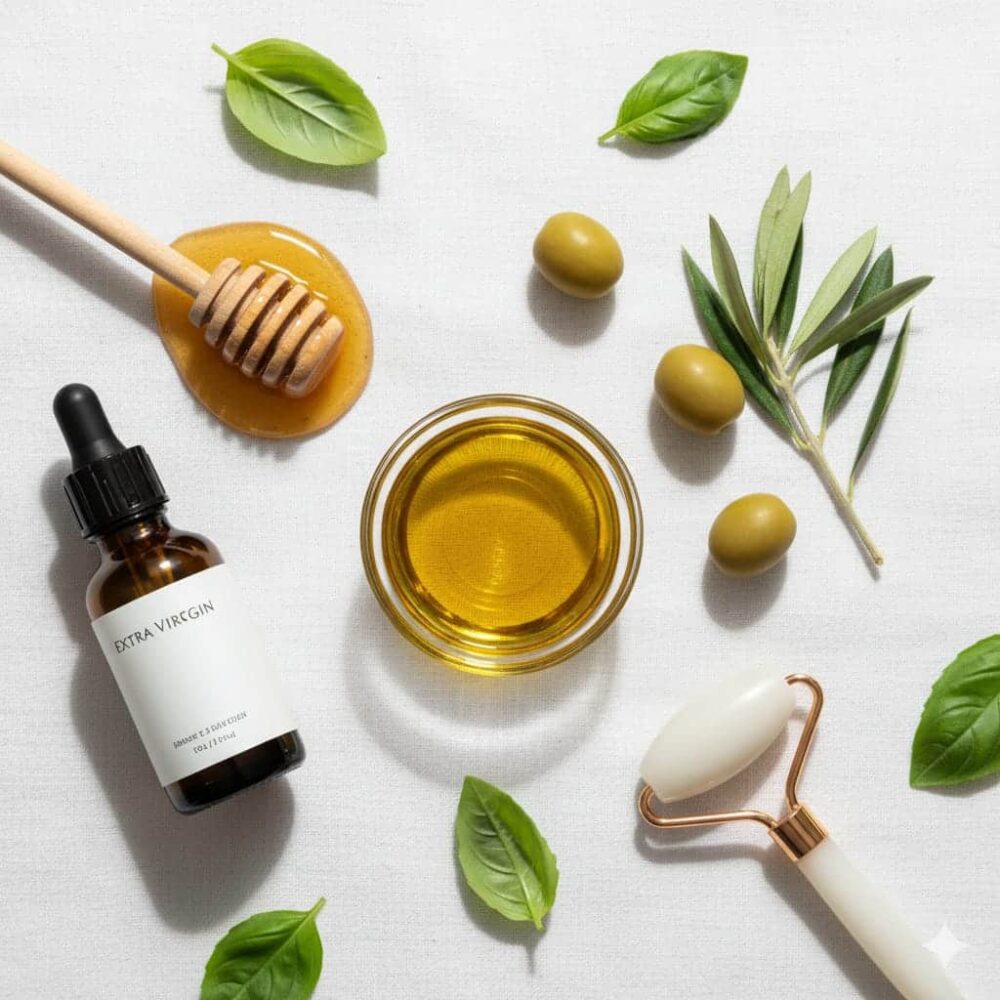
You don’t need a special “cosmetic-grade” oil. The best olive oil for your skin is the same one you’d want to eat for its high quality and great flavor! Here’s what to look for on the label:
- Extra-Virgin:This is the highest grade. It means the oil is from the first press of the olives and hasn’t been processed with heat or chemicals, so all the good-for-your-skin nutrients are intact.
- Cold-Pressed:This is another way of saying it was made without heat, which preserves the antioxidants.
- Dark Glass Bottle:Light can break down the oil and make it go rancid faster. A dark green or brown glass bottle protects it.
- A “Best By” Date:Olive oil doesn’t last forever. Look for a bottle with a clear date to ensure you’re getting fresh oil.
A quick tip: If you can find one that’s “single-origin,” it often means higher quality. But a good, food-grade extra-virgin, cold-pressed olive oil in a dark bottle is the perfect choice for your skincare needs.
Simple & Soothing DIY Olive Oil Treatments
Always do a patch test first! Mix up a small batch and apply a little to your inner arm. Wait 24 hours to make sure your skin is happy with it before using it more widely.
-
Overnight Hydration Serum (For Dry Skin)
- The Mix:In a small dropper bottle, combine 2 tablespoons of olive oil with 1 tablespoon of argan or jojoba oil. These lighter oils help it absorb beautifully.
- How to Use:After cleansing, pat your face damp. Massage 3-4 drops of the oil mixture into your skin before bed. Wake up to incredibly soft, nourished skin.
-
Soothing Lip Balm Blend
- The Mix:Mix 1 teaspoon of olive oil with ½ teaspoon of beeswax pellets (you can find these online or in craft stores). For extra healing, add a drop of honey.
- How to Use:Stir it well and store it in a tiny container. Apply a small amount to dry, chapped lips anytime for instant relief and a healthy shine.
-
Luxurious Body Massage Oil
- The Mix:Pour ½ cup of olive oil into a bottle. Add 10-15 drops of your favorite essential oil. Lavender is relaxing, while orange is uplifting. Always dilute essential oils in a carrier oil like olive oil.
- How to Use:Use it to moisturize your skin after a shower or for a calming massage. It’s a simple way to turn your skincare into a moment of self-care.
Embracing ingredients like olive oil reminds us that effective skincare doesn’t need to be complicated. If you’re ready to cut through the noise and discover what your skin truly needs, learn how to simplify your approach with our guide:
Minimalist Skin Care Routine: Simplify Your Beauty Regimen
Conclusion: Your Skin and a Kitchen Staple
So, there you have it. That bottle of olive oil in your cupboard is more than just a cooking ingredient. It’s a little bit of liquid magic for your skin.
It can be a powerful moisturizer for dry patches, a gentle soother for irritated skin, and a natural helper in your fight against fine lines. The key is to use it wisely. Always listen to your skin, do a simple patch test first, and choose a good-quality oil for the best results.
We’d love to hear from you! Have you tried using olive oil on your skin? What was your experience? Share your own tips and stories in the comments below. Let’s learn about these simple, natural beauty secrets together
FAQs -Your Olive Oil Skincare Questions
I sometimes get breakouts. Is olive oil good for your skin?
This is a tricky one. Olive oil can be a bit heavy for acne-prone skin and might clog pores for some people. The safest bet is to do a patch test first. If you’re worried, lighter oils like jojoba oil might be a better fit.
How often should I use olive oil on my face?
It depends on your skin! If your skin is very dry, you might use it every day. If it’s more normal or combination, using it just a few times a week as a mask or to remove makeup might be perfect. Just see how your skin feels and adjust.
Is it safe to use olive oil under my eyes?
You can gently pat a tiny, tiny amount around the bone of your eye socket to moisturize. But be very careful not to get it in your eyes. If you notice little white bumps (milia), it’s best to stop, as the rich oil can sometimes cause them.
What’s a safe way to try olive oil if I’m prone to acne breakouts?
The absolute most important step is a patch test. Apply a small amount to a discreet, acne-prone area (like along your jawline) for a few nights. If you don’t get new clogged pores or pimples, it might be safe for you to use it occasionally.
Can I use cooking olive oil on my skin?
Yes, but with caution. Kitchen olive oil for face is fine if it’s extra virgin and cold-pressed, as these are the same quality used in skincare. However, using cooking olive oil on face isn’t ideal because food-grade oils may contain impurities or lack freshness. Only if it’s high-quality EVOO in a dark bottle. Avoid using regular cooking olive oil for face (light or refined versions) as processing removes beneficial compounds.
Is olive oil good for sensitive skin?
Yes, olive oil can be soothing for sensitive skin because it is rich in antioxidants and healthy fats. However, it may not suit everyone, especially those prone to clogged pores.
Is Olive Oil Good for Combination Skin?
Olive oil can benefit combination skin by moisturizing dry areas, but it may feel too heavy or clog pores in oily zones. If you have combination skin, use it sparingly and only on the dry parts of your face. A lighter oil like squalane or jojoba is usually a better all-over option.
Is Olive Oil a Good Skin Moisturizer?
Yes, olive oil is a good natural moisturizer because it’s rich in fatty acids and antioxidants that help soften and hydrate the skin. However, its thick texture and moderate comedogenic rating mean it may not suit acne-prone or very oily skin. It works best for dry, sensitive, or mature skin types when used in small amounts.
Can I use olive oil on my face every day?
Yes, you can use olive oil on your face daily if you have dry or mature skin. For daily use of olive oil on face, apply 2-3 drops to damp skin after cleansing. However, if you have oily or acne-prone skin, limit use to 2-3 times per week as a treatment or makeup remover. The key to using olive oil on face daily is to start with small amounts and monitor how your skin responds. Always choose extra virgin olive oil for face and do a patch test first.
Does olive oil clog pores and cause acne?
Olive oil is moderately comedogenic, meaning it can clog pores for some people, especially those with oily or acne-prone skin. Does olive oil cause breakouts? It depends on your skin type. The oleic acid in olive oil may be too heavy for acne-prone skin and could lead to clogged pores from olive oil. If you’re wondering “will olive oil give me acne?”, the safest approach is to patch test on your jawline for a few nights. For acne-prone skin, consider lighter, non-comedogenic alternatives to olive oil like jojoba or squalane oil instead.
Can I leave olive oil on my face overnight?
Yes, you can leave olive oil on your face overnight if you have dry or mature skin. Using olive oil as overnight treatment allows it to deeply penetrate and work its regenerative magic while you sleep. After cleansing, warm 2-3 drops between your palms and press onto damp skin. However, avoid sleeping with olive oil on face if you have oily or acne-prone skin, as this increases the risk of clogged pores overnight. For olive oil overnight face treatment, always use a clean pillowcase and start with minimal product.
What is the best type of olive oil for skin?
The best olive oil for face and skin is extra virgin olive oil (EVOO) that is cold-pressed. Extra virgin olive oil for skincare is the highest grade and contains the most antioxidants and vitamins. Look for organic extra virgin olive oil for skin in a dark glass bottle to protect it from light damage. Avoid regular or refined olive oil, as processing removes beneficial nutrients. The best quality olive oil for face will have labels stating “first cold-pressed,” “unrefined,” and have a harvest or “best by” date. Cold pressed olive oil for face retains maximum skin-nourishing properties.
Does olive oil help with wrinkles and anti-aging?
Yes, olive oil for wrinkles and fine lines is effective due to its high antioxidant content.Studies show that the vitamin E and polyphenols in olive oil for aging skin help neutralize free radicals that break down collagen. Using olive oil for face wrinkles can soften fine lines and improve skin elasticity over time. For olive oil anti-aging treatment, massage 2-3 drops into clean skin nightly. While olive oil cannot reverse deep wrinkles, consistent use of extra virgin olive oil for anti-aging supports skin’s natural repair process and helps prevent premature aging.
Can olive oil remove makeup and waterproof mascara?
Yes, olive oil is an excellent natural makeup remover! Using olive oil to remove makeup works because its lipid-rich formula breaks down waterproof makeup and long-wear products. Here’s how to remove makeup with olive oil: Pour a small amount onto a cotton pad and gently massage over dry skin and eyes. Olive oil for removing waterproof mascara is especially effective because oil dissolves water-resistant formulas. After using olive oil as makeup remover, rinse with lukewarm water or use a gentle cleanser. This DIY olive oil makeup remover method is perfect for sensitive skin.
What’s better for skin: Olive oil or Coconut oil?
Olive oil vs coconut oil for face—which is better? It depends on your skin type. Olive oil for skin is rich in antioxidants and less comedogenic than coconut oil, making olive oil better for acne-prone skin. Coconut oil is highly pore-clogging with a comedogenic rating of 4/5. For dry skin olive oil vs coconut oil, olive oil provides antioxidant protection while coconut oil creates a stronger moisture barrier. Olive oil is better for sensitive skin due to its anti-inflammatory properties. The verdict: olive oil is generally safer for facial skin than coconut oil, especially if you’re prone to breakouts.
Is olive oil safe during pregnancy for stretch marks?
Olive oil during pregnancy is safe for external use on skin. Many women use olive oil for stretch marks prevention by massaging it onto their growing belly. Does olive oil prevent stretch marks during pregnancy? While no product guarantees prevention, using olive oil for pregnancy stretch marks helps keep skin moisturized and elastic. How to use olive oil for stretch marks during pregnancy: Massage a small amount onto belly, hips, and thighs twice daily after showering. Olive oil for pregnant women is natural and free from harmful chemicals. For best results treating stretch marks with olive oil, start early in pregnancy and stay consistent. Combine with vitamin E oil for enhanced benefits.