
Azelaic Acid for Skin: The Gentle Powerhouse You Need to Know
If you’re on a quest for clearer, calmer, and more even-toned skin, you’ve likely encountered a dizzying array of potent ingredients. From retinol to vitamin C, the options are endless, but for many, the side effects of redness and irritation are a deal-breaker.
What if there was an ingredient that could tackle acne, fade stubborn dark spots, and calm redness without sending your sensitive skin into a meltdown?
Enter azelaic acid—the dermatologist-loved multitasker that’s quietly changing the game for countless skin types. Found naturally in grains like barley and rye, this powerhouse is far more than a trendy buzzword. It’s a clinically-proven solution for a range of common concerns, from rosacea and acne to hyperpigmentation and uneven skin texture.
In this comprehensive guide, we’ll cut through the confusion. We’ll explore the science-backed benefits of azelaic acid for skin, how to use it correctly, and what you can realistically expect from those “azelaic acid before and after” transformations you see online.
What Is Azelaic Acid?
Let’s break it down. Azelaic acid might sound like a harsh chemical, but it’s actually something pretty natural. Your body is already familiar with it!
It’s a substance that comes from whole grains like barley and wheat. It’s also made by a tiny, harmless yeast that lives on everyone’s skin.
Think of it as a gentle giant. Because it’s so natural, it often works well even for people with sensitive skin that gets easily irritated by other products.
But does it actually work? Yes and it’s not just a social media trend. This ingredient is so effective that it’s officially approved as a prescription medicine by the U.S. Food and Drug Administration (FDA) for treating a common skin condition called rosacea.
You can find it in two main forms:
- Over-the-counter (OTC) serums and creams:These are lower strength, usually around 10%.
- Prescription gels and foams:These are stronger (15%-20%) and have brand names like Finacea.
This official FDA approval for treating rosacea proves it’s a powerful and trusted ingredient, not just a passing fad. You can see the official FDA information for Finacea here: FDA Finacea Approval Label
The Real-World Benefits of Azelaic Acid for Your Skin
You might have heard the buzz, but what does azelaic acid actually do in your daily routine? Think of it as a brilliant multi-tasker that tackles some of the most frustrating skin concerns with a surprisingly gentle touch.
If you’re wondering about the best uses of azelaic acid for skin, it truly shines in a few key areas. One of the most celebrated azelaic acid for skin benefits is its ability to create a brighter, more even canvas. This makes azelaic acid for skin brightening a popular goal for those struggling with dullness or dark spots.
But its talents don’t stop there. For anyone dealing with persistent redness or sensitivity, incorporating azelaic acid for skin care can be a game-changer. It works calmly beneath the surface to reduce inflammation without provoking a reaction, making it a trusted ally for even the most delicate complexions.
While azelaic acid is excellent for sensitive skin and acne-related pigmentation, stubborn melasma may require stronger melanin-blocking treatments. For those cases, kojic acid for melasma offers a more intensive option. Similarly, if you need faster exfoliation and texture improvement, glycolic acid for hyperpigmentation works through surface cell turnover rather than inflammation control

How to Use Azelaic Acid in Your Routine (And Avoid Side Effects)
Now that you know the benefits, let’s talk about how to make this ingredient work for you. Using it correctly is key to seeing great results and avoiding irritation.
So, how to use azelaic acid for skin safely? Follow these simple steps:
- Start Slow:Begin by applying it 2-3 times per week in the evening.
- Apply to Clean, Dry Skin:After washing and gently patting your face dry, apply a pea-sized amount. Spread it evenly across your entire face or just on areas of concern.
- Follow with Moisturizer:This is a crucial step. Always follow up with a good moisturizer to keep your skin barrier happy and hydrated.
- Don’t Forget Sunscreen!This is non-negotiable. Use a broad-spectrum sunscreen every morning. Azelaic acid makes your skin more sun-sensitive, and sunscreen protects your progress.
If you’re unsure how to structure your entire day around this ingredient, our Morning to Night Skincare Guide provides a clear, step-by-step routine.”
Side Effects of Azelic Acid
When starting, some mild side effects of azelaic acid on face are common. You might feel some temporary itching, stinging, or slight dryness. This usually fades as your skin adjusts after a week or two.
However, if you experience significant redness, peeling, or burning, you might be using it too often. Scale back to once or twice a week and ensure you’re using a moisturizer. Listening to your skin is the most important rule.
Realistic Expectations: Azelaic Acid Before and After
When you start any new skincare product, it’s natural to wonder about the “before and after” transformation. Let’s set some realistic expectations for your journey with azelaic acid.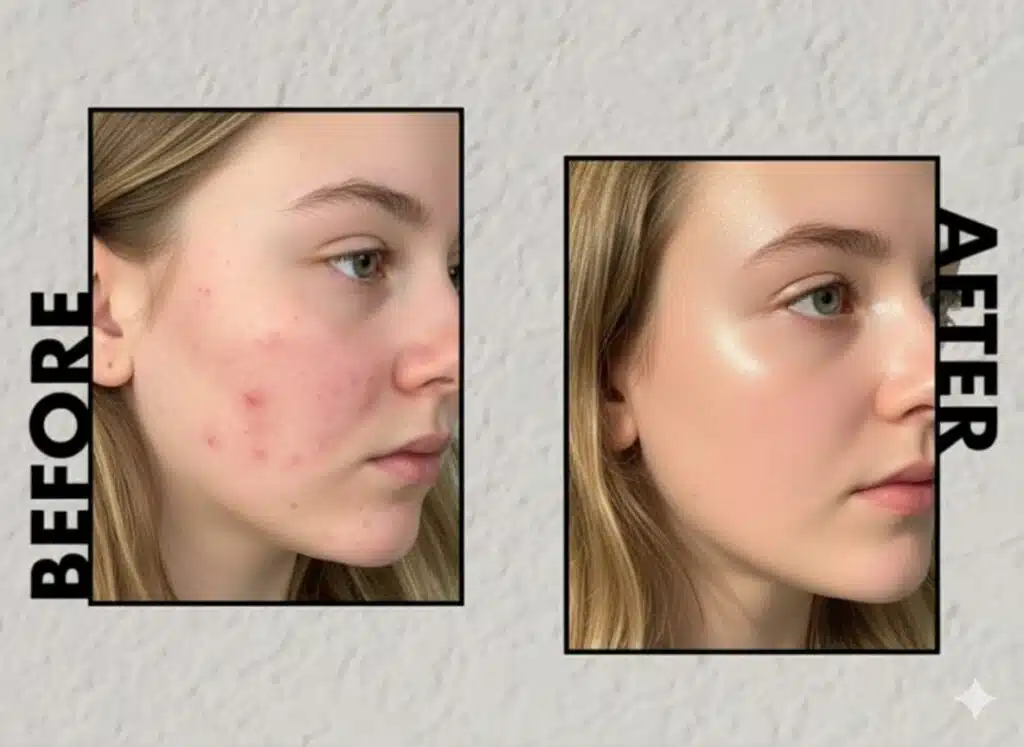
What You Can Expect (And When):
- First 2-4 Weeks:The first thing you might notice is calmer, less red skin. Breakouts may start to become less frequent and severe. Any initial itching or tingling should subside during this time.
- 1-3 Months:This is when you’ll likely see more noticeable results in terms of skin texture and brightness. Dark spots will begin to gradually fade as pigmentation at the surface is cleared away. Your overall complexion should look more even and radiant.
The Key to Success:
Patience and consistency are everything. Unlike a quick peel or extraction, azelaic acid works by gradually normalizing your skin’s behavior. For significant fading of dark spots and improved skin texture, giving it at least three months of consistent use is crucial.
Seeing a dramatic azelaic acid before and after photo online can be exciting, but remember that everyone’s skin is different. Your journey is unique, and steady progress is the real goal.
Finding the Best Azelaic Acid Product for Your Skin
With so many options available, how do you find the best azelaic acid for skin that fits your needs? The right choice depends on your skin type, concerns, and whether you have access to a dermatologist.
Prescription vs. Over-the-Counter: What’s the Difference?
Prescription Strength (15%-20%):
- Brands: Finacea (gel/foam), Azelex (cream)
- Best for: Moderate to severe rosacea, stubborn acne, or pronounced hyperpigmentation
- Requires: A dermatologist’s prescription
- Pros: Highest efficacy, often covered by insurance
- Cons: Requires doctor’s visit, may have more side effects
Over-the-Counter (10% and below):
- Available in: Serums, creams, and treatments
- Best for: Mild concerns, sensitive skin, or those new to azelaic acid
- Pros: Easily accessible, more affordable, gentler introduction
- Cons: May take longer to see results
Key Factors to Consider When Choosing:
- Your Skin Type:
- Oily/Acne-Prone Skin:Look for lightweight gels or serums
- Dry/Sensitive Skin:Cream-based formulations provide extra hydration
- Combination Skin:Serums that absorb quickly without feeling heavy
- Additional Ingredients:
- For extra brightening: Look for combinations with niacinamide or vitamin C
- For sensitive skin: Seek formulas with soothing ingredients like centella asiatica or panthenol
- For acne-prone skin: Salicylic acid combinations can provide enhanced pore-clearing
- Texture and Application:
- Gels: Typically absorb quickly, ideal for daytime use under makeup
- Creams: Richer texture, better for nighttime or dry skin types
- Serums: Versatile, can be layered with other treatments
Application Tips for Best Results:
- Patch Test First:Always test on a small area of your jawline for 2-3 days
- Consistency Matters:Regular use yields better results than sporadic application
- Layering Order:Apply after cleansing and toning, but before heavier creams
- Morning vs. Night:Can be used both times, but start with evening application
- Sun Protection:Never skip sunscreen – it’s crucial for maintaining results
Remember that the best azelaic acid for skin is the one that works consistently with your routine and doesn’t cause irritation. What works for someone else might not be ideal for you, so listen to your skin and adjust accordingly.
How Does Azelaic Acid Compare to Other Skincare Ingredients?
As you build your skincare routine, you might wonder how azelaic acid stacks up against other popular ingredients. Let’s compare it to some common alternatives to help you make informed choices.
Azelaic Acid vs. Kojic Acid
Azelaic Acid: Gentle multi-tasker that treats acne, redness, and pigmentation. Pregnancy-safe and suitable for sensitive skin. Works through antibacterial and anti-inflammatory action.
Kojic Acid: Stronger melanin blocker specifically targeting stubborn melasma and post-inflammatory hyperpigmentation. More irritating but more powerful for pure pigmentation concerns.
Verdict: Choose azelaic acid for sensitive skin, pregnancy, or combined acne + pigmentation. Choose kojic acid for stubborn melasma that hasn’t responded to gentler treatments. Read my complete kojic acid for hyperpigmentation guide for detailed information.
Azelaic Acid vs. Glycolic Acid
Azelaic Acid: Works below the surface to reduce inflammation, kill bacteria, and fade pigmentation without exfoliating. Gentler and less sun-sensitizing.
Glycolic Acid: Exfoliates dead skin cells from the surface, improving texture and brightness quickly. More effective for anti-aging but can be harsh on sensitive skin.
Verdict: Choose azelaic acid if you have sensitive or rosacea-prone skin. Choose glycolic acid if texture and fine lines are your main concerns alongside pigmentation. Many people use both: glycolic acid 2-3x weekly for exfoliation and azelaic acid on alternate days. See my glycolic acid complete guide for usage details.
Azelaic Acid vs. Tranexamic Acid for Skin
Both are excellent for fading dark spots, but they work differently:
- Azelaic Acid:A broader multitasker that tackles pigmentation while also fighting acne and calming inflammation. It’s like a well-rounded athlete.
- Tranexamic Acid:More specialized for stubborn pigmentation like melasma. It specifically targets the pathways that create dark spots.
Verdict: Choose azelaic acid if you have multiple concerns (acne + pigmentation + redness). Opt for tranexamic acid if your primary, stubborn issue is melasma or intense hyperpigmentation.
Azelaic Acid vs. Vitamin C
- Azelaic Acid:Excellent for treating existing pigmentation and calming active breakouts. Better for sensitive skin types.
- Vitamin C:Primarily a preventative antioxidant that protects against future damage and provides general brightening. Can be irritating for some.
Verdict: They can work well together! Use vitamin C in the morning for protection and azelaic acid in the evening for treatment.
Azelaic Acid vs. Retinol
- Azelaic Acid:Immediate anti-inflammatory benefits, works on surface-level concerns like redness and active acne. Gentler option.
- Retinol:Works at a deeper cellular level to boost collagen and cell turnover. More effective for anti-aging but comes with potential irritation.
Verdict: Many dermatologists recommend using them together (azelaic acid in AM, retinol in PM) for comprehensive skin improvement.
When to Choose Azelaic Acid:
- Your skin is sensitive and easily irritated by strong actives
- You’re managing both breakouts and post-acne dark spots
- Redness and inflammation are your primary concerns
The beauty of azelaic acid lies in its ability to play well with others while being effective enough to stand on its own. It’s the diplomatic peacekeeper of your skincare routine—powerful enough to make real changes but gentle enough to keep the peace.
Azelaic Acid for Specific Skin Concerns: A Targeted Guide
Understanding how to tailor azelaic acid use to your specific needs can maximize its benefits. Here’s how to approach different common skin concerns.
For Stubborn Dark Spots and Pigmentation
When using azelaic acid for skin pigmentation, consistency is your greatest ally. For post-inflammatory hyperpigmentation (those dark marks left after acne heals), apply a thin layer directly to the spots twice daily. The mechanism is twofold: it reduces pigment production and speeds up skin cell turnover, gently pushing pigmented cells to the surface.
Pro Tip: For enhanced results, look for formulations that combine azelaic acid with niacinamide or kojic acid. These combinations target pigmentation through multiple pathways, potentially speeding up results. Alternatively, you can use glycolic acid 2-3 times weekly alongside azelaic acid for combined exfoliation and melanin-blocking benefits
For Managing Rosacea and Persistent Redness
Those using azelaic acid for skin redness will find its anti-inflammatory properties particularly beneficial. The key here is patience and gentle application. Start with once-daily application, using just a pea-sized amount for the entire face. Gently pat it onto affected areas rather than rubbing vigorously.
Important: During rosacea flares, you might need to temporarily reduce frequency or buffer the acid by applying moisturizer first. Listen to your skin – it will tell you what it can handle.
For Acne-Prone and Sensitive Skin
The beauty of azelaic acid for skin care in acne routines lies in its dual antibacterial and anti-inflammatory action. It tackles both the bacteria that cause acne and the redness that follows. Unlike some acne treatments that can strip the skin, azelaic acid helps maintain your skin’s natural barrier while working to clear breakouts.
Application Strategy: Focus on all acne-prone areas, not just active breakouts. This preventative approach can help stop new pimples from forming.
For Overall Brightening and Texture Improvement
If your goal is general azelaic acid for skin brightening and texture refinement, incorporate it as part of your regular maintenance routine. Use it 3-4 times weekly, applying to your entire face after cleansing. The gentle exfoliating action will gradually reveal smoother, more radiant skin without the irritation associated with physical scrubs or stronger acids.
Remember: While many seek azelaic acid for skin lightening of specific dark spots, it’s important to understand that it works to even out skin tone rather than fundamentally lightening your natural skin color. The result is a more uniform, brighter complexion rather than a lightening effect.
Potential Side Effects of Azelaic Acid: What to Really Expect
While azelaic acid is known for being gentle, like any active ingredient, it can cause side effects—especially when you’re just starting out. Knowing what’s normal and what’s not can help you use it safely and effectively.
Common, Usually Temporary Side Effects
Most people experience some mild, initial reactions that typically fade within 2-4 weeks as your skin adjusts. These normal side effects of azelaic acid on face include:
- Mild itching, stinging, or tinglingimmediately after application
- Temporary rednessin the applied areas
- Slight dryness or tightness, especially if you’re not using a moisturizer
These sensations are most common with prescription-strength formulas but can occur with any concentration. They usually indicate that the ingredient is working, not that it’s causing harm.
Less Common, More Concerning Reactions
While rare, some people may experience:
- Peeling or flaking skin
- Burning sensation that persists
- Skin irritation or contact dermatitis
- Swelling or hives(this indicates an allergic reaction)
According to clinical studies, only about 1-5% of users experience significant burning, itching, or redness that may require discontinuing use. Source: National Center for Biotechnology Information
How to Minimize and Manage Side Effects of Azelaic Acid
- The “Slow and Low” Approach:Start with a lower concentration (10% or less) and apply every other day, gradually increasing frequency as your skin tolerates it.
- Buffer with Moisturizer:If you experience stinging, try applying your moisturizer first, waiting 10 minutes, then applying azelaic acid. This creates a protective barrier that can reduce irritation.
- Skip the “Active Allies”:When first introducing azelaic acid, temporarily pause other potent actives like retinol, vitamin C, and physical exfoliants to avoid overwhelming your skin.
- Listen to Your Skin:If you experience persistent burning, significant peeling, or swelling, stop using the product and consult a dermatologist. These are signs that your skin barrier may be compromised or you’re having an allergic reaction.
The “Purging” Myth
Unlike retinoids that accelerate cell turnover and can cause purging, azelaic acid doesn’t typically trigger this process. If you’re breaking out more after starting azelaic acid, it’s more likely irritation rather than purging. Scale back on frequency and ensure you’re using the right amount (a pea-sized quantity for the entire face).
Remember: While azelaic acid side effects are usually mild and temporary, everyone’s skin is different. What works perfectly for one person might need adjustment for another. The key is to introduce it gradually and pay attention to how your skin responds.
Azelaic Acid in Your Daily Routine: A Simple Guide
Now that you understand what azelaic acid can do, let’s talk about how to practically fit it into your daily life. Creating an effective routine doesn’t need to be complicated.
Morning Routine with Azelaic Acid
A morning routine focuses on protection and maintenance:
- Gentle Cleanser: Start with a mild, non-stripping cleanser
- Azelaic Acid: Apply a pea-sized amount to entire face
- Moisturizer: Choose one suitable for your skin type
- Sunscreen SPF 30+: This is non-negotiable when using azelaic acid
Why this works: Using azelaic acid in the morning helps control oil production throughout the day and provides anti-inflammatory benefits under your sunscreen.
Evening Routine with Azelaic Acid
Your evening routine is when repair happens:
- Double Cleanse: Start with an oil-based cleanser if wearing makeup/sunscreen
- Gentle Water-Based Cleanser
- Azelaic Acid: Apply to completely dry skin
- Moisturizer: Use a slightly richer formula at night
Pro Tip: Wait 5-10 minutes after cleansing before applying azelaic acid. This ensures your skin is completely dry, which can reduce potential stinging.
When to Skip or Adjust
Listen to your skin and adjust accordingly:
- Skip if: Your skin feels raw, irritated, or you’ve over-exfoliated
- Reduce frequency if: You experience persistent stinging or redness
- Switch to alternate days if: You’re introducing other active ingredients
Sample Weekly Schedule for Beginners
| Day | Morning | Evening |
| Monday | Azelaic acid routine | Recovery night (no actives) |
| Tuesday | Gentle routine (no azelaic acid) | Azelaic acid routine |
| Wednesday | Azelaic acid routine | Recovery night |
| Thursday | Gentle routine | Azelaic acid routine |
| Friday | Azelaic acid routine | Recovery night |
| Weekend | Listen to your skin’s needs |
This gradual introduction helps your skin build tolerance while minimizing potential irritation. After 2-3 weeks, you can increase frequency based on how your skin responds.
Remember: Consistency is more important than frequency. Using azelaic acid 3-4 times weekly consistently will yield better results than using it daily for a week then stopping due to irritation.
How Effective is Azelaic Acid for Rosacea?
Azelaic acid is a first-line, dermatologist-recommended treatment for rosacea. Its potent anti-inflammatory properties directly target the redness and inflammatory bumps (papules and pustules) characteristic of the condition. Prescription-strength 15% azelaic acid gel is FDA-approved for this specific use, making it a gold-standard option for managing rosacea symptoms.
Azelaic Acid vs. Tranexamic Acid: Which Is Better for You?
This is a common question for those targeting hyperpigmentation.
- Choose Azelaic Acid if:You have a combination of concerns like acne, redness, and dark spots. It’s the multi-tasking champion.
- Choose Tranexamic Acid if:Your primary and most stubborn concern is melasma or intense, focused hyperpigmentation. It’s a more specialized pigment inhibitor.
They can also be used together in a regimen for a multi-pronged attack on pigmentation.
Should You Apply Azelaic Acid Before or After Moisturizer?
The order depends on your skin’s tolerance:
- For Maximum Effect (Before Moisturizer):Apply to clean, dry skin. This allows for the best absorption and potency.
- For Sensitive Skin (After Moisturizer):If you experience stinging or irritation, apply your moisturizer first. Let it dry, then apply azelaic acid. This “buffering” method reduces irritation while maintaining benefits.
Can You Use Azelaic Acid with Retinol?
Yes, this combination can be highly effective for tackling both acne/redness and aging/texture. To use them safely without overwhelming your skin:
- The Safest Method:Use azelaic acid in your morning routine and retinol in your evening routine.
- The Advanced Method:If your skin is well-tolerating, you can use both in the same PM routine. Apply azelaic acid first, wait 10-15 minutes for it to absorb, then apply your retinol, followed by moisturizer.
Can You Use Azelaic Acid Everyday?
Yes, you can use azelaic acid every day, but it depends on your skin’s tolerance and the product strength. Here’s a detailed breakdown:
For Prescription-Strength (15-20%)
- Start with 1-2 times weekly
- Gradually build up to daily use over 4-6 weeks
- Many people can eventually use it twice daily
For Over-the-Counter (10% or less)
- Most people can start with daily use
- Begin with evening application only
- Can progress to twice daily if tolerated
Signs You’re Ready for Daily Use
- No stinging or itching after application
- No redness or dryness
- Your skin feels comfortable and balanced
When to Scale Back
- If you experience persistent redness
- If your skin feels tight or uncomfortable
- If you notice peeling or flaking
Pro Tip: Always listen to your skin. Even if the product directions say “daily,” your skin might need a slower approach. Many people find they get great results using it 4-5 times per week rather than forcing daily use.
The key is gradual introduction and paying attention to how your skin responds. Many people successfully use azelaic acid daily once their skin has built up tolerance, but it’s not necessary for everyone to see great results.
The Final Verdict: Is Azelaic Acid Right for Your Skin?
After exploring all the facets of this versatile ingredient, you might be wondering if it’s the missing piece in your skincare puzzle. Let’s break down who should consider adding azelaic acid to their routine and who might want to approach it with caution.
The Ideal Candidate for Azelaic Acid
You’re likely to benefit greatly from azelaic acid if you identify with any of these concerns:
- You struggle with multiple issues at once– like acne, redness, AND dark spots
- Your skin is sensitiveand often reacts poorly to stronger treatments
- You’re looking for a gentle yet effective brightening agent
- You want to avoid the “purge” periodcommon with retinoids
- You’re dealing with rosacea or persistent facial redness
- You need a pregnancy-safe active ingredient(always consult your doctor first)
When You Might Want to Consider Alternatives
While azelaic acid is generally well-tolerated, you might want to think twice if:
- Your primary concern is deep wrinkles (retinoids might be more effective)
- You’re looking for immediate exfoliation results (AHAs might work faster)
- You have extremely sensitive skin that reacts to even gentle actives
- You’re already using multiple strong actives and don’t want to overwhelm your skin
Remember, effective skincare doesn’t have to be complicated. Azelaic acid is a powerhouse multitasker, making it a perfect cornerstone product for a Minimalist Skin Care Routine that delivers results without the overwhelm.
The Bottom Line
Azelaic acid stands out in the crowded skincare market because of its unique ability to deliver multiple benefits with minimal irritation. It’s not the strongest ingredient available, nor the fastest-acting, but its excellent safety profile and versatility make it valuable for many people.
Many people worry about experiencing an azelaic acid purge, but this ingredient is actually much gentler compared to stronger actives like retinoids or AHAs. While a mild increase in breakouts can happen as your pores start to clear, it’s usually short-lived and settles within a few weeks. Most users don’t purge at all and instead notice gradual brightening and smoother skin as azelaic acid begins to treat inflammation and pigmentation.
Whether you choose to incorporate azelaic acid or not, remember that successful skincare is about finding what works for YOUR unique skin. It’s about consistency, patience, and listening to what your skin needs. Azelaic acid might not be a miracle cure, but for many, it’s the reliable workhorse that finally helps them achieve the calm, clear, even-toned skin they’ve been seeking.
Frequently Asked Questions About Azelaic Acid
What are the main benefits of azelaic acid for skin?
Azelaic acid is a multitasking ingredient that offers three primary benefits: it calms redness and inflammation (making it excellent for rosacea), fades dark spots and post-acne marks by inhibiting pigment production, and helps clear acne by fighting bacteria and unclogging pores.
Can I use azelaic acid with kojic acid?
Yes, they work well together as they target pigmentation through different mechanisms. Azelaic acid provides anti-inflammatory and antibacterial benefits while kojic acid blocks tyrosinase enzyme activity. Use kojic acid in the morning and azelaic acid at night, or alternate days.
Can I use azelaic acid with glycolic acid?
Yes, but introduce carefully. Glycolic acid exfoliates the surface while azelaic acid works deeper on inflammation and pigmentation. Use glycolic acid 2-3 times weekly and azelaic acid on alternate days. Avoid using both on the same day initially. For detailed glycolic acid usage
How should I use azelaic acid for skin brightening?
For brightening effects, apply a pea-sized amount of azelaic acid to clean, dry skin once daily, gradually increasing to twice daily as tolerated. Always follow with moisturizer and use sunscreen every morning, as sun protection is crucial for achieving brightening results.
Can I use azelaic acid if I have sensitive skin?
Yes, azelaic acid is one of the gentler active ingredients and is often recommended for sensitive skin types. However, start with a lower concentration (10% or less) and apply every other day to see how your skin responds before increasing frequency.
What are the most common side effects of azelaic acid on face?
Mild itching, stinging, or temporary redness are the most common side effects, especially when first starting. These usually subside within 2-4 weeks as your skin adjusts. If you experience persistent burning or significant irritation, reduce frequency or discontinue use.
How long until I see azelaic acid before and after results?
Most people notice initial improvements in redness and acne within 4-8 weeks. Significant brightening of dark spots and evening of skin texture typically takes 12-16 weeks of consistent use. Taking weekly photos can help you track subtle changes.
Does azelaic acid lighten the skin?
Yes. Azelaic acid helps lighten dark spots, hyperpigmentation, and uneven skin tone by slowing melanin production. It brightens the skin but does not bleach it.
Can I use azelaic acid with other active ingredients?
Yes, azelaic acid pairs well with many ingredients. It works particularly well with niacinamide for boosting brightening effects and with hyaluronic acid for added hydration. When combining with stronger actives like retinol, use them at different times of day and monitor your skin for sensitivity.
How effective is azelaic acid for rosacea?
It is one of the most effective and clinically proven treatments for rosacea. Prescription-strength (15%) azelaic acid is specifically FDA-approved to reduce the inflammatory bumps, lesions, and redness associated with the condition by calming inflammation at the source.
What is the difference between azelaic acid vs tranexamic acid for skin?
While both are excellent for hyperpigmentation, they have different strengths. Azelaic acid is a multi-tasker, great for rosacea, acne, and fading dark spots. Tranexamic acid is more specialized, primarily targeting melanin pathways to fade stubborn melasma and PIH without the anti-acne benefits.
What is the best azelaic acid for hyperpigmentation?
The “best” product depends on your skin’s sensitivity. For significant hyperpigmentation, a prescription-grade 15-20% formula (like Finacea) is most effective. For over-the-counter options, look for a stable 10% serum, ideally one that also contains other brighteners like niacinamide or kojic acid for a multi-targeted approach.
Can you use azelaic acid with retinol?
Yes, they can be a powerful combination. To avoid irritation, apply them at different times—azelaic acid in the morning and retinol at night. If your skin is resilient, you can use them together in the same PM routine by applying azelaic acid first, waiting 10 minutes, and then applying retinol, followed by a moisturizer.
Can I use azelaic acid and niacinamide together?
Absolutely. This is a fantastic pairing. Using azelaic acid and niacinamide together can enhance brightening, reduce redness, and strengthen the skin barrier. They are both anti-inflammatory and work well in the same routine. You can apply them one after the other or look for a product that combines both.
Should I apply azelaic acid before or after moisturizer?
This depends on your skin’s sensitivity. For most people, applying azelaic acid before your moisturizer on dry skin ensures maximum efficacy. If you experience stinging or have very sensitive skin, applying it after your moisturizer acts as a “buffer” to reduce potential irritation while still providing benefits.
Is azelaic acid good for closed comedones?
Yes, it is highly effective for treating closed comedones (those small, flesh-colored bumps). It works by normalizing the shedding of skin cells inside the pore, preventing them from becoming clogged in the first place. With consistent use, it can help smooth out this type of texture.