How Long Does Azelaic Acid Take to Work?
If you’ve just added azelaic acid to your skincare routine, you’re probably asking the million-dollar question: how long does azelaic acid take to work? The short answer? Most people see initial improvements in 2-4 weeks, with significant results appearing around the 8-12 week mark.
Whether you’re using it for acne, hyperpigmentation, rosacea, or melasma, understanding the realistic timeline for seeing results helps you stay consistent and avoid premature disappointment.
What Is Azelaic Acid and How Does It Work?
Before diving into how long azelaic acid takes to work on acne and other skin concerns, it’s important to understand what this powerhouse ingredient actually does. Azelaic acid is a naturally occurring dicarboxylic acid found in grains like wheat, barley, and rye. In skincare, it’s typically synthesized in laboratories for stability and effectiveness.
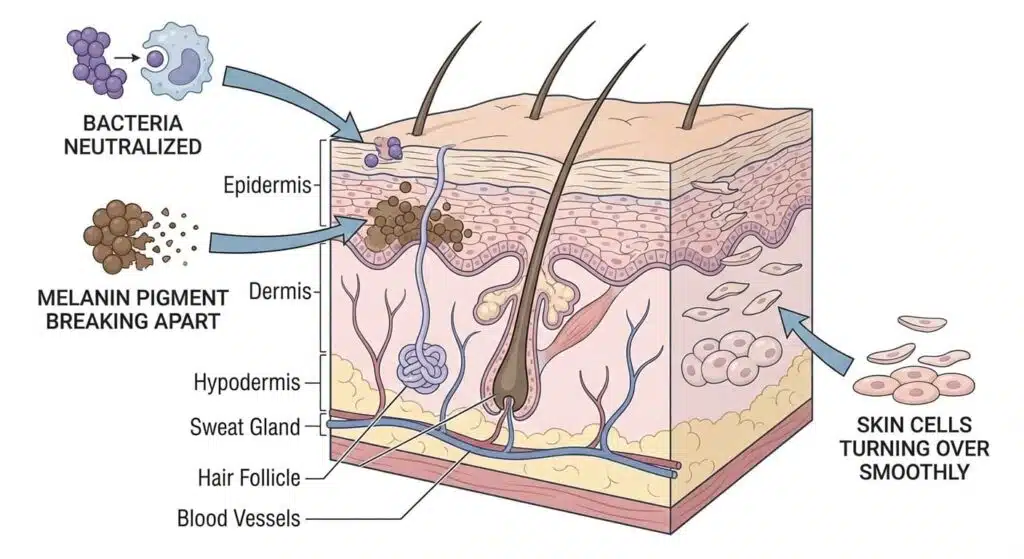
Unlike harsher acids that work through aggressive exfoliation alone, azelaic acid is a true multitasker that addresses skin concerns through multiple mechanisms. It inhibits tyrosinase (the enzyme responsible for melanin production), kills acne-causing bacteria, normalizes skin cell turnover, and reduces inflammation—all without the harsh side effects associated with many other active ingredients.
Research shows azelaic acid can take between 2-4 months to produce noticeable results, with prescription-strength formulations typically working faster than over-the-counter products.
Understanding these multi-targeted mechanisms helps explain why azelaic acid is such a versatile and well-tolerated ingredient. For a detailed clinical perspective on its uses and benefits from board-certified dermatologists, you can refer to the resource from the American Academy of Dermatology
How Long Does Azelaic Acid Take to Work? The Week-by-Week Timeline
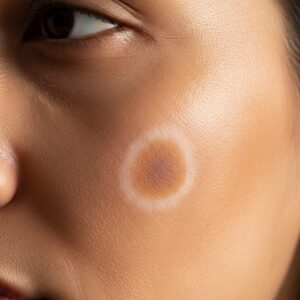
Understanding how long it takes for azelaic acid to work helps set realistic expectations and prevents you from abandoning an effective treatment too soon. Here’s what you can expect during your azelaic acid journey.
Weeks 1-2: The Adjustment Phase
What’s Happening: Your skin is getting acquainted with azelaic acid. During this initial period, you might experience mild tingling, slight redness, or temporary dryness—especially if you’re using a higher concentration like 15-20%. These sensations are normal and typically subside as your skin builds tolerance.
Visible Changes: Don’t expect dramatic transformations yet. The ingredient is working beneath the surface to normalize keratinization and begin inhibiting melanin production. Some people with inflammatory acne might notice reduced redness around active breakouts, but this is subtle.
What to Do: Start slowly if you have sensitive skin. Apply azelaic acid once daily for the first week, then gradually increase to twice daily if tolerated. Focus on consistent application rather than expecting quick results.
Weeks 2-4: Early Improvements Emerge
What’s Happening: Initial improvements like reduced redness and irritation can appear in 2-4 weeks. Your skin cell turnover is accelerating, and the antibacterial properties of azelaic acid are beginning to impact acne-causing bacteria populations.
Visible Changes: If you’re using azelaic acid for acne, you might notice fewer new breakouts forming. Existing acne lesions may heal slightly faster than usual. Those using it for rosacea often report decreased facial redness during this timeframe. The texture of your skin may feel smoother as dead skin cells are cleared away.
What to Do: Continue your consistent application schedule. Take photos in consistent lighting to track subtle changes that are hard to notice day-to-day. Pair azelaic acid with gentle, non-irritating products to support your skin barrier during this transition period.
Weeks 4-8: Noticeable Progress Begins
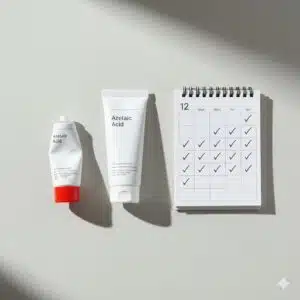
What’s Happening: This is when how long azelaic acid takes to work for hyperpigmentation becomes clearer. The melanin-inhibiting effects are accumulating, and you’re seeing the results of several skin cell turnover cycles. The anti-inflammatory properties have had time to calm chronic irritation.
Visible Changes: Dark spots and post-inflammatory hyperpigmentation start looking lighter. Some people who use azelaic acid to treat acne notice results around four to six weeks, with clearer skin and fewer active breakouts. If you’re treating melasma, you’ll start seeing subtle evening of skin tone. Rosacea sufferers often report significant reduction in papules and pustules during this window.
What to Do: This is where patience pays off. You’re past the hardest part—the waiting. Don’t be tempted to add multiple new actives simultaneously or increase your azelaic acid concentration too quickly. Let the ingredient continue doing its work at your current dosage.
Weeks 8-12: Significant Transformation
What’s Happening: Most users report clear and significant improvement in skin concerns like rosacea, acne, and hyperpigmentation by the twelve-week point. Azelaic acid has now had ample time to work its magic across multiple mechanisms—melanin inhibition, bacterial reduction, inflammation control, and normalized cell turnover.
Visible Changes: This is the milestone where before-and-after photos show dramatic differences. Acne is substantially improved or cleared. Dark spots are noticeably lighter. Skin texture is smoother and more even. Redness from rosacea or general inflammation is significantly reduced. Your overall complexion appears brighter and more uniform.
What to Do: Celebrate your progress but don’t stop now. The improvements you’re seeing are the result of consistent use, and discontinuing treatment often leads to regression. Start thinking about maintenance protocols—many people reduce frequency to 3-4 times weekly after achieving desired results.
Months 3-6: Maximum Results and Maintenance
What’s Happening: Full results, such as significant reduction in acne and hyperpigmentation, may take up to 6 months of consistent use. By this point, your skin has undergone numerous complete turnover cycles with azelaic acid’s support, and the cumulative effects are at their peak.
Visible Changes: For stubborn hyperpigmentation, melasma, or deep acne scarring, this extended timeline is when you’ll see maximum lightening and improvement. Your skin should be significantly clearer, more even-toned, and healthier overall. The texture improvements are substantial, and your skin’s resilience to irritation and inflammation has increased.
What to Do: Transition to a maintenance routine if you’ve achieved your goals. Many dermatologists recommend continuing azelaic acid 3-5 times weekly long-term to maintain results and prevent recurrence of pigmentation or acne issues.
Factors That Affect How Long Azelaic Acid Takes to Work
While the general timeline above applies to most people, several factors influence how long does it take for azelaic acid to work in your specific situation.
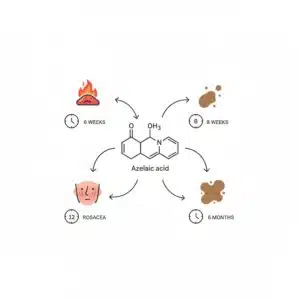
Concentration Strength Makes a Difference
Prescription-Strength (15-20%): Prescription products typically produce visible results in roughly two months, whereas OTC products often take twice as long. If you’re using prescription Finacea (15% azelaic acid) or compounded formulations at 20%, expect results on the faster end of the timeline—often 6-8 weeks for noticeable improvement.
Over-the-Counter (10% or less): Products with 10% azelaic acid or lower are gentler but require more patience. Results typically appear around the 10-12 week mark rather than 6-8 weeks. However, these lower concentrations also have reduced irritation risk, making them ideal for sensitive skin or first-time users.
Your Skin Concern Matters
Different conditions respond at different rates:
- Acne: Often shows improvement fastest, with reduced breakouts noticeable in 4-6 weeks
- Post-Inflammatory Hyperpigmentation (PIH): Moderate improvement in 6-8 weeks, significant fading in 12 weeks
- Rosacea: If your doctor has prescribed azelaic acid for rosacea, you may not see positive change for 3 months
- Melasma: Typically requires the full 12-16 weeks for visible lightening due to deeper pigmentation
- Acne Scars: Among the slowest to improve, often requiring 4-6 months for substantial results
Consistency is Non-Negotiable
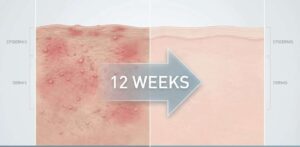
How long does azelaic acid take to work on dark spots? The answer depends largely on how consistently you use it. Missing applications significantly extends your timeline. Azelaic acid works through gradual accumulation—each application builds on the previous one to normalize melanin production and speed cell turnover.
Using azelaic acid sporadically (a few times one week, skipping the next week) essentially resets your progress repeatedly. After a few months of using azelaic acid consistently, your skin becomes stronger and more tolerant overall. This consistency also allows you to accurately assess whether the ingredient is working for you.
Skin Type and Sensitivity
People with sensitive or reactive skin may see slower initial progress because they need to introduce azelaic acid more gradually. Starting with once-daily application and slowly increasing to twice daily extends the timeline but prevents the irritation that could worsen pigmentation or inflammation.
Conversely, those with resilient skin who can tolerate twice-daily application from the start often see results on the faster end of the spectrum. Your skin’s natural turnover rate also plays a role—younger skin with faster cell renewal typically responds more quickly than mature skin with slower turnover.
Combining with Other Treatments
Dermatologists often prescribe azelaic acid alongside other treatments for enhanced results:
- With Niacinamide: The combination can accelerate brightening effects for hyperpigmentation
- With Retinoids: Enhanced cell turnover can speed results but requires careful introduction to avoid irritation
- With Vitamin C: Antioxidant support and additional melanin inhibition work synergistically
- With Hydroquinone: For stubborn melasma, this combination (under dermatologist supervision) can produce faster lightening
However, combining too many actives too quickly can cause irritation that sets back your timeline. Work with a dermatologist to create an optimal combination protocol.
How to Use Azelaic Acid for Best Results
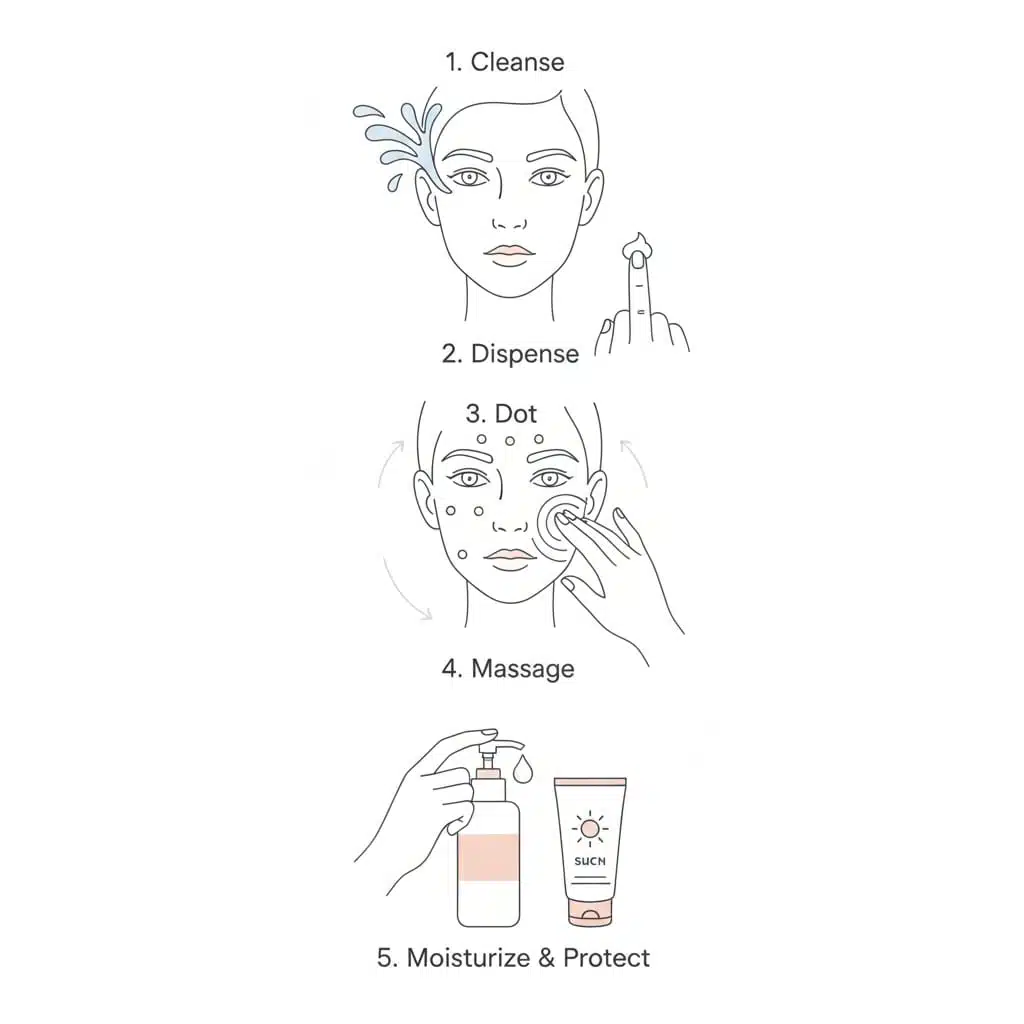
Knowing how long azelaic acid takes to work for acne and other concerns is only helpful if you’re using it correctly. Follow these guidelines to maximize effectiveness and reach your results timeline as efficiently as possible.
Application Frequency
For Beginners: Start with once-daily application (evening) for the first 1-2 weeks to build tolerance. This is especially important for sensitive skin or if using higher concentrations (15-20%).
Standard Protocol: Once tolerance is established, apply twice daily—morning and evening—for optimal results. Most clinical studies showing the timelines mentioned above used twice-daily application.
Maintenance: After achieving desired results (typically 12-16 weeks), many people maintain improvements with 3-5 applications per week rather than twice daily.
Proper Application Technique
- Cleanse: Wash your face with a gentle, pH-balanced cleanser. Pat completely dry and wait 5-10 minutes—applying to damp skin increases irritation risk.
- Apply Azelaic Acid: Use a pea-sized amount for your entire face. Gently massage into skin until absorbed. Focus on problem areas but apply to the entire face for even results.
- Wait Before Layering: Allow 10-15 minutes for full absorption before applying additional products. This ensures proper pH for azelaic acid to work effectively.
- Moisturize: Follow with a gentle, fragrance-free moisturizer to support your skin barrier and minimize potential dryness.
- Sunscreen (Morning): Always apply broad-spectrum SPF 30+ during the day. While azelaic acid itself isn’t photosensitizing, treating hyperpigmentation requires diligent sun protection to prevent darkening.
What to Avoid While Using Azelaic Acid
During your treatment period, avoid these common mistakes.
- Over-Exfoliation: Don’t combine with harsh physical scrubs or multiple exfoliating acids (AHAs/BHAs) without guidance
- Harsh Cleansers: Avoid sulfates, high-pH soaps, and astringent toners that can irritate skin
- Inconsistent Application: Missing days regularly will significantly extend your timeline
- Sun Exposure Without Protection: UV exposure triggers melanin production, counteracting your brightening efforts
- Giving Up Too Soon: Many people abandon azelaic acid at week 4-6, right before visible improvements typically begin
When to See a Dermatologist About Azelaic Acid Results

While most people see improvements following the timeline outlined above, certain situations warrant professional consultation:
See a dermatologist if:
- You’ve used azelaic acid consistently for 16 weeks with zero improvement
- Your skin condition worsens after 4-6 weeks of use
- You experience severe irritation, persistent burning, or allergic reactions
- You develop unusual lightening or darkening of skin patches
- You’re uncertain whether your concentration is appropriate for your concerns
If three months have passed and you’ve noticed zero changes, contact your doctor. You may need a stronger prescription formulation, a different ingredient entirely, or a combination treatment approach. A dermatologist can also rule out underlying conditions that topical treatments alone can’t address.
Maximizing Your Azelaic Acid Success
How long does it take for azelaic acid to work ultimately depends on your commitment to the process. Here’s how to ensure you see results within the expected timeline:
Take Progress Photos: Document your skin in consistent lighting every 2 weeks. Gradual improvements are hard to notice in the mirror but become obvious when comparing photos.
Stick with It: The 8-12 week mark is when most people see significant results. Quitting at week 4 or 6 means missing out on the transformation that was just around the corner.
Support Your Skin Barrier: Use gentle, hydrating products alongside azelaic acid. A healthy skin barrier responds better and tolerates actives more effectively.
Be Patient with Stubborn Issues: Melasma and deep acne scarring often require the full 6-month timeline. These aren’t failures of the product—they’re simply more challenging conditions requiring sustained treatment.
Consider Professional Guidance: Working with a dermatologist can optimize your azelaic acid concentration, frequency, and combination with other treatments for faster results.
Frequently Asked Questions About Azelaic Acid Results
How long does it take for azelaic acid to work on acne?
Most people see reduced breakouts and fewer new pimples within 4-6 weeks of consistent twice-daily use. Inflammatory acne responds fastest, with visible reduction in redness and swelling appearing as early as 2-3 weeks. For complete acne clearance, expect 8-12 weeks of regular application.
How long does azelaic acid take to work on dark spots?
Post-inflammatory hyperpigmentation typically shows initial lightening around week 6-8, with significant fading by the 12-week mark. Stubborn dark spots or melasma may require 4-6 months for maximum results. Consistent daily application and sun protection are essential for treating pigmentation.
Can you see results from azelaic acid in 2 weeks?
While some people notice reduced redness and smoother texture within 2 weeks, significant visible improvements usually take longer. The 2-week mark is typically the adjustment phase where your skin builds tolerance. Meaningful results for acne, hyperpigmentation, or rosacea generally appear after 4-6 weeks minimum.
How long should I use azelaic acid before giving up?
Give azelaic acid a full 12 weeks (3 months) of consistent twice-daily use before deciding it’s not working. Most dramatic improvements appear between weeks 8-12. If you see absolutely no change after 16 weeks, consult a dermatologist about increasing concentration or trying combination treatments.
Does 10% azelaic acid work slower than 20%?
Yes, lower concentrations typically take longer to produce visible results. Prescription-strength formulations (15-20%) often show results in 6-8 weeks, while over-the-counter 10% products may take 10-12 weeks for comparable improvements. However, lower concentrations also have reduced irritation risk.
How long does azelaic acid take to work for rosacea?
Rosacea treatment with azelaic acid typically requires 8-12 weeks for noticeable reduction in redness, bumps, and inflammation. Some dermatologists note that rosacea patients may not see positive changes for up to 3 months. Consistent application is crucial for managing this chronic condition.
How long does azelaic acid take to work on melasma?
Melasma is one of the most stubborn pigmentation conditions and typically requires 12-16 weeks of consistent twice-daily azelaic acid application for visible improvement. Some dermatologists recommend up to 6 months for maximum results. Combining azelaic acid with strict sun protection (SPF 50+ daily) and potentially other brightening ingredients like vitamin C significantly improves outcomes.
Why isn’t my azelaic acid working after 4 weeks?
Four weeks is still early in the azelaic acid timeline. Most people don’t see significant results until weeks 6-8. However, if you see worsening after 4 weeks, you may be experiencing irritation. Check your application frequency, ensure you’re using proper technique, and verify you’re not over-exfoliating with other products. .
Can I speed up how long azelaic acid takes to work?
While you can’t dramatically accelerate results, you can optimize your timeline by applying twice daily consistently, protecting skin from sun exposure with SPF 30+, supporting your skin barrier with gentle products, and potentially combining with complementary ingredients like niacinamide (under dermatologist guidance).
How long does azelaic acid purging last?
Azelaic acid typically doesn’t cause significant purging like retinoids can. If you experience increased breakouts, they usually resolve within 2-4 weeks as your skin adjusts. True purging brings underlying congestion to the surface and should improve by week 4-6. Worsening beyond this may indicate irritation rather than purging.
How long does 15% azelaic acid take to work?
Fifteen percent azelaic acid (like Finacea gel) is prescription-strength and typically shows initial results faster than 10% OTC formulations. Most users see noticeable improvements in 6-8 weeks, with significant results by 12 weeks. This concentration balances effectiveness with tolerability for most skin types.
Should I use azelaic acid once or twice daily for faster results?
Twice-daily application (morning and evening) produces faster results than once daily, typically shaving 2-4 weeks off your timeline. However, start with once daily for the first 1-2 weeks if you have sensitive skin, then increase to twice daily once tolerance is established.
Conclusion:
The answer is: 2-4 weeks for initial improvements, 8-12 weeks for significant visible results, and up to 6 months for maximum benefits on stubborn concerns like melasma and deep scarring.
This timeline isn’t a drawback—it’s a feature. Azelaic acid works gently and effectively without traumatizing your skin, building lasting improvements rather than quick fixes that don’t last. The gradual approach means you’re addressing the root causes of your skin concerns while strengthening your overall skin health.
Whether you’re tackling acne, hyperpigmentation, rosacea, or melasma, consistency is your most powerful tool. Apply your azelaic acid twice daily, protect your skin from sun exposure, support your skin barrier with gentle products, and give the ingredient the full 12-16 weeks it needs to deliver its best results.
Your patience will be rewarded with clearer, more even-toned, healthier skin that continues improving with consistent use.
Related Reading:
1.Want to learn more about azelaic acid and how it compares to other powerful skincare acids?
Azelaic Acid for Skin: The Gentle Powerhouse You Need to Know
2. Understand how azelaic acid stacks up against glycolic acid (AHA) and salicylic acid (BHA)
AHA vs BHA vs Azelaic Acid: Which Is Right for You?