
Biotin for Brittle Nails: Benefits and Results Timeline
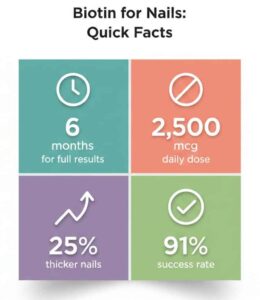
Tired of nails that split, peel, or break at the slightest touch? Biotin for brittle nails has emerged as a science-backed solution with impressive clinical results. Studies show that oral biotin supplementation increases nail thickness by up to 25% and reduces splitting in 91% of patients with brittle nails.
Does Biotin Actually Work for Brittle Nails?
Yes, clinical evidence strongly supports biotin’s effectiveness for brittle nails.
According to the National Institutes of Health, research on biotin supplementation for brittle nails shows consistent positive outcomes across multiple trials.
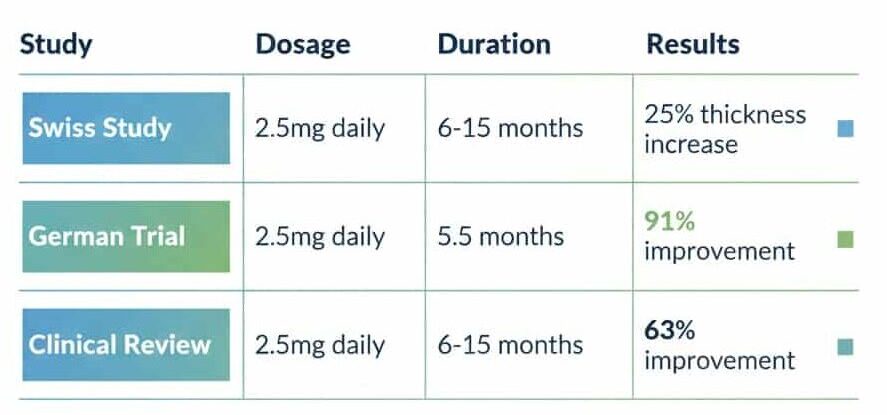
| Study | Dosage | Duration | Success Rate |
| Swiss Study | 2.5 mg daily | 6-15 months | 25% thickness increase |
| German Trial | 2.5 mg daily | 5.5 months | 91% improvement |
| Clinical Review | 2.5 mg daily | 6-15 months | 63% improvement |
Biotin strengthens nails by supporting keratin production, the structural protein that forms your nail plate. Without adequate biotin, keratin synthesis becomes impaired, leading to thin, brittle nails that split and break easily.
Key Benefits of Biotin for Nail Health
Biotin benefits for nails extend beyond just preventing breakage. Clinical studies reveal multiple improvements in nail structure and appearance.
Increased nail thickness: Studies show 25% increase in nail plate thickness when biotin is taken immediately before measurement. Even delayed measurements show 7% improvement.
Reduced splitting and peeling: Scanning electron microscopy confirms that biotin reduces nail plate splitting and irregular cellular arrangement on the nail surface.
Improved firmness and hardness: 91% of participants report firmer, harder nails after consistent biotin supplementation for several months.
Enhanced growth rate: While not the primary benefit, biotin may modestly increase nail growth rate by supporting cell proliferation in the nail matrix.
Better nail surface quality: The irregular, rough texture characteristic of brittle nails becomes smoother and more uniform with biotin treatment.
How Long Does Biotin Take to Work for Nails?
 Understanding the biotin for brittle nails timeline helps set realistic expectations. Nail improvements follow a predictable pattern based on nail growth cycles.
| Timeline | What to Expect |
| Week 1-2 | No visible changes yet |
| Week 3-4 | Slight improvement in nail bed strength |
| Week 6-8 | New growth shows less brittleness |
| Month 3-4 | Noticeable thickness increase visible |
| Month 5-6 | Maximum improvements achieved |
Fingernails grow approximately 3-4 mm per month. Since improvements occur in newly formed nail tissue, you must wait for old, brittle nails to grow out completely before seeing full results.
Early signs (4-8 weeks): Less breakage at the nail tips, slightly firmer nail plates, reduced peeling at free edge.
Mid-term results (3-4 months): Visible increase in nail thickness, decreased splitting when nails reach moderate length, improved resistance to daily wear.
Long-term outcomes (5-6 months): Complete replacement of old nail plate with stronger tissue, sustained improvements in thickness and hardness, ability to grow nails longer without breaking.
Most clinical trials use 5.5 to 6 months as the evaluation period because this timeframe allows complete nail plate replacement.
How Much Biotin Per Day for Stronger Nails?

How much biotin per day you need depends on whether you’re addressing deficiency or seeking therapeutic benefits for brittle nails.
| Purpose | Daily Dosage | Notes |
| Basic requirement | 30 mcg | Adequate intake for adults |
| Mild brittleness | 100-1,000 mcg | Low therapeutic dose |
| Moderate to severe | 2,500 mcg (2.5 mg) | Clinical trial dosage |
| Maximum safe dose | 10,000 mcg | Generally safe, may affect labs |
Biotin dosage for nails in clinical studies consistently uses 2,500 mcg (2.5 mg) daily. This therapeutic dose produced the 25% thickness increase and 91% improvement rate documented in research.
Food sources provide 30-100 mcg daily, which maintains normal nail health but may not reverse existing brittleness. Supplementation bridges the gap between basic requirements and therapeutic needs.
Find your optimal biotin dose based on your health goals and current needs.
How Much Biotin Should I Take Daily? Complete Dosage Guide
Best Time of Day to Take Biotin for Nails
Best time of day to take biotin doesn’t significantly impact nail health outcomes, but timing can optimize absorption and consistency.
Morning intake advantages:
- Easier to remember with breakfast routine
- Less likely to forget before bed
- Can be paired with other morning supplements
- Supports energy metabolism during active hours
With or without food:
- Take with meals for better absorption
- Fat-containing foods may enhance uptake
- Consistent timing matters more than specific hour
Avoid taking biotin right before laboratory tests. High doses can interfere with immunoassays used for thyroid function, cardiac markers, and other diagnostics. Stop supplementation 72 hours before blood work.
learn more about Best Time to Take Biotin: Morning vs Night
Biotin and Acne Prone Skin: Nail Supplement Safety

Concerns about biotin and acne prone skin are valid, but the risk primarily relates to mega-doses, not clinical nail treatment dosages.
| Biotin Dosage | Acne Risk | Nail Benefits |
| 30-100 mcg (food) | ✅ Very low | Maintenance only |
| 2,500 mcg (clinical) | ✅ Low | ⭐ Proven effective |
| 5,000-10,000 mcg | ⚠️ Moderate | Not superior |
The 2,500 mcg dose used in successful nail studies rarely triggers acne. Higher doses (5,000+ mcg) may interfere with vitamin B5 absorption, potentially causing breakouts in sensitive individuals.
For acne-prone individuals:
- Start with 2,500 mcg, not higher
- Monitor skin response for first month
- Consider B-complex supplements for balanced B vitamins
- Increase water intake to support metabolism
- Discontinue if breakouts occur
Most people tolerate 2,500 mcg without skin issues. This dose provides therapeutic nail benefits while remaining below typical acne-triggering thresholds.
Top Foods High in Biotin for Nail Strength
While supplements provide therapeutic doses, best biotin for nails includes food sources that support overall nail health with complementary nutrients.
| Food | Serving | Biotin (mcg) | Additional Nail Benefits |
| Nutritional yeast | 2 tbsp | 21 | B vitamins, protein |
| Soybeans (cooked) | ½ cup | 19.3 | Protein, iron |
| Peanuts | ¼ cup | 4.9 | Protein, vitamin E |
| Almonds | ¼ cup | 1.5 | Vitamin E, magnesium |
| Sunflower seeds | ¼ cup | 2.6 | Vitamin E, selenium |
| Sweet potato | ½ cup | 2.4 | Beta-carotene, vitamin C |
| Mushrooms | ½ cup | 5.6 | Selenium, vitamin D |
Pakistani and Indian nail-supporting recipes:

- Badam kheer: Almonds in creamy milk dessert
- Moong daal: Split mung beans with biotin-rich spices
- Shakarkandi chaat: Sweet potato with lemon and spices
- Peanut chutney: Ground peanuts with curry leaves
- Mushroom masala: Sautéed mushrooms in tomato gravy
- Til barfi: Sesame seed sweet with jaggery
Boost your biotin intake naturally with these nutrient-dense food sources. Top 15 Biotin Rich Foods for Hair Growth Naturally
Also, if you are vegan, read about the 10 Best Vegan Foods High in Biotin
When Biotin Won’t Help Your Brittle Nails
Biotin for brittle nails works specifically for brittleness caused by inadequate keratin production. Other nail conditions require different treatments.
Biotin won’t help if you have:
- Fungal nail infections (require antifungal medication)
- Psoriasis of the nails (needs topical or systemic psoriasis treatment)
- Trauma-related damage (time and protection needed)
- Thyroid disorders (address underlying thyroid dysfunction)
- Iron deficiency anemia (requires iron supplementation)
- Aging-related changes without brittleness
Signs biotin might not be the solution:
- Yellow or white discoloration (suggests fungal infection)
- Pitting or oil drops under nail (indicates psoriasis)
- Horizontal ridges (may signal systemic illness)
- Spoon-shaped nails (suggests iron deficiency)
- One nail affected (likely trauma or infection)
If brittleness persists after 6 months of 2,500 mcg daily biotin, consult a dermatologist to investigate other causes. Multiple nutrient deficiencies, hormonal imbalances, or underlying medical conditions may contribute to nail problems.
Clinical Evidence: What Studies Actually Show
Understanding the research behind biotin benefits for nails helps set appropriate expectations and identify limitations in current evidence.
Study strengths: Multiple trials show consistent improvements in nail thickness (7-25%), hardness, and splitting reduction. Scanning electron microscopy provides objective measurements, not just subjective reports.
Study limitations: Most trials lack placebo control groups, making it impossible to rule out placebo effects completely. Sample sizes remain small (22-45 participants). Baseline biotin status wasn’t measured, so improvements may reflect correction of subclinical deficiency.
Success rates vary: The 91% improvement rate represents the best outcome. More conservative estimates show 63-67% of participants experiencing benefits. Approximately 9-37% report no improvement.
Individual response factors:
- Severity of baseline brittleness
- Underlying causes (deficiency vs. other factors)
- Consistency of supplementation
- Concurrent nutrient deficiencies
- Age and overall health status
Despite limitations, the consistency across multiple independent studies supports biotin’s effectiveness for many people with brittle nails.
Conclusion
The evidence supporting biotin for brittle nails is compelling. Clinical studies consistently show that 2,500 mcg daily increases nail thickness by up to 25% and improves nail quality in the majority of users.
How much biotin per day you need for therapeutic benefits (2,500 mcg) exceeds what food sources provide, making supplementation necessary for treating existing brittleness. The best time of day to take biotin is whenever you’ll remember consistently, preferably with a meal.
Results require patience. How long does biotin take to work for nails depends on nail growth rate, but visible improvements appear within 6-8 weeks and peak at 5-6 months. Concerns about biotin and acne prone skin are minimal at the clinical dose of 2,500 mcg.
Give your nails 6 months of consistent supplementation, protect them from damage, and most likely, you’ll see the stronger, healthier nails you’ve been seeking.
Frequently Asked Questions
Does biotin really work for brittle nails?
Yes, clinical studies demonstrate that 2,500 mcg biotin daily increases nail thickness by up to 25% and improves firmness in 91% of participants. Results appear after 4-6 months of consistent supplementation, once old brittle nails grow out and stronger new nails replace them.
How long does biotin take to work for brittle nails?
Visible improvements begin at 6-8 weeks but maximum results take 5-6 months. Nails grow 3-4 mm monthly, so complete nail plate replacement requires at least 4-5 months. Early signs include less breakage and firmer nail beds within the first 2 months.
What is the best biotin dosage for nail growth?
Clinical trials use 2,500 mcg (2.5 mg) daily with proven success. This dose produced the 25% thickness increase documented in research. Higher doses don’t necessarily improve results and may interfere with lab tests. Start with 2,500 mcg for 6 months.
How much biotin per day do I need for stronger nails?
The basic requirement is 30 mcg daily, but therapeutic treatment of brittle nails requires 2,500 mcg (2.5 mg) daily based on clinical evidence. Food sources provide 30-100 mcg, insufficient for treating existing brittleness but adequate for maintenance after improvement.
When is the best time of day to take biotin for nails?
Morning or evening both work well. Take biotin with a meal containing some fat for better absorption. Consistency matters more than specific timing. Avoid taking biotin within 72 hours before laboratory blood tests as it can interfere with certain immunoassays.
Can biotin cause acne while treating brittle nails?
The clinical dose of 2,500 mcg rarely causes acne. Higher doses (5,000-10,000 mcg) pose greater risk by interfering with vitamin B5 absorption. If you have acne-prone skin, start with 2,500 mcg and monitor your response rather than using mega-doses.
What foods are high in biotin for nail health?
Nutritional yeast (21 mcg per 2 tbsp), soybeans (19.3 mcg per ½ cup), peanuts (4.9 mcg per ¼ cup), and mushrooms (5.6 mcg per ½ cup) provide the most biotin. However, food sources alone don’t provide therapeutic amounts for treating existing brittleness.
Will biotin help if my nails are brittle from aging?
Biotin may help age-related brittleness if keratin production has declined. However, if brittleness results from other age-related factors like reduced moisture, circulation issues, or medication side effects, biotin alone may not be sufficient. Try 2,500 mcg daily for 6 months to assess response.
Related Read:
Biotin Deficiency: Signs You Might Not Be Getting Enough
Recognize the warning signs and symptoms of biotin deficiency before they worsen.
Biotin vs Collagen: Which is Better for Hair & Nails?
Compare two popular supplements and find out which one suits your needs best.
Biotin Side Effects: Does Biotin Cause Acne & Breakouts?
Discover the truth about biotin and skin health, plus how to avoid breakouts.
Allergy Notice:
This blog includes nuts like peanuts and almonds. If you have a nut allergy, please avoid these ingredients or consult your doctor before use.
About the Author
Hi, I’m Saima Hussain! I’m a health and wellness blogger passionate about plant-based living and natural hair care. Through my own research and experience, I share practical tips to help women improve their hair health naturally, no supplements needed. My goal is to raise awareness and support others on their wellness journeys.
This article is reviewed for nutritional accuracy and updated regularly to reflect current dietary guidelines.