
Biotin vs Collagen: Which is Better for Hair & Nails?
This guide examines the science behind biotin vs collagen, helping you understand which supplement aligns with your specific beauty and wellness goals.
They work through completely different mechanisms, and choosing the wrong one could waste your money or even cause side effects.
Understanding the Basics: What Are Biotin and Collagen?
Before diving into biotin vs collagen comparisons, let’s clarify what these substances actually are and why they’re marketed for hair and nail health.
What Is Biotin?
Biotin (vitamin B7 or vitamin H) is a water-soluble B vitamin essential for converting food into energy. Your body cannot produce biotin, so you must obtain it through diet or supplementation.
Key Functions:
- Converts carbohydrates, fats, and proteins into usable energy
- Supports enzymes that metabolize glucose and fatty acids
- Plays a crucial role in keratin production (the structural protein in hair and nails)
- Helps regulate gene expression and cell signaling
- Supports nervous system function
The recommended adequate intake for adults is 30 micrograms daily. Most supplements contain 2,500-10,000 mcg—doses 100 to 300 times higher than daily requirements.
What Is Collagen?
Collagen is the most abundant protein in the human body, making up approximately 25-35% of total body protein. It provides structural support to connective tissues throughout your body.
Key Functions:
- Forms the structural framework of skin, hair, nails, bones, and ligaments
- Maintains skin elasticity and hydration
- Supports joint health and cartilage structure
- Provides amino acids necessary for keratin synthesis
- Promotes wound healing and tissue repair
Your body naturally produces collagen, but production declines by approximately 1% per year after age 20. Women experience an even more rapid decline after menopause.
How Biotin Works for Hair and Nails
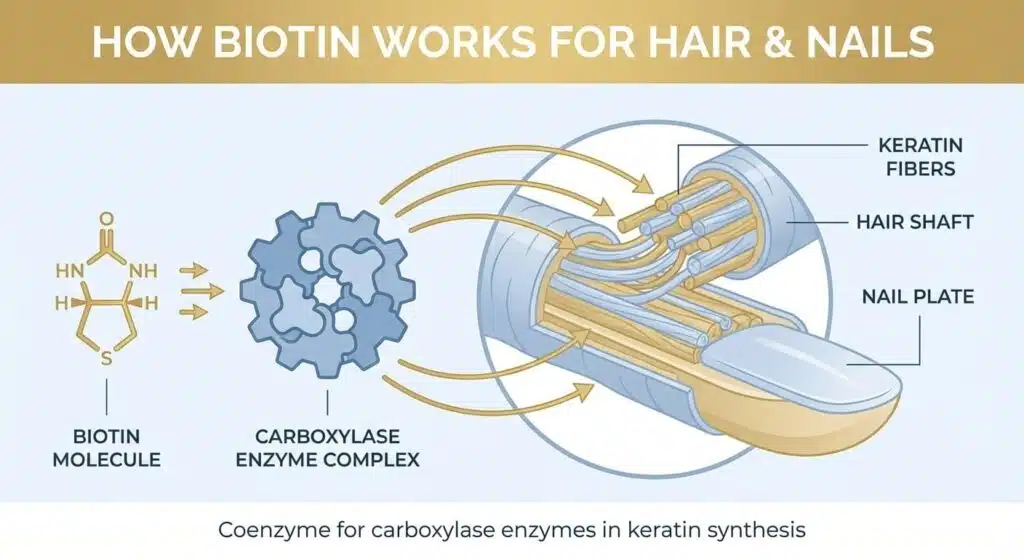
Biotin’s connection to hair and nail health centers on its essential role in keratin production. Keratin is the tough, fibrous protein that forms the structural basis of hair strands and nail plates.
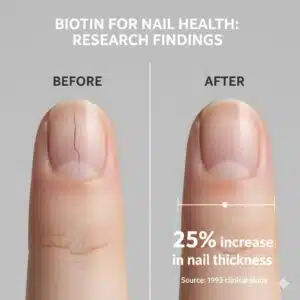
A 1993 study demonstrated a 25% increase in nail thickness after 6 months of biotin supplementation in people with brittle nails.
Biotin’s Mechanism of Action
Keratin Synthesis Support: Biotin acts as a coenzyme for carboxylase enzymes that facilitate the production of keratin. Without adequate biotin, your body struggles to produce the keratin necessary for strong hair and nails.
Cellular Metabolism: Biotin supports the metabolic processes in hair follicle cells and nail bed cells, ensuring they have sufficient energy to function optimally.
Fatty Acid Production: Biotin helps produce fatty acids that nourish the scalp and support healthy sebum production, creating an optimal environment for hair growth.
How Collagen Works for Hair and Nails
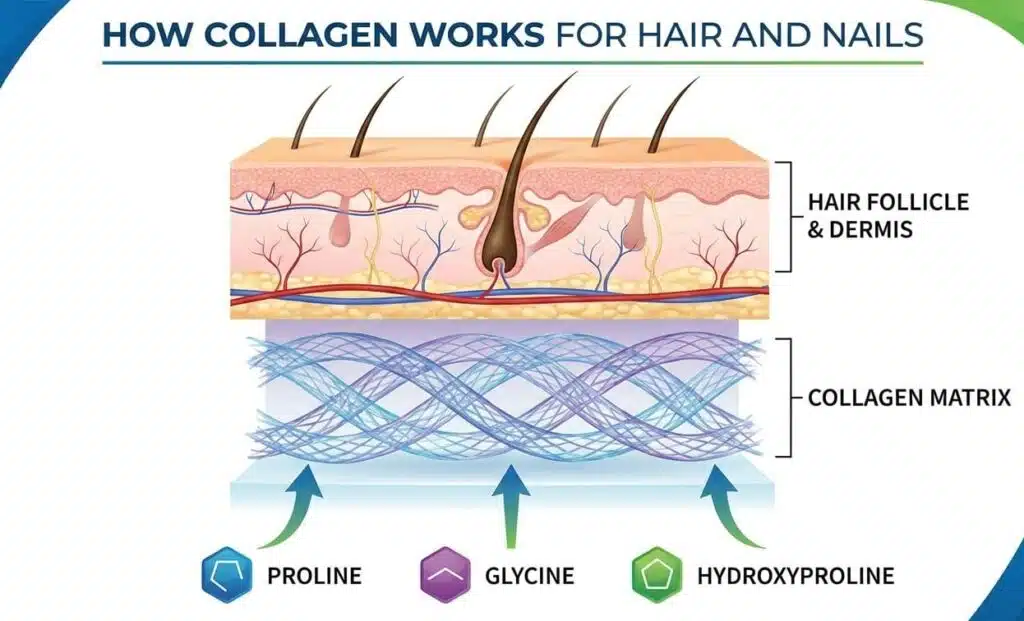
Collagen supports hair and nail health through structural reinforcement rather than metabolic support. Understanding how collagen works requires examining its unique amino acid composition.
Collagen’s Mechanism of Action
Direct Structural Support: Collagen provides the amino acids—particularly proline, glycine, and hydroxyproline—that your body uses to build keratin and maintain the dermal layer that anchors hair follicles.
Scalp Health: Collagen strengthens the dermis (middle layer of skin) where hair follicles are embedded, providing better anchorage and supporting follicle health.
Antioxidant Properties: Some amino acids in collagen possess antioxidant properties that may help fight free radical damage to hair follicles, potentially slowing age-related hair thinning.
Keratin Building Blocks: Every scoop of hydrolyzed collagen peptides provides approximately 1,150mg of proline, the primary amino acid needed for keratin production.
Advantage Over Biotin: Unlike biotin, you cannot obtain bioactive hydrolyzed collagen peptides from food sources alone. Supplementation is the only way to get these specialized collagen forms.
Biotin vs Collagen: Direct Comparison
Let’s break down how biotin vs collagen stack up across the key factors that matter for hair and nail health.
Composition and Function
| Factor | Biotin | Collagen |
| Type | Water-soluble B vitamin | Structural protein |
| Body Production | Cannot be produced by body | Naturally produced but declines with age |
| Primary Function | Coenzyme for metabolism | Structural support |
| Mechanism | Supports keratin synthesis enzymes | Provides amino acid building blocks |
| Availability | Found in many foods | Hydrolyzed form only from supplements |
Hair Health Benefits
Biotin for Hair:
- ✓ Supports keratin production
- ✓ May reduce hair shedding in deficient individuals
- ✓ Strengthens hair structure
- ⚠️ Limited evidence for benefits in non-deficient people
- ⚠️ Results take 3-6 months to appear
Collagen for Hair:
- ✓ Provides proline and amino acids for keratin
- ✓ Strengthens scalp and follicle anchorage
- ✓ Supported by more robust research
- ✓ May slow age-related hair thinning
- ✓ Additional anti-aging benefits for skin
Nail Health Benefits
Biotin for Nails:
- ✓ Proven effective for brittle nail syndrome
- ✓ Increases nail thickness by up to 25%
- ✓ Reduces nail splitting and breakage
- ✓ Well-documented benefits specifically for nails
- ⚠️ Requires consistent use for 3-6 months
Collagen for Nails:
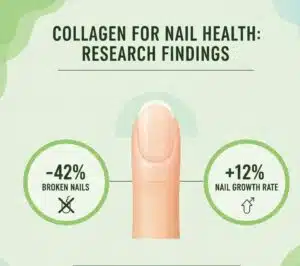
- ✓ Decreases broken nails by 42%
- ✓ Increases nail growth rate by 12%
- ✓ Provides amino acids for nail protein
- ✓ Improves overall nail appearance
- ✓ Benefits persist after supplementation ends
Side Effects and Safety
Biotin Side Effects:
- ⚠️ Can trigger acne breakouts (especially jawline and chin)
- ⚠️ Interferes with blood test results (thyroid, hormone, cardiac markers)
- ⚠️ Competes with vitamin B5 absorption
- ⚠️ May cause digestive upset in some people
- ✓ Water-soluble (excess excreted in urine)
- ✓ Low toxicity risk
Collagen Side Effects:
- ✓ Generally well-tolerated
- ⚠️ Possible digestive issues (mild)
- ⚠️ Derived from animal sources (not suitable for vegans)
- ⚠️ Can be expensive
- ⚠️ Potential allergic reactions (rare)
- ✓ No blood test interference
Price and Accessibility
Biotin:
- Generally less expensive ($10-25 per month)
- Available in tablets, capsules, gummies, and liquids
- Simpler production process
- Found naturally in eggs, nuts, seeds, fish, and whole grains
Collagen:
- More expensive ($20-50+ per month)
- Available as powder, capsules, or liquid
- Complex extraction and processing required
- Typically sourced from grass-fed bovine or marine sources
- Cannot get bioactive forms from food
Should You Take Biotin or Collagen for Hair Growth?
The biotin vs collagen question for hair growth depends on identifying the root cause of your hair concerns and your current nutritional status.
Choose Biotin for Hair If You Have:
✓ Confirmed Biotin Deficiency Symptoms include hair loss, skin rashes, brittle nails, and fatigue. Blood testing confirms deficiency.
✓ Brittle Hair That Breaks Easily Biotin strengthens the keratin structure, reducing breakage along the hair shaft.
✓ Diet Low in Biotin-Rich Foods If you avoid eggs, nuts, seeds, and whole grains, supplementation may help.
✓ Certain Medical Conditions Long-term antibiotic use, digestive disorders, or genetic biotinidase deficiency increase biotin needs.
Choose Collagen for Hair If You Have:
✓ Age-Related Hair Thinning Collagen addresses the declining collagen production that weakens hair follicles with age.
✓ Scalp Health Concerns Collagen strengthens the dermal layer, improving follicle anchorage and scalp integrity.
✓ Fine or Thin Hair Strands Collagen provides the amino acid building blocks to increase hair diameter and strength.
✓ Multiple Anti-Aging Goals If you also want to improve skin elasticity, reduce wrinkles, or support joint health, collagen provides comprehensive benefits.
Should You Take Biotin or Collagen for Nail Strength?
Both biotin vs collagen show proven benefits for nail health, but they work through different mechanisms.
Choose Biotin for Nails If You Have:
✓ Brittle Nail Syndrome Biotin has the most extensive research specifically for brittle, splitting nails.
✓ Slow-Growing Nails Biotin supports the metabolic processes that drive nail growth.
✓ Peeling or Flaking Nails Biotin strengthens the nail plate layers, reducing delamination.
✓ Budget Constraints Biotin supplements are generally more affordable than quality collagen products.
Choose Collagen for Nails If You Have:
✓ Aging Hands and Nails Collagen addresses age-related changes in nail structure and surrounding skin.
✓ Nails That Break Under Pressure Collagen provides structural reinforcement for more resilient nails.
✓ Desire for Skin Benefits Collagen simultaneously improves nail health and hand skin appearance.
✓ Poor Response to Biotin If biotin supplementation hasn’t helped, collagen may work better for your specific nail concerns.
Can You Take Biotin and Collagen Together?
Yes, combining biotin vs collagen is not only safe but may provide synergistic benefits. Research supports using both supplements together for comprehensive hair, skin, and nail support.
Research on Combined Supplementation
Study Findings:
- A 2019 randomized controlled trial published in Nutrients found that taking biotin and collagen together positively impacted skin hydration, elasticity, smoothness, and density after 12 weeks
- A 2020 study in the Journal of Medicinal Food showed improved collagen structure in facial skin and positive subjective results for skin appearance
Why They Work Well Together
Complementary Mechanisms:
- Biotin: Supports metabolic processes and enzyme function for keratin synthesis
- Collagen: Provides structural amino acid building blocks
Different Action Points:
- Biotin: Works at the cellular/metabolic level
- Collagen: Works at the structural/protein level
No Competitive Absorption: Unlike biotin’s competition with vitamin B5, biotin and collagen don’t interfere with each other’s absorption or function.
Optimal Dosing for Combined Use
Recommended Daily Doses:
- Biotin: 2,500-5,000 mcg
- Collagen: 10-20 grams (10,000-20,000 mg)
Timing Considerations:
- Take biotin with food to minimize digestive upset
- Collagen can be taken any time, mixed into beverages or food
- Consistency matters more than timing for both supplements
Natural Food Sources: Beyond the Biotin vs Collagen Debate
Before investing in supplements, consider whether you can meet your needs through dietary sources.
Top Biotin-Rich Foods
| Food Source | Biotin Content | Serving Size |
| Beef liver | 30 mcg | 3 ounces |
| Egg yolk | 10 mcg | 1 large egg |
| Salmon | 5 mcg | 3 ounces |
| Sweet potato | 2.4 mcg | 1/2 cup |
| Almonds | 1.5 mcg | 1/4 cup |
| Sunflower seeds | 2.6 mcg | 1/4 cup |
| Spinach | 0.5 mcg | 1/2 cup |
Plant-Based Sources: Nuts, seeds, legumes, whole grains, avocados, mushrooms, and nutritional yeast provide biotin for vegetarian and vegan diets.
Collagen-Rich Foods

Important Note: You cannot obtain bioactive hydrolyzed collagen peptides from food. However, these foods support your body’s natural collagen production:
Animal Sources:
- Bone broth (chicken, beef, fish)
- Chicken skin
- Pork skin
- Fish and shellfish
- Egg whites
Collagen-Supporting Foods:
- Vitamin C-rich foods (citrus, berries, bell peppers) aid collagen synthesis
- Proline-rich foods (egg whites, dairy, cabbage)
- Glycine-rich foods (gelatin, bone broth)
- Copper-containing foods (organ meats, sesame seeds)
Who Should Avoid Biotin or Collagen?
Understanding contraindications helps you make a safe decision in the biotin vs collagen choice.
Avoid or Use Caution with Biotin If You:
❌ Require Regular Blood Testing Biotin interferes with thyroid function tests, hormone assays, cardiac markers, and other important diagnostics. Stop biotin 48-72 hours before any blood work.
❌ Have Active Hormonal Acne High-dose biotin can worsen breakouts by depleting vitamin B5 and increasing sebum production.
❌ Take Anti-Seizure Medications Medications like carbamazepine, phenobarbolin, and phenytoin can reduce biotin absorption.
⚠️ Are Pregnant or Breastfeeding Only use under medical supervision, as requirements may differ.
⚠️ Smoke Cigarettes Smoking increases biotin needs and may affect supplementation requirements.
Avoid or Use Caution with Collagen If You:
❌ Follow a Vegan or Vegetarian Diet Most collagen supplements are derived from animal sources (bovine or marine).
❌ Have Shellfish or Fish Allergies Marine collagen sources may trigger allergic reactions.
⚠️ Have Kidney Disease The high protein content may stress compromised kidney function.
⚠️ Are on a Restricted Protein Diet Collagen adds significant protein to daily intake.
⚠️ Have Histamine Intolerance Some people report increased histamine reactions to collagen supplements.
Alternative and Complementary Supplements
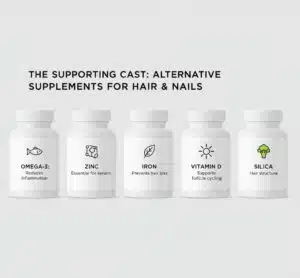
The biotin vs collagen debate shouldn’t overshadow other effective supplements for hair and nail health.
Proven Alternatives
Omega-3 Fatty Acids
- Dosage: 1,000-2,000 mg EPA/DHA daily
- Benefits: Reduces inflammation, nourishes scalp, supports hair follicle health
- Sources: Fish oil, algae oil (vegan), flaxseed oil
Zinc
- Dosage: 15-30 mg daily
- Benefits: Essential for keratin production, supports hair growth, prevents hair loss
- Note: Many people are zinc deficient, especially those with digestive issues
Iron
- Dosage: 18-30 mg daily (test levels first)
- Benefits: Prevents hair loss caused by anemia, supports oxygen delivery to follicles
- Warning: Only supplement if deficient; excess iron is harmful
Vitamin D
- Dosage: 1,000-4,000 IU daily
- Benefits: Supports hair follicle cycling, may prevent hair loss
- Note: Test your levels before supplementing
Silica
- Dosage: 10-40 mg daily
- Benefits: Strengthens hair and nails, supports collagen formation
- Sources: Horsetail extract, bamboo extract
Lifestyle Factors That Impact Hair and Nail Health
Supplements alone cannot overcome poor lifestyle habits. The biotin vs collagen debate becomes irrelevant if you don’t address these fundamental factors.
Essential Foundations
Balanced Nutrition
- Adequate protein intake (0.8-1.2g per kg body weight)
- Variety of fruits and vegetables for micronutrients
- Healthy fats from avocados, nuts, olive oil, fatty fish
- Whole grains for B vitamins and minerals
Hydration
- Drink 8-10 glasses of water daily
- Dehydration makes hair brittle and nails weak
- Affects nutrient delivery to hair follicles and nail beds
Stress Management
- Chronic stress triggers hair loss (telogen effluvium)
- Increases cortisol, which affects nutrient absorption
- Practice meditation, yoga, regular exercise, adequate sleep
Gentle Hair and Nail Care
- Avoid excessive heat styling and harsh chemicals
- Don’t pick or bite nails
- Protect nails from harsh detergents and chemicals
- Use moisturizing products for hair and cuticles
Quality Sleep
- Aim for 7-9 hours nightly
- Growth hormone released during deep sleep supports hair and nail growth
- Poor sleep disrupts nutrient metabolism
Conclusion
The biotin vs collagen debate doesn’t have a one-size-fits-all answer. Both supplements offer distinct benefits for hair and nail health through different mechanisms. Collagen provides structural support backed by more robust research, while biotin supports metabolic processes essential for keratin production.
Key Takeaways
- Collagen provides structural support with amino acids for keratin, backed by stronger research showing benefits for aging skin, hair, and nails
- Biotin supports metabolic processes essential for keratin synthesis, most effective for people with deficiency or brittle nail syndrome
- Research supports taking both together for synergistic benefits affecting skin hydration, elasticity, and overall appearance
- Collagen cannot be obtained from food in bioactive form, while biotin is available in eggs, nuts, seeds, and whole grains
- Biotin can cause acne and interferes with blood tests, requiring discontinuation 48-72 hours before lab work
- Results take 3-6 months for either supplement; consistency matters more than choosing between biotin vs collagen
- Supplements work best alongside proper nutrition, hydration, stress management, and gentle hair/nail care practices
FAQ
Which is better for hair growth: biotin or collagen?
Collagen is generally better for hair growth due to stronger research evidence and its ability to provide amino acids that directly support keratin production and scalp health. Biotin primarily benefits those with confirmed deficiency. For comprehensive results, taking both together provides synergistic benefits.
Can I take biotin and collagen together?
Yes, taking biotin and collagen together is safe and may provide better results than either supplement alone. They work through different mechanisms and don’t interfere with each other’s absorption.
How long does it take to see results from biotin or collagen?
Expect 3-6 months of consistent use to see noticeable results for hair and nails with either biotin or collagen. Nail improvements typically appear within 3-4 months, while hair changes take 4-6 months due to the hair growth cycle. Skin improvements with collagen may appear within 4-8 weeks.
Does biotin or collagen work better for brittle nails?
Biotin has the strongest specific research for brittle nail syndrome, showing a 25% increase in nail thickness and 42% reduction in splitting. However, collagen also demonstrates significant benefits with a 42% decrease in broken nails and 12% growth rate increase. Both are effective options.
What are the side effects of biotin vs collagen?
Biotin can cause acne breakouts (especially jawline), interferes with blood test results, and may cause digestive upset. Collagen is generally well-tolerated but may cause mild digestive issues and is not suitable for vegans. Collagen doesn’t interfere with blood tests like biotin does.
Is collagen or biotin better for aging skin?
Collagen is significantly better for aging skin with robust research showing improvements in skin elasticity, hydration, and wrinkles after 90 days. Collagen provides structural support for skin that biotin cannot. Biotin’s primary benefits focus on hair and nails rather than skin aging.
How much biotin and collagen should I take daily?
For biotin, take 2,500-5,000 mcg daily (the adequate intake is only 30 mcg, but therapeutic doses are much higher). For collagen, take 10-20 grams (10,000-20,000 mg) daily. Both should be taken consistently with food for best absorption and results.
Can biotin cause hair loss or make it worse?
Biotin doesn’t cause hair loss, but high doses can trigger acne through vitamin B5 depletion. If you’re not biotin deficient, supplementation may not improve hair loss caused by hormonal issues, genetics, or other factors. Address the underlying cause rather than just supplementing with biotin.
Are there vegan alternatives to collagen supplements?
There are no true vegan sources of collagen, but plant-based alternatives support your body’s natural collagen production. Options include vitamin C-rich foods, silica from bamboo or horsetail extract, amino acid supplements (proline and glycine), and consuming collagen-building nutrients.
Does biotin interfere with thyroid medication or tests?
Yes, biotin significantly interferes with thyroid function tests, causing false low TSH and false elevated T3/T4 results. If you take thyroid medication or require monitoring, stop biotin 48-72 hours before any blood work. Always inform your healthcare provider about biotin supplementation.
Which is more affordable: biotin or collagen supplements?
Biotin supplements are generally more affordable ($10-25 per month) due to simpler production processes. Quality collagen supplements range from $20-50+ per month because of complex extraction methods and sourcing from grass-fed bovine or marine sources. Both offer good value for their respective benefits.
Can collagen help with hair loss like biotin?
Yes, collagen can help with hair loss by providing amino acids needed for keratin synthesis and strengthening the dermis where hair follicles are anchored. Research shows collagen peptides enhance follicle cell proliferation and may prevent age-related hair thinning, making it effective for hair loss prevention.
Related Reads: Expand Your Knowledge on Biotin
Our comparison of biotin and collagen covers their core uses, but biotin has many other important considerations. To help you make fully informed decisions, explore these in-depth guides from our archives:
Biotin During Pregnancy: Is It Safe?
Navigating supplements while pregnant requires extra caution. This guide breaks down the latest research on biotin’s safety during pregnancy and breastfeeding, explaining why requirements change and how to meet them safely through diet or supplements.
Biotin Deficiency: Signs You Might Not Be Getting Enough
Before starting high-dose supplementation, understand what a true deficiency looks like. This article details the rare but important symptoms—from hair loss and skin rashes to neurological effects—and explains who is most at risk.
Does Biotin Cause Acne? Biotin Side Effects (2025 Guide)
One of the most common reasons people stop taking biotin is unexpected breakouts. This detailed guide explains the science behind why high-dose biotin can trigger acne, how to identify it, and practical strategies to prevent or mitigate this side effect.
Biotin for Hair Growth: Does It Really Work?
Separating hype from evidence, this guide examines what the scientific studies actually say about biotin’s effectiveness for hair thinning and growth. It sets realistic expectations on who can benefit and how long it takes to see results.