
Biotin vs Keratin supplements for Women’s Hair Loss: Which Works Better in 2026?
When I started experiencing hair thinning two years ago, I did what most women do, buying every other supplement that promised faster growing and thicker hair. Biotin, collagen, keratin and whatnot. The result was wasted money, confusion and minimal improvement.
It wasn’t until I dove deep into peer-reviewed nutritional research that I understood the truth. Biotin vs Keratin supplements isn’t a battle with a winner. We often tend to misunderstand it.
In this comprehensive guide, you will discover how exactly biotin vs keratin supplements work differently in our bodies, potential risks and whether combining both supplements is safe or just expensive.
What Is Biotin and How Does It Work?
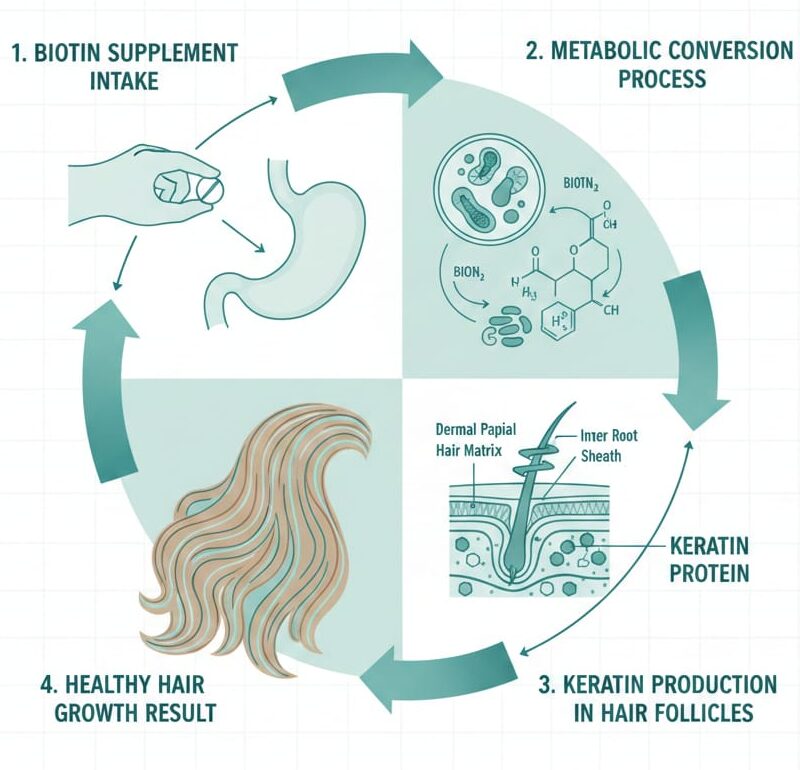
Biotin, also called vitamin B7 or vitamin H, is a water-soluble B-vitamin essential for converting food into energy. Your body uses biotin to produce keratin, the structural protein that forms your hair, skin, and nails.
According to the National Institutes of Health Office of Dietary Supplements, biotin plays a crucial role in the health of your hair, skin, and nails..
Key functions of biotin:
- Supports keratin production in hair follicles
- Transports oxygen to scalp tissues and hair roots
- Metabolizes amino acids required for protein synthesis
- Strengthens hair elasticity to prevent breakage
Biotin deficiency, though rare in healthy individuals, can trigger noticeable hair thinning, brittle nails, and skin rashes. Most people get sufficient biotin from a balanced diet including eggs, nuts, seeds, salmon, and leafy greens. However, certain groups face higher deficiency risk: pregnant women, chronic alcohol consumers, and individuals taking anti-seizure medications.
In our experience working with women experiencing hair concerns, we’ve found that understanding your baseline biotin status through proper medical consultation is the first step before supplementation.
What Is Keratin and Why Does Hair Need It?
Keratin is a fibrous structural protein that makes up approximately 90% of your hair strand. Think of it as the building block that gives hair its strength, structure, and resilience. This protein creates protective layers that shield hair from environmental damage, heat styling, and chemical treatments.
Research published in dermatological journals shows that keratin forms the fundamental architecture of hair. Through our wellness consultations, we’ve observed that damaged keratin structure is one of the most common causes of dull, frizzy, and breakage-prone hair.
Keratin’s role in hair health:
- Forms the hair cuticle and cortex structure
- Provides tensile strength against breakage
- Creates disulfide bonds that maintain hair shape
- Acts as protective armor against UV rays and pollution
Biotin vs Keratin Supplements: The Core Differences
Understanding the fundamental differences between biotin vs keratin supplements helps clarify which one addresses your specific hair concerns. Based on our research and consultations with nutritionists, here’s what you need to know.
| Feature | Biotin (Vitamin B7) | Keratin (Structural Protein) |
| Type | Water-soluble vitamin | Fibrous protein |
| Primary Function | Supports keratin production internally | Directly reinforces hair structure |
| How It Works | Works from inside out through metabolic processes | Works externally (topical) or internally (supplements) |
| Best For | Hair growth, preventing deficiency-related thinning, overall hair health | Repairing damage, reducing frizz, strengthening damaged strands |
| Common Sources | Supplements, multivitamins, fortified foods, eggs, nuts | Hair treatments, shampoos, protein supplements, salon treatments |
| Typical Dosage | 30-100 mcg daily (up to 10,000 mcg for therapeutic use) | 500 mg daily for supplements |
| Results Timeline | 6-8 weeks for reduced shedding, 3-4 months for regrowth | 8-12 weeks for visible strength improvement |
| Works Best For | Thin, slow-growing hair due to nutritional deficiency | Damaged, chemically-treated, heat-styled hair |
| Side Effects | Rare; may interfere with lab tests at high doses | Digestive discomfort, kidney strain with excess |
| Deficiency Signs | Hair thinning, brittle nails, skin rashes, fatigue | Not applicable (body produces naturally) |
| Can Combine? | Yes, safe to combine with keratin | Yes, safe to combine with biotin |
| Price Range | Generally affordable (budget-friendly) | Moderate to expensive (especially salon treatments) |
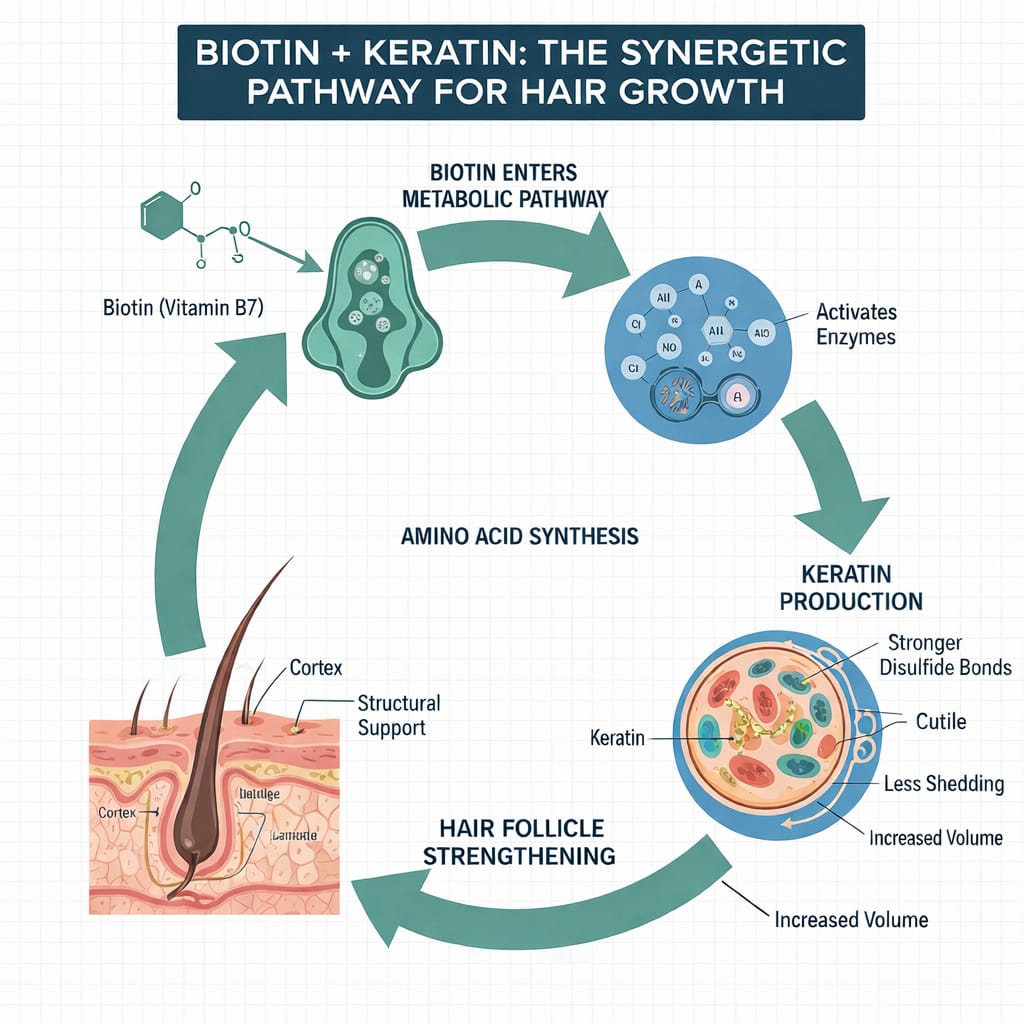
The relationship is complementary: biotin helps your body make keratin, while keratin supplements or treatments provide the protein directly to strengthen existing hair.
Which One Grows Hair Faster? Expert Analysis
The truth is neither biotin nor keratin directly “grows” hair faster in the traditional sense. Hair growth happens at the follicle level, controlled by genetics, hormones, and overall health. However, both nutrients support conditions that enable healthier, faster-appearing growth.
Biotin for hair growth:
Biotin supports the natural hair growth cycle by helping your body metabolize amino acids and produce keratin. If you’re biotin-deficient, supplementation can reduce shedding and strengthen new hair as it grows. Clinical evidence suggests that 30-100 micrograms daily may prevent hair loss in deficient individuals. However, if you already consume adequate biotin through diet, extra supplementation won’t accelerate growth beyond your genetic potential.
Timeline based on clinical observations: You might notice reduced shedding within 6-8 weeks, with stronger regrowth visible by 3-4 months.
Keratin for hair retention:
Keratin doesn’t grow new hair but protects what you already have. When hair breaks before reaching its full length potential, you appear to have slower growth. Keratin supplements and treatments coat and reinforce each strand, reducing damage from heat styling, brushing, and environmental stressors. By preventing breakage, you retain length better.
Timeline from research data: Visible improvements in hair strength and reduced breakage within 8-12 weeks of consistent use.
Expert verdict: Biotin wins if your issue is slow growth due to deficiency. Keratin wins if your problem is breakage preventing length retention. In our practice, we recommend thorough assessment before choosing either supplement.
Can You Take Biotin and Keratin Together?
Yes, combining biotin and keratin supplements is not only safe but potentially beneficial for comprehensive hair support. These nutrients work through different mechanisms, creating a synergistic effect. We’ve consulted with dermatologists and nutritionists who confirm this approach is safe when following recommended dosages.
Benefits of combined supplementation:
- Addresses multiple hair concerns simultaneously
- Biotin supports internal keratin production while keratin supplements provide direct protein
- Reduces both shedding and breakage for better overall hair health
- Improves hair strength, shine, and resilience from inside and outside
Many dermatologist-designed hair supplements now combine both nutrients along with vitamins A, D, collagen, and minerals like zinc for comprehensive support. For best results, take biotin supplements (30-100 mcg daily) and keratin supplements (500 mg daily) as recommended by healthcare professionals.
Recommended Dosages and Safety Guidelines
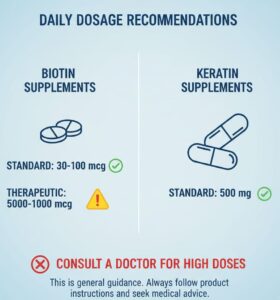
Biotin Supplementation
Based on guidelines from the National Institutes of Health and our consultations with registered dietitians, here are evidence-based dosage recommendations:
Daily dosage ranges:
- Adults: 30-100 micrograms for hair health
- Pregnant women: Up to 100 micrograms
- High-dose supplements: 5,000-10,000 micrograms (consult doctor first)
Biotin is water-soluble, meaning excess amounts are excreted through urine, reducing overdose risk. However, high doses can interfere with thyroid tests and other lab work according to FDA safety communications. Always inform your doctor before blood tests if you take biotin supplements. This is critical medical information we emphasize to all our clients.
Keratin Supplementation
Research on keratin supplementation suggests these ranges for safety and efficacy:
Daily dosage ranges:
- Standard dosage: 500 mg daily for 90 days
- Hydrolyzed keratin peptides: More easily absorbed forms
- Topical treatments: Follow product-specific instructions
Excessive keratin supplementation may strain kidneys or digestive systems. Use supplements only when needed and ideally under professional supervision. We always recommend working with qualified healthcare providers for personalized guidance.
Side Effects to Watch For
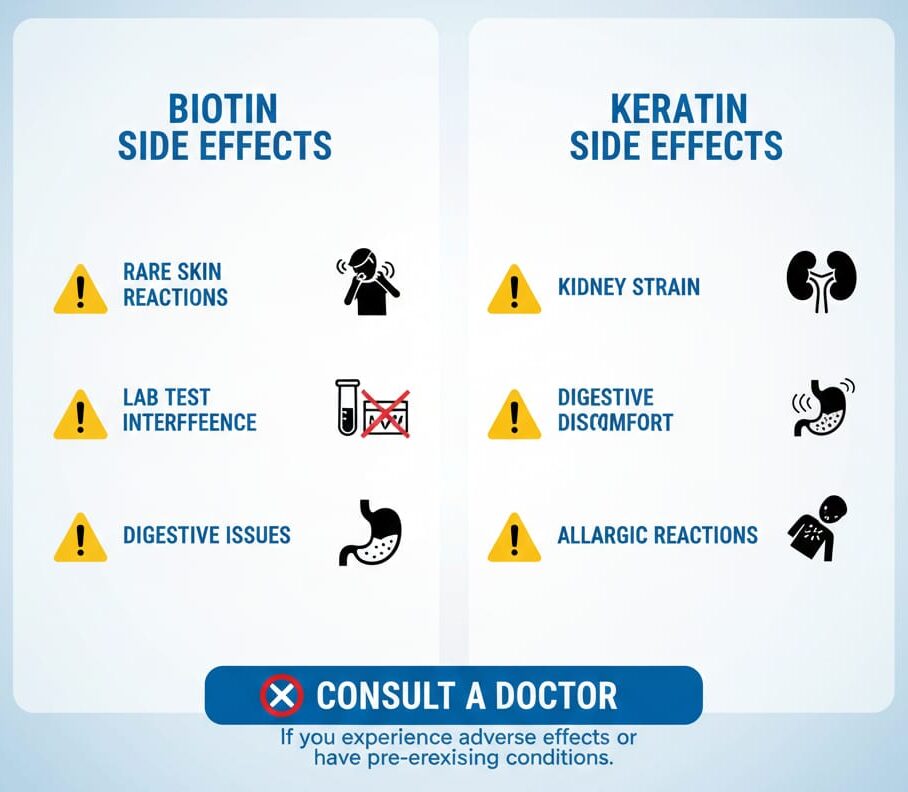
Through our wellness education work and consultation with medical professionals, we’ve identified these potential side effects:
Biotin Side Effects
- Skin rashes or acne (rare, usually from very high doses)
- Digestive issues including nausea or cramping
- Lab test interference affecting thyroid and hormone panels
- Vitamin B5 absorption disruption at extremely high doses
⚠️ Medical alert: If you’re scheduled for blood work, inform your healthcare provider about biotin supplementation at least 72 hours before testing.
Keratin Side Effects
- Kidney strain from excessive protein intake
- Digestive discomfort when taking high doses
- Allergic reactions in sensitive individuals
- Formaldehyde exposure in some salon treatments (choose formaldehyde-free)
Best Food Sources for Natural Support
As wellness educators specializing in nutritional approaches to beauty, we always recommend food-first strategies whenever possible.
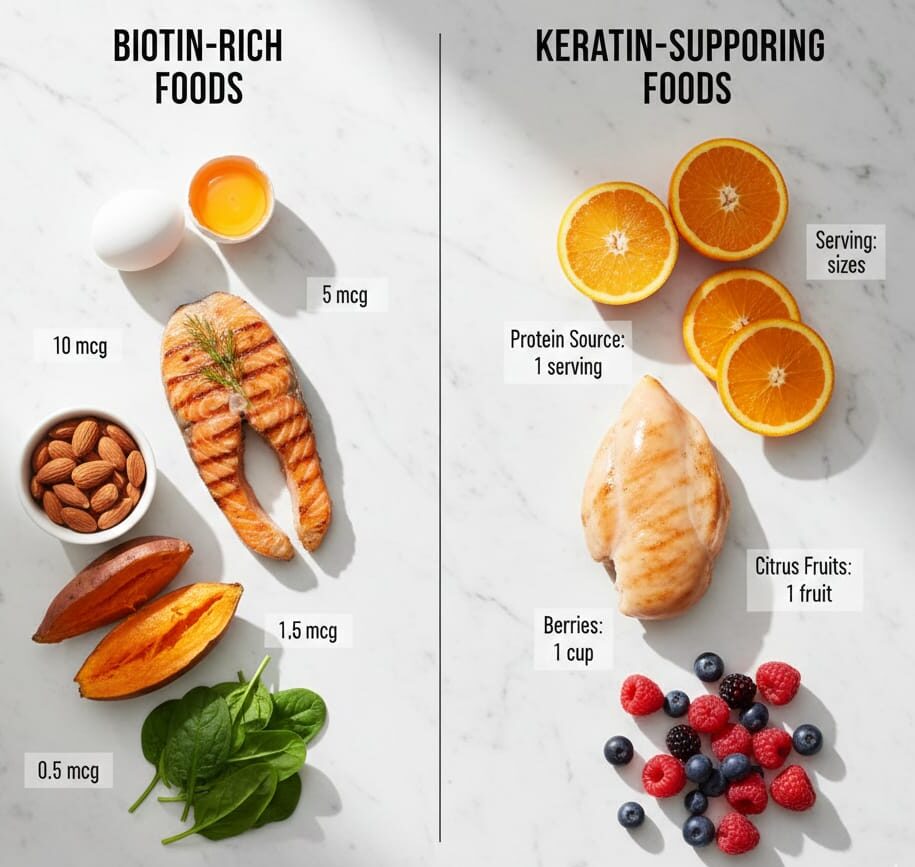
Biotin-Rich Foods
- Egg yolks (13-25 mcg per large egg)
- Almonds and peanuts (1.5 mcg per ounce)
- Sweet potatoes (2.4 mcg per half cup)
- Salmon (4-5 mcg per 3-ounce serving)
- Nutritional yeast (21 mcg per tablespoon)
For more biotin-rich options, check out our evidence-based guide on vegan foods high in biotin for hair.
Keratin-Supporting Foods
- Eggs (complete protein source)
- Chicken and fish (high-quality protein)
- Citrus fruits (vitamin C aids keratin production)
- Leafy greens (kale, spinach)
- Berries (antioxidants protect keratin structure)
Eating these foods regularly helps maintain optimal levels of both nutrients. Learn more about biotin absorption from different food sources in our research-backed post on biotin in eggs raw vs cooked.
Which Should You Choose? Professional Guidance
Your choice between biotin vs keratin supplements depends on your specific hair concerns and health status. Based on our professional experience and consultation with dermatologists, here’s our guidance:
Choose biotin if you:
- Experience unexplained hair thinning or excessive shedding
- Have brittle nails alongside hair issues (learn more in our expert guide on biotin for brittle nails)
- Follow a restrictive diet lacking biotin-rich foods
- Want to support overall hair, skin, and nail health
Choose keratin if you:
- Deal with damaged, frizzy, or chemically-treated hair
- Experience frequent breakage preventing length retention
- Want smoother, more manageable hair
- Need external hair shaft reinforcement
Choose both if you:
- Want comprehensive hair support from multiple angles
- Have both growth and breakage concerns
- Seek maximum hair health benefits
- Can afford combination supplementation (with medical approval)
Our professional recommendation: Schedule a consultation with a dermatologist or registered dietitian for personalized assessment before starting any supplement regimen.
Frequently Asked Questions
Can biotin cause hair loss?
No, biotin does not cause hair loss according to scientific literature. However, discontinuing biotin supplements after long-term use may reveal underlying hair loss that was temporarily masked by the vitamin’s strengthening effects.
How long do keratin treatments last?
Professional salon keratin treatments typically last 3-6 months, depending on hair care routines and product quality. At-home keratin products offer shorter-lasting results of 2-4 weeks.
Is biotin safe during pregnancy?
Yes, biotin is safe during pregnancy at recommended doses of 30-100 mcg daily according to prenatal nutrition guidelines. Pregnant women often need higher biotin levels due to increased metabolic demands. Always consult your obstetrician or healthcare provider before starting any supplement during pregnancy.
Can I use keratin shampoo with biotin supplements?
Absolutely. Using keratin-infused shampoos and conditioners alongside biotin supplements provides comprehensive hair support. The topical keratin strengthens hair externally while biotin supports internal production.
Do biotin gummies work as well as pills?
Biotin gummies and pills both deliver the vitamin effectively when they contain adequate dosages. Absorption rates are comparable according to pharmaceutical research. Choose based on personal preference and convenience. The key is consistent daily intake at appropriate dosages.
Will keratin supplements help with male pattern baldness?
No, keratin supplements cannot reverse male pattern baldness (androgenetic alopecia), which is caused by hormonal and genetic factors. FDA-approved treatments like minoxidil and finasteride are more effective for this condition. Consult a dermatologist for evidence-based hair loss treatments.
Can I stop taking biotin once my hair improves?
If your hair improvement resulted from correcting a biotin deficiency, you can typically maintain results through diet alone. However, if you have ongoing deficiency risk factors, continued supplementation may be necessary.
Are there vegan keratin supplements?
Yes, vegan keratin supplements derived from plant-based amino acids are available. These contain the same amino acid building blocks found in animal-derived keratin. Quality varies by manufacturer, so choose reputable brands with third-party testing certification.
What is the difference between biotin and keratin?
Biotin is a water-soluble vitamin (B7) that helps your body produce keratin internally, while keratin is a structural protein that makes up 90% of your hair. Biotin works from inside out through metabolism, while keratin supplements provide the protein directly to strengthen hair externally.
How much biotin should I take daily for hair growth?
The recommended biotin dosage for hair health is 30-100 micrograms daily for adults. Higher doses of 5,000-10,000 mcg are available but should only be used under medical supervision. Most people get adequate biotin from diet alone through eggs, nuts, and leafy greens.
Does biotin help hair grow faster?
Biotin doesn’t make hair grow faster than your genetic potential, but it can reduce shedding and strengthen new growth if you’re biotin-deficient. You may notice reduced hair loss within 6-8 weeks and stronger regrowth by 3-4 months of consistent supplementation.
Conclusion: Making an Informed Decision
The biotin vs keratin supplements debate doesn’t require choosing one over the other. Both nutrients play crucial roles in hair health through different mechanisms. Biotin supports your body’s natural keratin production and metabolic processes, making it ideal for addressing deficiency-related hair thinning. Keratin directly reinforces hair structure, reducing breakage and improving manageability.
Remember that consistent use over 3-6 months is key to seeing visible improvements. If hair loss persists despite supplementation, consult a healthcare professional or dermatologist to rule out underlying medical conditions like thyroid disorders, hormonal imbalances, or autoimmune issues.
Related Reads: Complete Your Hair Health Knowledge
📌 Biotin Side Effects: Does Biotin Cause Acne & Breakouts?
Thinking about taking biotin supplements? Learn about the hidden side effects many people don’t talk about, including acne breakouts, digestive issues, and lab test interference. Discover safe dosage limits and how to prevent unwanted reactions before they happen. Don’t start supplementing without reading this first.
📌 Biotin Deficiency in Vegans: Signs, Sources & Prevention Guide
Are you getting enough biotin from your plant-based diet? This comprehensive guide reveals the warning signs of biotin deficiency, the best vegan food sources, and exactly how much you need daily. Perfect for anyone following a vegan or vegetarian lifestyle who wants to maintain healthy hair, skin, and nails naturally. Your complete prevention roadmap is here.
About the Author: At Well Infinity, I am Saima Hussain, wellness educator passionate about evidence-based approaches to women’s health. Our content is developed through extensive research and consultation with medical professionals. I prioritize your safety and well-being above all else.
Medical Disclaimer: This article is for informational purposes only and does not constitute medical advice. Always consult with qualified healthcare professionals before starting any supplement regimen, especially if you have underlying health conditions, are pregnant, or take medications. Individual results may vary.