
Can Biotin Affect Thyroid Test Results? What You Need to Know
Consuming biotin for hair , nail or skin can have adverse or unexpected risks as it can interfere with biotin test results. This guide explains exactly how biotin affect thyroid test results and what you need to do to get accurate results.
According to the FDA’s official alert, biotin interference has resulted in at least one death from a falsely normal troponin test result. The agency emphasizes that patients should inform their doctors about all supplements before any laboratory testing
What Is Biotin and Why Do People Take It?
Biotin is vitamin B7, a water-soluble nutrient your body needs to convert food into energy. It helps break down carbohydrates, fats, and proteins while supporting healthy hair, skin, and nails.
Most people get enough biotin from food sources like eggs, nuts, salmon, and sweet potatoes. The recommended daily intake is just 30 micrograms for adults. However, beauty supplements often contain 5,000 to 10,000 micrograms, which is 167 to 333 times higher than what your body actually needs.
People take high-dose biotin supplements hoping to:
- Grow hair faster or thicker
- Strengthen brittle nails
- Improve skin texture
- Boost energy levels
- Support metabolism
While biotin side effects are generally mild, the interference with medical tests poses a serious health risk that many users don’t know about.
Can Biotin Affect Thyroid Test Results?
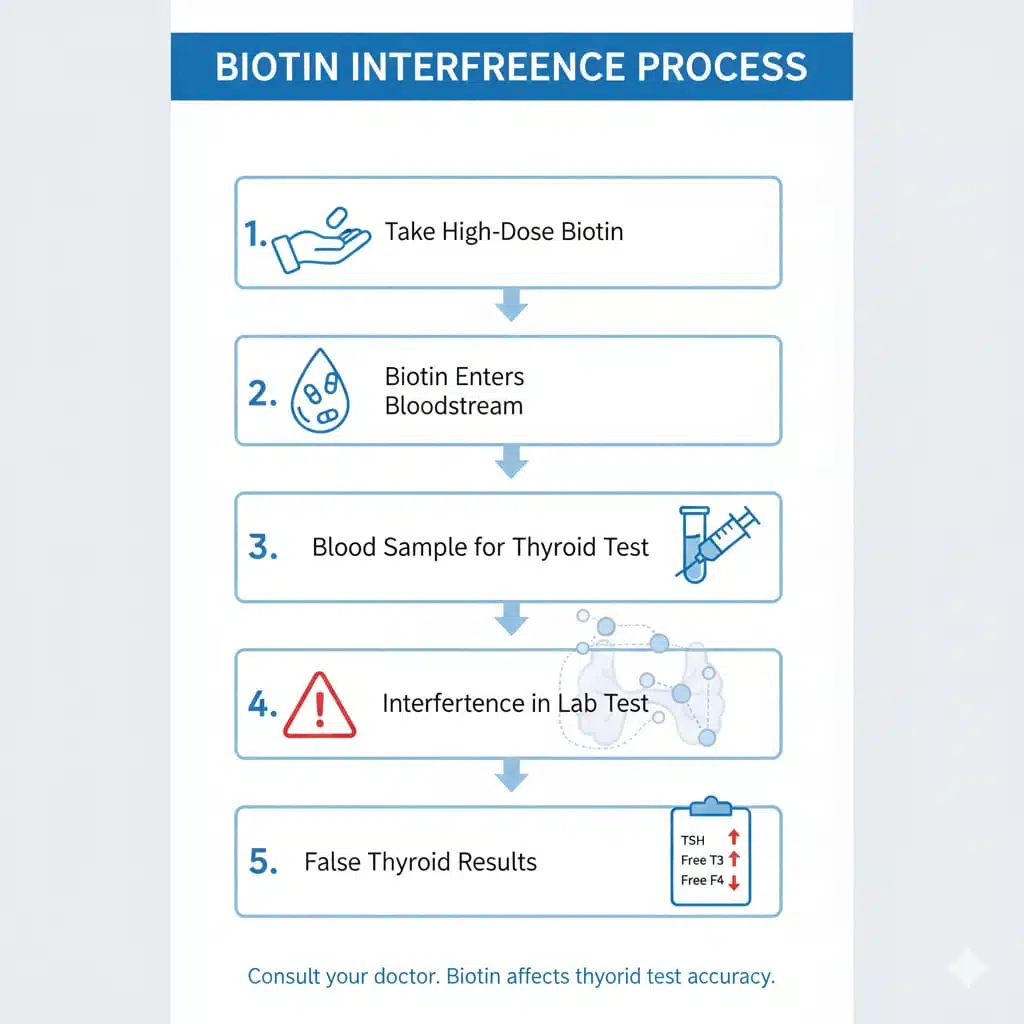
Yes, biotin can affect thyroid test results significantly. High doses of biotin interfere with the laboratory methods used to measure thyroid hormones, creating false readings that can lead to incorrect diagnosis and treatment.
Research published in medical journals shows that biotin interference can cause:
- Falsely low TSH levels: Makes you appear hyperthyroid when you’re not
- Falsely elevated T3 and T4: Shows excess thyroid hormone production
- Incorrect antibody readings: Affects autoimmune thyroid disease diagnosis
- Misdiagnosis of Graves’ disease: Mimics the pattern of overactive thyroid
The U.S. Food and Drug Administration (FDA) issued a safety communication in 2019 warning healthcare providers and patients about biotin interference with lab tests.
How Does Biotin Interfere with Thyroid Labs?
Here’s the problem: When you take high-dose biotin supplements, the excess biotin in your bloodstream competes with the biotin used in the test system. This competition disrupts the binding process and produces false readings.
The interference creates two types of errors:
- Competitive binding issues: Excess biotin blocks the test biotin from attaching properly
- Signal disruption: High biotin levels interfere with the detection mechanism
The result depends on the specific test design. Some show falsely high hormone levels while others show falsely low readings. For thyroid tests specifically, you typically see falsely low TSH combined with falsely elevated T3 and T4, which mimics hyperthyroidism.
Studies show that biotin levels above 10 nanograms per milliliter start causing interference. People taking 5,000 to 10,000 microgram supplements often have blood biotin levels 10 to 40 times higher than this threshold.
What Thyroid Tests Are Affected by Biotin?
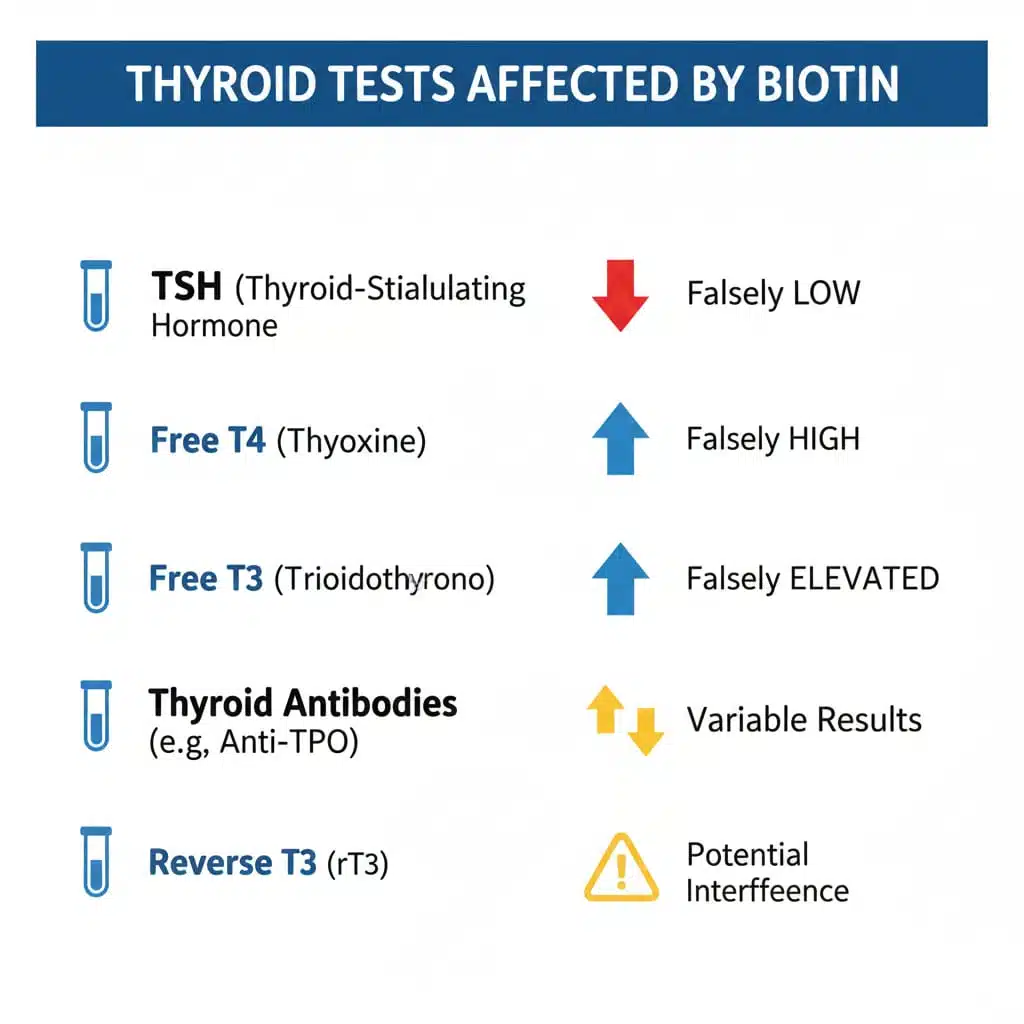
Biotin interferes with nearly all common thyroid function tests used in medical practice today.
Tests showing significant biotin interference:
TSH (Thyroid Stimulating Hormone)
- Most commonly affected test
- Usually shows falsely LOW results
- Can make normal thyroid function look like hyperthyroidism
- Critical for diagnosing both hypo and hyperthyroidism
Free T4 (Thyroxine)
- Often shows falsely ELEVATED results
- Makes thyroid hormone levels appear higher than actual
- Used to confirm TSH abnormalities
Free T3 (Triiodothyronine)
- Typically shows falsely HIGH readings
- Can suggest excess thyroid hormone production
- Important for diagnosing hyperthyroidism
Thyroid Antibodies
- Anti-TPO and anti-thyroglobulin tests affected
- Results may be falsely elevated or decreased
- Critical for diagnosing Hashimoto’s and Graves’ disease
Reverse T3
- Shows interference in some lab systems
- Affects assessment of thyroid hormone conversion
How Much Biotin Causes Test Interference?
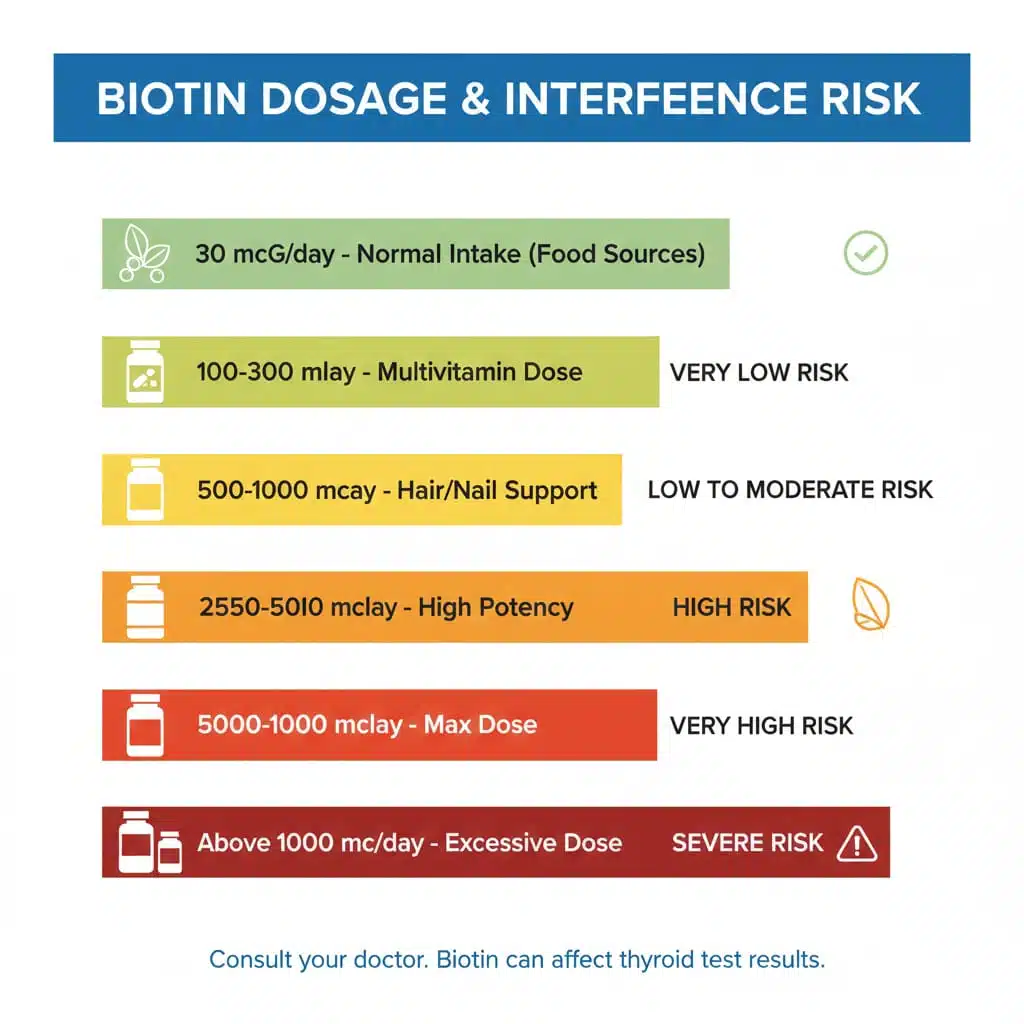
The amount of biotin that causes thyroid test interference is much lower than most people think.
Research shows interference begins at surprisingly modest doses:
| Biotin Dosage | Interference Risk Level | Common Sources |
| 30 mcg/day (Adequate Intake) | None | Food sources (eggs, nuts, salmon) |
| 100-300 mcg/day | Very Low | Low-dose supplements, multivitamins |
| 500-1,000 mcg/day | Low to Moderate | Some beauty supplements |
| 2,500-5,000 mcg/day | High | Standard hair/nail supplements |
| 5,000-10,000 mcg/day | Very High | Most beauty supplements |
| Above 10,000 mcg/day | Severe | High-dose hair loss formulas |
Most beauty and hair growth supplements contain 5,000 to 10,000 micrograms per serving. Some formulas marketed for severe hair loss contain 30,000 micrograms or more. All of these doses carry substantial risk for thyroid test interference.
If you’re wondering about how much biotin should I take daily, the answer for most people is simply getting it from food sources rather than high-dose supplements.
How Long to Stop Biotin Before Thyroid Test
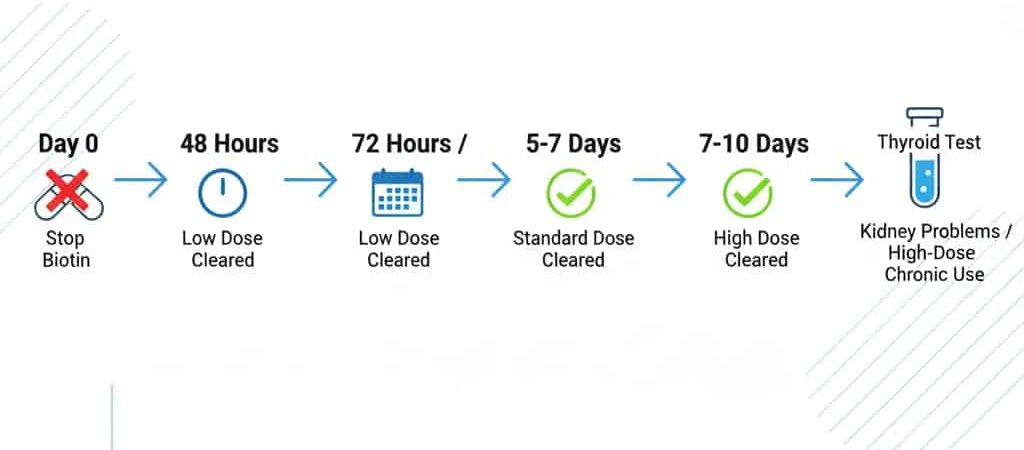
Breakdown by dosage:
- Minimum 48 hours: For low doses under 1,000 mcg
- 72 hours (3 days): Standard recommendation for most supplements
- 5-7 days: For high doses above 5,000 mcg
- 7-10 days: For very high doses or people with kidney problems
The 72-hour window works for most people because biotin is water-soluble and your kidneys eliminate it fairly quickly. However, individual variation exists based on several factors:
Some medical organizations recommend stopping biotin for at least 8 hours before testing, but this short timeframe doesn’t allow complete clearance for people taking high doses. The safer approach is stopping 3 to 7 days before any blood work.
Important steps before testing:
- Tell your doctor you’re taking biotin supplements
- Provide the exact dose you’re taking
- Stop supplements for the recommended time period
- Don’t restart until after your blood draw
- Ask if your lab uses biotin-free testing methods
Who Is at Highest Risk for Biotin-Thyroid Test Issues?
High-risk groups:
People with existing thyroid conditions
- Regular monitoring means more frequent testing
- Changes in results might trigger medication adjustments
- Biotin can hide true changes in thyroid function
Women with PCOS or hormonal imbalances
- Often take biotin for hair loss from hormonal issues
- Require hormone testing including thyroid panels
- Risk of biotin affecting hormone tests
Patients on thyroid medication
- Need regular TSH monitoring to adjust doses
- Biotin interference can lead to incorrect dose changes
- May result in undertreatment or overtreatment
People taking multiple supplements
- Hair, skin, and nail formulas often contain high biotin
- May not realize how much biotin they’re consuming
- Risk of cumulative effects from multiple products
Individuals with kidney disease
- Slower biotin elimination from the body
- Higher blood levels persist longer
- Need extended washout period before testing
Those preparing for surgery
- Preoperative testing includes thyroid and cardiac markers
- Biotin interference can delay necessary procedures
- May affect surgical risk assessment
If you fall into any high-risk category, consider avoiding high-dose biotin supplements entirely or use them only under medical supervision with awareness of testing implications.
Alternatives to High-Dose Biotin Supplements
You don’t need to risk test interference to support hair, skin, and nail health. Several effective alternatives exist that don’t interfere with medical testing.
Safe biotin sources:
Food-based biotin intake
- Eggs provide 10 mcg per whole egg
- Salmon offers 5 mcg per 3-ounce serving
- Almonds contain 1.5 mcg per quarter cup
- Sweet potatoes have 2.4 mcg per half cup
- No risk of test interference at dietary levels
Lower dose supplements
- Choose products with 30 to 300 mcg maximum
- Closer to actual nutritional needs
- Minimal test interference risk
- Still supports normal biotin function
Alternative supplements for hair and nails
- Collagen peptides: Support hair structure without test interference
- Silica: Strengthens hair and nails naturally
- Omega-3 fatty acids: Reduce inflammation supporting scalp health
- Zinc: Supports hair growth and immune function
- Vitamin D: Many people are deficient, important for hair follicles
- Iron: Common deficiency causing hair loss in women
For thyroid-specific support, consider herbs for thyroid health that work through different mechanisms than biotin.
Lifestyle approaches:
- Balanced diet with adequate protein
- Proper hydration for nutrient transport
- Stress management affecting hair health
- Adequate sleep for hormone regulation
- Gentle hair care practices
- Scalp massage improving circulation
Most people who think they need high-dose biotin actually need to address underlying causes of hair loss like nutrient deficiencies, hormonal imbalances, stress, or harsh hair treatments.
Key Takeaways
- High-dose biotin supplements interfere with thyroid blood tests, causing false results that can lead to misdiagnosis
- Biotin affects TSH, T3, T4, and thyroid antibody tests by disrupting the laboratory testing process
- Supplements containing 5,000 mcg or more create high risk for significant test interference
- Stop biotin for 3 to 7 days before any thyroid testing to ensure accurate results
- Always tell your doctor about biotin supplements before blood work
- Most people don’t need high-dose biotin and can get adequate amounts from food
- Alternatives like collagen, omega-3s, and zinc support hair health without testing risks
FAQ
How long should I stop taking biotin before a thyroid test?
Stop biotin for at least 72 hours (3 days) before thyroid testing. For high doses above 5,000 mcg, stop for 5 to 7 days. People with kidney problems should stop for 7 to 10 days since biotin clears more slowly from their system.
Can biotin cause false high thyroid levels?
Yes, biotin typically causes falsely elevated T3 and T4 thyroid hormone levels while showing falsely low TSH. This pattern mimics hyperthyroidism or Graves’ disease and can lead to unnecessary treatment with antithyroid medications.
Does biotin affect TSH test results?
Biotin significantly affects TSH tests, usually causing falsely low readings. This makes normal thyroid function appear like hyperthyroidism. The interference happens because biotin disrupts the laboratory method used to measure TSH in your blood.
How much biotin interferes with thyroid tests?
Biotin doses above 5,000 mcg create high risk for thyroid test interference. Even moderate doses of 1,000 to 2,500 mcg can cause problems in some people. Most beauty supplements contain 5,000 to 10,000 mcg per serving.
Can biotin make me look hyperthyroid?
Yes, biotin interference typically creates a pattern of falsely low TSH with falsely elevated thyroid hormones. This matches the lab pattern seen in hyperthyroidism or Graves’ disease, potentially leading doctors to diagnose overactive thyroid when you don’t have it.
Should I tell my doctor I’m taking biotin?
Always tell your doctor about biotin supplements before any blood testing. Provide the exact dose and how long you’ve been taking it. This information helps your doctor interpret results correctly and decide if retesting is needed.
What happens if I don’t stop biotin before thyroid testing?
If you don’t stop biotin before testing, your results will likely be inaccurate. This can lead to misdiagnosis, unnecessary medications, incorrect dose adjustments of thyroid medication, or missed diagnosis of actual thyroid problems requiring treatment.
Does biotin affect thyroid medication absorption?
No, biotin doesn’t affect how your body absorbs thyroid medication like levothyroxine. The problem is biotin interferes with blood tests used to monitor your thyroid medication, which can lead to incorrect dose adjustments based on false test results.
Can biotin cause abnormal thyroid test results?
Yes, biotin commonly causes abnormal thyroid test results even when your thyroid function is completely normal. The interference happens at the laboratory level during the testing process, not from actual effects on your thyroid gland.
Are there biotin supplements that don’t interfere with tests?
No biotin supplement is immune to causing test interference. The interference depends on the amount of biotin in your bloodstream, not the supplement brand or form. Lower doses under 300 mcg create minimal risk compared to high-dose products.
Conclusion
Understanding how biotin affect thyroid test results can help in avoiding unnecessary medical changes and misdiagnosis. Getting biotin from biotin-rich food sources is always a safe and better option as it never interferes with test results. Considering safer alternatives is a healthy choice for which your body will thank you.
Related Reading
Biotin for PCOS: Does It Help or Make It Worse?
Discover how biotin supplements affect women with PCOS and whether high doses can interfere with hormone testing and treatment.
Biotin vs Collagen: Which Is Better for Hair and Nails?
Compare biotin and collagen supplements to find which one delivers better results for hair growth and nail strength without testing interference.
Top 15 Biotin-Rich Foods for Hair Growth Naturally
Get biotin from natural food sources instead of high-dose supplements to support hair growth without risking thyroid test interference.
Best Time to Take Biotin: Morning vs Night
Learn the optimal timing for biotin supplementation and how to schedule it around medical testing to avoid lab result interference.
Biotin for Postpartum Hair Loss: What New Moms Should Know
Understand how biotin affects postpartum hair recovery and what new mothers should consider before taking supplements during thyroid testing.
Biotin for Women Over 40: Menopause and Hair Loss
Explore how biotin supplementation works for menopausal hair loss and why women over 40 need to be especially careful with thyroid monitoring.
Is Biotin Safe for Teenagers? Parents’ Guide
Find out if biotin supplements are safe for teens and what parents should know about dosing and potential medical test interference.