
How Much Biotin Should I Take Daily? Complete Dosage Guide
Confused about how much biotin should I take daily? The truth is, most people don’t need high-dose biotin supplements at all. Understanding the recommended daily biotin intake by age and your individual needs can help you avoid unnecessary supplementation while ensuring optimal hair, nail, and metabolic health.
This complete guide breaks down exactly how much biotin you need, who requires more, and when supplements actually make sense.
What Is Biotin and Why Do You Need It?

Biotin, also known as vitamin B7 or vitamin H, is a water-soluble B vitamin that plays essential roles throughout your body. As a coenzyme, biotin assists in breaking down macronutrients carbohydrates, fats, and proteins into usable energy for your cells.
Beyond energy metabolism, biotin supports:
- Keratin production: The structural protein forming hair, skin, and nails
- Cell signaling: How cells communicate with substances inside and outside
- Gene regulation: How DNA responds to environmental changes
- Nervous system function: Myelin sheath formation around nerves
- Blood sugar regulation: May help improve glucose metabolism in type 2 diabetes
The name “biotin” derives from the Greek word “biotos,” meaning “life” or “sustenance”—a fitting description for this vital nutrient. According to research from the National Institutes of Health, biotin deficiency is rare in people consuming varied diets, but certain conditions increase requirements significantly.
Recommended Daily Biotin Dosage by Age
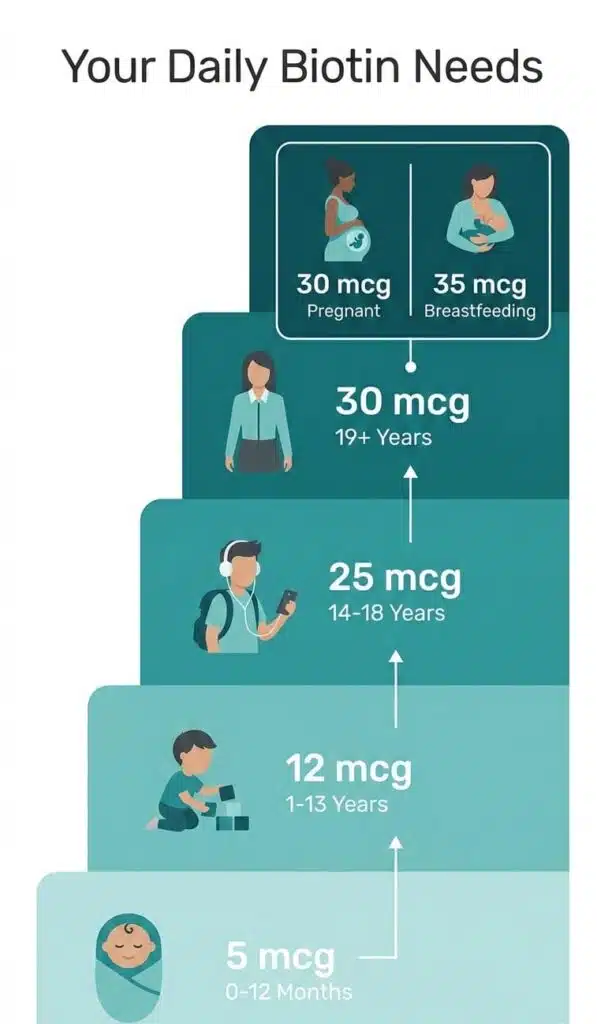
Unlike many vitamins, biotin doesn’t have an established Recommended Dietary Allowance (RDA). Instead, the Food and Nutrition Board set Adequate Intake (AI) levels based on average biotin consumption in healthy populations. These represent the minimum biotin intake needed daily to prevent deficiency:
| Age Group | Adequate Intake (AI) |
|---|---|
| Birth to 6 months | 5 mcg |
| 7-12 months | 6 mcg |
| 1-3 years | 8 mcg |
| 4-8 years | 12 mcg |
| 9-13 years | 20 mcg |
| 14-18 years | 25 mcg |
| Adults 19+ years | 30 mcg |
| Pregnant women | 30 mcg |
| Breastfeeding women | 35 mcg |
These amounts represent the safe daily biotin dosage for adults and children when obtained through diet.
How Much Biotin Per Day for Hair Growth?
One of the most common questions is: “how much biotin do I need for hair growth?” The answer may surprise you. The same 30 mcg daily that supports overall health also supports normal hair growth.
Here’s what the science actually shows about biotin dosage for hair loss prevention:
- No evidence supports megadoses: Taking 5,000-10,000 mcg won’t accelerate growth beyond your genetic potential
- Deficiency correction helps: If true biotin deficiency causes hair loss, supplementation restores normal growth
- Most hair loss isn’t biotin-related: Genetics, hormones, stress, and hormonal balance and hair health issues cause most cases
- Research used 2.5 mg (2,500 mcg): Studies on brittle nails used this dose for 6 months, with improvement
The best biotin dosage for hair thickness is simply meeting your daily AI of 30 mcg through diet. If you have diagnosed with biotin deficiency causing hair issues, your healthcare provider may recommend 2.5 mg (2,500 mcg) daily but this should only be taken under medical supervision.
Can You Get Enough Biotin from Food Alone?
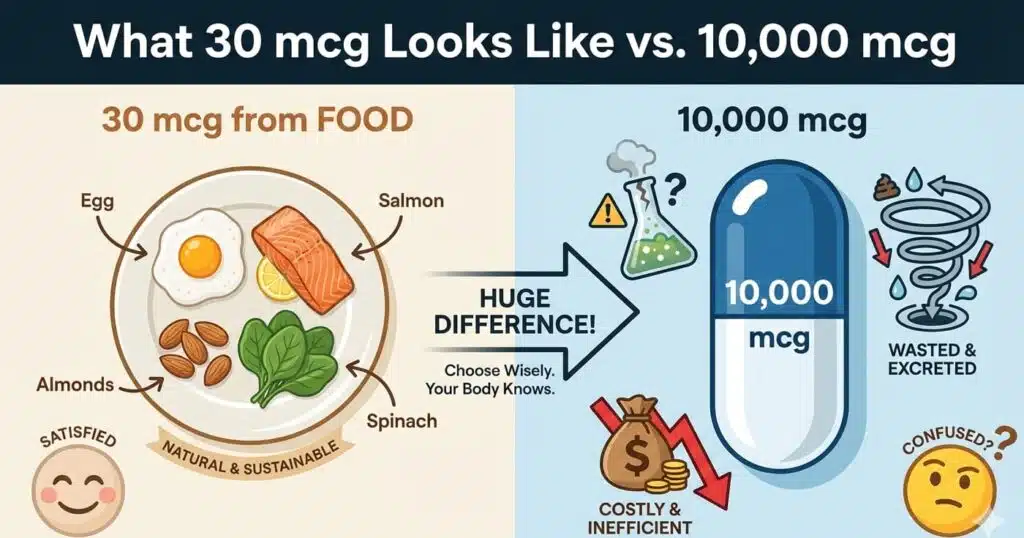
Absolutely! Understanding how to get enough biotin without supplements is simpler than you think. A varied diet naturally provides adequate biotin through common foods:
High-biotin foods and their content:
- Beef liver (3 oz): 31 mcg (103% AI) – exceeds daily needs in one serving
- Egg (1 whole): 10 mcg (33% AI) – cook thoroughly for best absorption
- Salmon (3 oz): 5 mcg (17% AI) – plus omega-3 fatty acids
- Sunflower seeds (1/4 cup): 2.6 mcg (9% AI) – portable snack option
- Sweet potato (1/2 cup): 2.4 mcg (8% AI) – with beta-carotene
- Almonds (1/4 cup): 1.5 mcg (5% AI) – healthy fats included
- Spinach (1/2 cup cooked): 0.5 mcg (2% AI) – iron and folate bonus
A simple example: Eating two eggs (20 mcg) plus a handful of almonds (1.5 mcg) and a sweet potato (2.4 mcg) provides 23.9 mcg—nearly 80% of your daily needs. Add salmon for dinner, and you’ve exceeded 30 mcg easily.
Your gut bacteria also produce small amounts of biotin, contributing to your daily supply. This is why true biotin deficiency remains extremely rare in developed countries where people eat varied diets.
Who Needs More Biotin Than the Standard Dose?
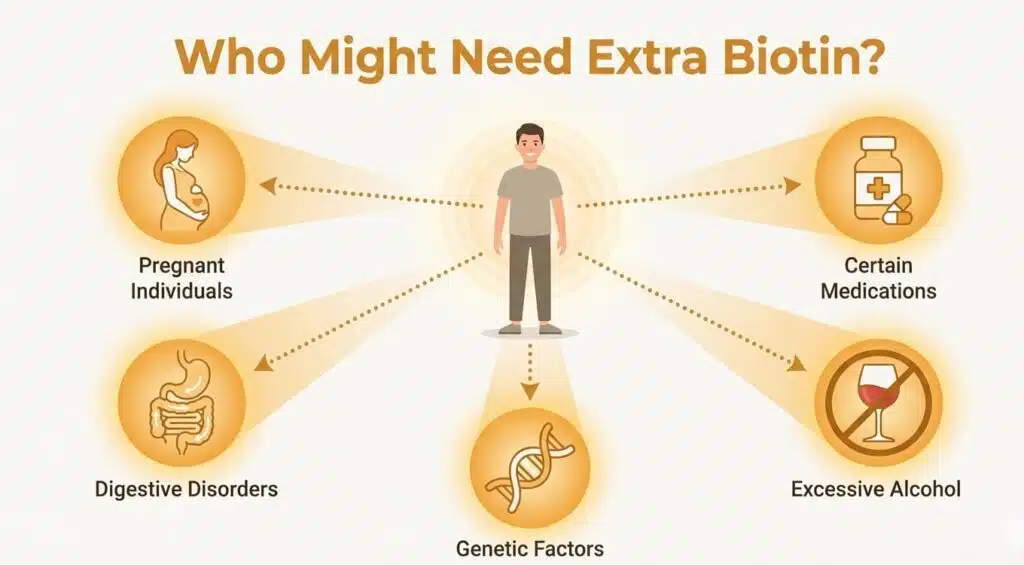
While 30 mcg suffices for most adults, certain groups face higher deficiency risk and may need additional biotin. Understanding when to take biotin supplements safely starts with recognizing these risk factors:
Groups requiring increased biotin intake:
- Pregnant and breastfeeding women: Up to one-third develop subclinical deficiency despite adequate intake; requires 30-35 mcg daily minimum
- People with biotinidase deficiency: Rare genetic disorder preventing biotin processing; requires lifelong supplementation under medical care
- Individuals on long-term anticonvulsants: Anti-seizure medications reduce biotin absorption; may need supplementation
- Those with alcohol use disorder: Chronic alcohol blocks biotin absorption across intestinal walls
- People with digestive disorders: Crohn’s disease, celiac, and inflammatory bowel conditions impair nutrient absorption
- Kidney dialysis patients: Dialysis removes water-soluble vitamins including biotin
- Those consuming raw egg whites regularly: Avidin protein in raw whites binds biotin and prevents absorption
If you fall into any category above, consult your healthcare provider about appropriate supplementation. They may recommend blood testing to confirm deficiency before starting supplements, or monitor your biotin and PCOS status if you have hormonal concerns.
Is 10,000 mcg of Biotin Too Much Daily?
Many people wonder “is 10000 mcg biotin safe to take daily?” and “what happens if I take too much biotin?” Here’s what you need to know about maximum safe biotin dosage limits:
No established upper limit exists: The Food and Nutrition Board hasn’t set a Tolerable Upper Intake Level (UL) for biotin because no toxic effects have been documented even at very high doses.
Studies show safety at extreme doses: Research has tested up to 300 mg (300,000 mcg) daily for multiple sclerosis patients without adverse effects—that’s 10,000 times the AI recommendation.
However, megadoses create serious problems:
- Lab test interference: High biotin levels skew thyroid function tests, cardiac markers, hormone panels, and troponin levels
- Misdiagnosis risk: False results can lead to unnecessary medical treatment or missing real conditions
- Potential acne breakouts: Some individuals develop potential biotin side effects, including acne, at high doses
- Waste of money: Your body excretes excess water-soluble biotin through urine, you literally flush the excess away
The safe biotin supplement dosage for hair and nails is typically 30-2,500 mcg (2.5 mg) daily. Anything above 2,500 mcg offers no additional benefit while increasing lab test interference risk. If you’re taking 10,000 mcg, you’re consuming 333 times the amount your body actually needs.
Best Time to Take Biotin Supplements
If your healthcare provider recommends supplementation, you might wonder about the optimal time to take biotin, morning or night. Good news: timing doesn’t significantly affect absorption.
General guidelines for biotin supplement timing:
- Morning with breakfast: Many prefer this to establish a routine
- Evening before bed: Works equally well for absorption
- With or without food: Biotin absorbs well either way, unlike fat-soluble vitamins
- Consistency matters most: Take at the same time daily for best results
The most important factor isn’t timing, it’s consistency. Choose whatever time you’re most likely to remember and stick with it.
One critical warning: If you have upcoming blood tests scheduled, inform your healthcare provider about biotin supplementation. They may ask you to stop taking biotin 3-7 days before testing to avoid interference with results.
Signs You Might Need More Biotin
True biotin deficiency is rare, but recognizing the signs helps you seek appropriate care. Common symptoms of low biotin levels include:
Hair and skin changes:
- Thinning hair or excessive shedding beyond normal (50-100 hairs daily)
- Hair loss in unusual patterns
- Red, scaly rash around eyes, nose, mouth, and genital area
- Dry, flaky skin despite adequate hydration
Nail problems:
- Brittle nails that crack, peel, or split easily
- Vertical ridges running down nail surface
- Slow nail growth compared to historical patterns
Neurological symptoms:
- Tingling or numbness in hands and feet (peripheral neuropathy)
- Muscle pain and weakness
- Coordination difficulties
Mental health changes:
- Depression or mood instability
- Fatigue unrelated to sleep quality
- Confusion or difficulty concentrating
If you experience multiple symptoms, consult your healthcare provider for proper testing. Don’t self-diagnose and start high-dose supplements without medical guidance.
Please go through our guide for in-depth information on Biotin for Hair Growth
Biotin Supplements vs Food Sources
When considering biotin from food vs supplements, whole foods offer distinct advantages for most people:
Why food sources are superior:
- Complete nutrition package: Foods provide biotin plus complementary nutrients like protein, healthy fats, and other vitamins
- Better absorption: Food-based biotin comes with natural cofactors enhancing utilization
- No lab test interference: Dietary biotin doesn’t reach the extreme levels that skew blood tests
- Cost-effective: Buying nutrient-dense whole foods costs less than quality supplements
- Sustainable long-term: Building healthy eating habits serves your entire body, not just one nutrient
When supplements make sense:
- Diagnosed with biotin deficiency, confirmed by blood testing
- Medical conditions preventing adequate absorption
- Pregnancy or breastfeeding with inadequate dietary intake
- Long-term medication use is interfering with biotin metabolism
- Biotinidase deficiency or other genetic conditions
Frequently Asked Questions About Biotin Dosage
How much biotin is safe to take daily for hair growth?
The safe amount is 30-2,500 mcg (2.5 mg) daily. While studies on brittle nails used 2,500 mcg, the standard 30 mcg adequate intake supports normal hair growth for most people. Higher doses don’t accelerate growth beyond your genetic potential and may interfere with lab tests.
Can I take 5000 mcg of biotin every day?
Yes, 5,000 mcg is considered safe with no known toxicity. However, this dose is 167 times the adequate intake and offers no proven benefits over lower amounts.
How long does it take for biotin to work?
When correcting a true deficiency, expect 3-6 months for visible hair and nail improvement. Hair grows approximately 0.5 inches monthly, so new growth must replace damaged strands. If you’re not deficient, biotin won’t produce noticeable changes regardless of dose or duration.
Should I take biotin in the morning or at night?
Either time works equally well—biotin absorption doesn’t depend on timing. Take it whenever you’re most likely to remember consistently. Whether morning with breakfast or evening before bed, consistency matters more.
What are the symptoms of taking too much biotin?
Biotin has no known toxicity symptoms even at extremely high doses. The primary risk is interference with lab tests measuring thyroid function, cardiac markers, and hormone levels, potentially leading to misdiagnosis. Some people report acne breakouts at very high doses (10,000+ mcg).
Do you need to take biotin supplements if you eat a balanced diet?
No, most people don’t need supplements. A varied diet including eggs, nuts, fish, and vegetables easily provides 30 mcg daily. Only those with diagnosed deficiency, certain medical conditions, medication interactions, or pregnancy/breastfeeding with inadequate intake require supplementation.
How much biotin should pregnant women take daily?
Pregnant women need 30 mcg daily, the same as non-pregnant adults. Breastfeeding women require slightly more at 35 mcg daily. Consult your healthcare provider about the appropriate biotin dosage during pregnancy. Please read our complete guide on
Biotin During Pregnancy: Is It Safe?
Can biotin supplements cause weight gain or other side effects?
No evidence links biotin to weight gain. Side effects are extremely rare at recommended doses. The main concerns are lab test interference at high doses and potential acne in some individuals. Biotin is water-soluble; excess is excreted through urine rather than building up in your body.
Read more at Does Biotin Cause Acne? Biotin Side Effects(2025 Guide)
Conclusion
Understanding how much biotin should I take daily comes down to simple facts: most adults need just 30 mcg from food sources. The recommended biotin intake by age ranges from 5 mcg for infants to 35 mcg for breastfeeding women, amounts easily achieved through varied, whole-food diets.
Before purchasing high-dose biotin supplements, honestly evaluate your diet and risk factors. Are you eating eggs, nuts, fish, and vegetables regularly? Do you have a medical condition or take medications affecting biotin absorption? Have you been diagnosed with actual deficiency through blood testing? For most people, the answer to supplementation is improving dietary choices rather than adding pills.
If you suspect deficiency or fall into a higher-risk category, consult your healthcare provider for proper testing and guidance. The safe daily biotin dosage for adults is 30-2,500 mcg when needed—not the 10,000 mcg megadoses marketed aggressively for hair growth. Focus on sustainable nutrition habits that support your entire body, and your hair, nails, and overall health will benefit naturally.