How to Get Rid of Dry Cuticles Fast: 10 Remedies That Actually Work
For two winters in a row, my cuticles cracked so badly they bled every time I bent my fingers.
I tried every hand lotion available. Nothing worked. It was only after researching the actual science that I realized I had been treating the symptom, not the cause.
If you want to know how to get rid of dry cuticles and keep finding the same useless advice, this guide is different. Every remedy here is backed by dermatological research and tested personally.
Quick Summary: What Works Best for Dry Cuticles checkmark Daily cuticle oil application (morning and night) checkmark Overnight slugging with petroleum jelly and cotton gloves checkmark Warm coconut oil soak 2 to 3 times per week checkmark Switching to acetone-free nail polish remover checkmark Checking for biotin or vitamin C deficiency if topical treatments failWhat Causes Dry Cuticles? (And Why Yours Won’t Heal)
Most people apply cream for a few days, see no results, and give up.
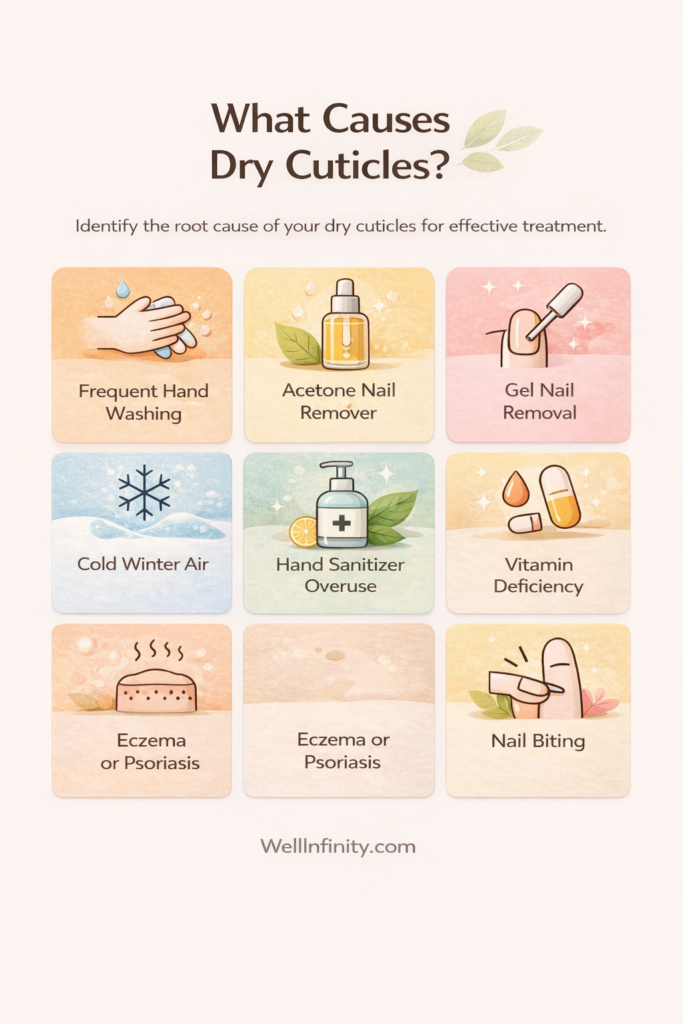
The real problem is that they never identified what was actively drying their cuticles. Remove the cause first, then treat. The most common causes:
- Frequent hand washing and harsh soaps that strip natural oils
- Acetone nail polish remover that dehydrates the nail bed on contact
- Cold, dry winter air combined with heated indoor environments
- Gel and acrylic nail removal (the acetone soaks cause serious dehydration)
- Hand sanitizer overuse which disrupts the skin moisture barrier
- Vitamin deficiencies in biotin, vitamin C, vitamin E, or iron
- Skin conditions like eczema or psoriasis affecting the nail area
- Nail and cuticle biting that repeatedly damages the skin barrier
Can a Vitamin Deficiency Cause Dry Cuticles?
Yes. This is one of the most overlooked causes.
Biotin (vitamin B7) deficiency specifically causes dry, flaky skin around the nails. A study in the Journal of the American Academy of Dermatology confirmed oral biotin supplementation increased nail plate thickness and reduced brittleness in patients with fragile nails.
Vitamin C supports collagen synthesis in the skin surrounding your nails. Vitamin E protects nail tissue from oxidative damage. Iron deficiency impairs skin cell turnover, leading to persistent dryness.
If topical treatments stop working after two consistent weeks, ask your doctor for a nutrient panel. You can also explore our guide on biotin for brittle nails for a full breakdown.
How to Get Rid of Dry Cuticles: 10 Remedies That Work
These are ordered from fastest relief to long-term prevention. Use them together for best results.
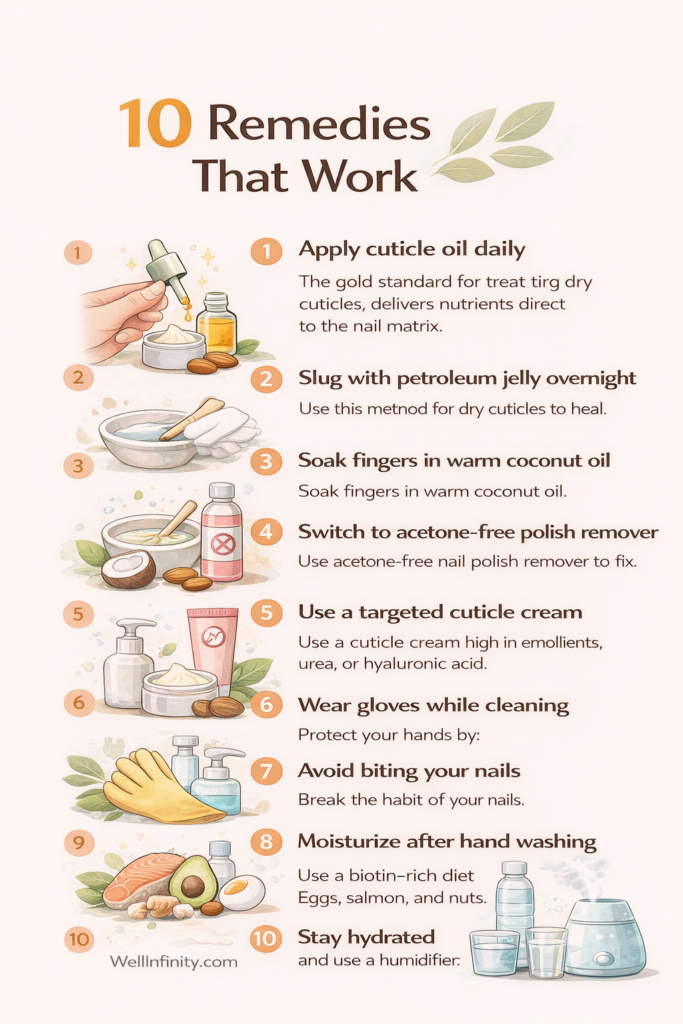
1. Apply Cuticle Oil Daily (The Gold Standard)
Cuticle oil is the most effective treatment for dry cuticles. It penetrates the skin faster than thick creams and delivers nutrients directly to the nail matrix.
In my own experience, two weeks of consistent daily oil use did more than months of hand lotion ever had. Look for oils containing:
- Jojoba oil (closest to the skin’s natural sebum, absorbs without greasiness)
- Vitamin E (antioxidant that repairs damaged skin cells)
- Argan oil (rich in omega fatty acids, fast-absorbing)
- Almond oil (gentle, ideal for sensitive skin)
Apply one drop per nail bed. Massage in circular motions for 30 seconds. Let absorb fully before getting dressed.
Do this every morning and every night. Consistency matters more than how much you apply.
2. Heal Dry Cuticles Overnight With the Slugging Method
Nail slugging is a dermatologist-approved technique that works remarkably fast.
Apply cuticle oil first. Let it absorb for five minutes. Then coat the entire nail area with petroleum jelly and sleep in cotton gloves.
The petroleum jelly acts as an occlusive layer that stops transepidermal water loss, the process by which skin loses moisture to evaporation overnight.
I was genuinely surprised the first time I tried this. My cuticles were visibly softer after a single night.
Do this at least twice per week. For severely cracked cuticles, do it every night until healed.
3. Warm Coconut Oil Soak (Best DIY Home Remedy)
Warm a small bowl of coconut oil to a comfortable temperature (not hot). Soak fingertips for 10 minutes.
The lauric acid in coconut oil provides deep moisturization and mild antimicrobial properties. This is especially useful when cracked cuticles show signs of minor inflammation.
After soaking, pat dry without rinsing so the oil stays on the skin. Do this two to three times per week. Olive oil works equally well if that is what you have at home.
4. Use a Targeted Cuticle Cream, Not Regular Hand Lotion
Standard hand lotion is formulated for the broader surface of your hand. It evaporates too quickly to treat the dense skin around the nail bed.
Cuticle creams contain higher concentrations of emollients and occlusives. When choosing one, prioritize these ingredients:
- Shea butter for deep, sustained moisture
- Urea (5 to 10%) to soften and gently exfoliate thickened cuticle skin
- Hyaluronic acid to draw water into the skin from the environment
- Glycerin to help the skin retain moisture longer
5. Make a DIY Biotin Cuticle Salve (Evidence-Based Recipe)
Research confirms biotin supports the keratin structure that makes up nails and surrounding skin. This simple salve combines the best topical nutrients:
- 1 tsp argan oil plus 1 tsp coconut oil
- 1 vitamin E capsule (pierce and squeeze directly in)
- 2 drops lavender essential oil (optional, anti-inflammatory)
Mix and store in a small glass jar. Apply nightly.
For internal biotin support, read our guide on biotin for brittle nails and skin health. Before supplementing, also check our article on biotin side effects for what to watch out for.
6. Push Back Cuticles. Never Cut Them.
The American Academy of Dermatology explicitly advises against cutting cuticles [2]. Cutting removes the protective seal that keeps bacteria out of the nail matrix.
Instead, soften cuticles first with warm water or oil. Then use a rubber-tipped cuticle pusher to gently ease them back.
If you have hangnails, clip only those using sterilized scissors. Never tear or rip them. That causes micro-wounds that invite infection.
7. Stop Using the Products That Are Drying Your Cuticles
In many cases, daily products are actively undoing all your moisturizing progress. Address these immediately:
⚠️ Acetone nail polish remover (switch to an acetone-free formula)
⚠️ Alcohol-based hand sanitizers (use sparingly, apply cuticle oil right after)
⚠️ Harsh antibacterial soaps (switch to gentle, fragrance-free options)
⚠️ Household cleaning chemicals (always wear rubber gloves)
8. Hydrate from Within: Water, Diet, and Supplements
Drinking at least 8 glasses of water daily keeps skin cells plump throughout the body, including around the nail bed.
Omega-3 fatty acids from fatty fish, walnuts, and flaxseeds strengthen the skin’s lipid barrier and directly affect how well your cuticles retain moisture.
If you are biotin deficient, you will typically notice dry cuticles alongside brittle nails and increased hair shedding. These three symptoms together are a strong signal to check your B-vitamin levels.
9. How to Prevent Dry Cuticles in Winter
Winter is peak season for cracked cuticles. Cold air holds less moisture. Heated indoor environments strip humidity. Hot showers strip skin oils faster.
A targeted winter protocol makes a measurable difference:
- Apply cuticle oil right after washing hands while skin is still slightly damp
- Run a humidifier in your bedroom overnight (aim for 40 to 60% relative humidity)
- Wear lined gloves outdoors to shield hands from cold wind
- Do the overnight slugging treatment at least twice a week through the colder months
- Use lukewarm water instead of hot water when washing hands
10. How to Fix Dry Cuticles After Gel or Acrylic Nails
Gel and acrylic nail removal is one of the most damaging things you can do to your cuticles. The acetone soaks and filing significantly dehydrate the cuticle barrier.
After any gel removal, follow a two-week intensive recovery period:
- Apply cuticle oil three times daily
- Do a warm oil soak every other evening
- Keep nails bare for at least one week to let the nail bed breathe
- Use the overnight slugging method every night until visible recovery
Daily Cuticle Care Routine for Permanently Soft Nails
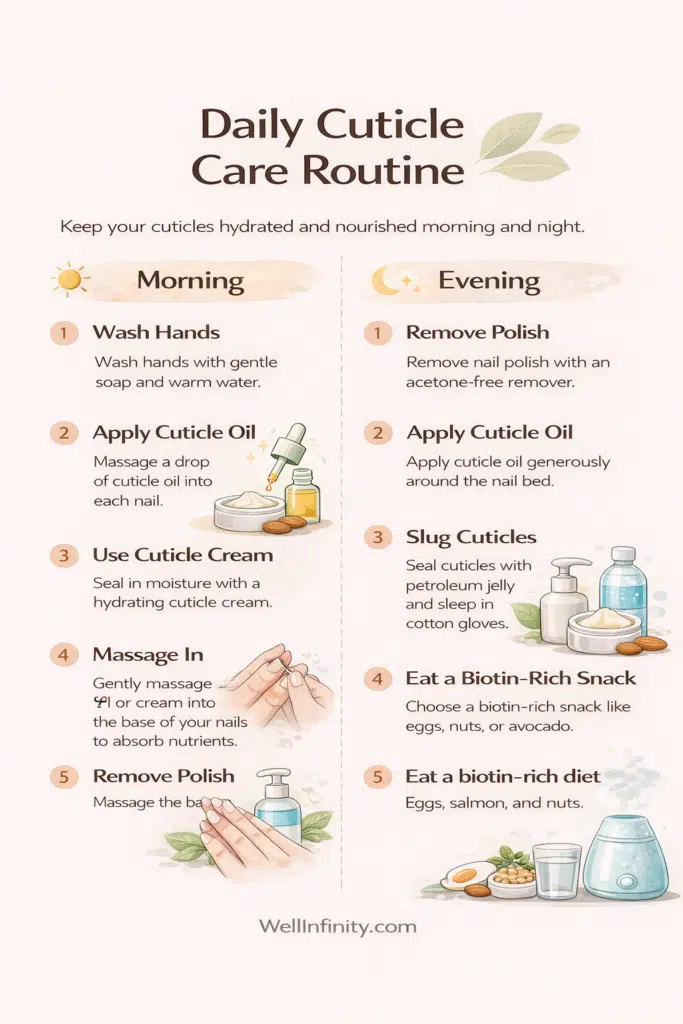
The difference between people with healthy cuticles and those who constantly struggle is not expensive products. It is daily habit.
This routine takes under three minutes.
Morning (2 Minutes)
- Pat hands dry after washing. Apply one drop of cuticle oil to each nail bed.
- Massage in circular motions for 30 seconds per hand.
- Let absorb for 2 minutes before getting dressed.
Evening (3 Minutes)
- Wash hands with a mild, fragrance-free soap.
- Apply cuticle cream or oil generously to all nail beds.
- On alternate nights, seal with petroleum jelly and sleep in cotton gloves.
If you are supplementing for nail health, read our guide on the best time to take biotin for nail and skin results to time it correctly for maximum absorption.
Cuticle Oil vs Cuticle Cream: Which One Should You Use?
Both work. The right choice depends on your current condition.
- Cuticle oil: Best for daily maintenance. Fast-absorbing. Good for use throughout the day.
- Cuticle cream: Better for severely cracked cuticles that need intensive overnight repair.
- Best combination: Oil in the morning for quick hydration. Cream or petroleum jelly at night for deep repair.
When to See a Doctor About Dry Cuticles
Most dry cuticles respond to home treatment within one to two weeks. See a dermatologist if you notice any of the following:
- ⚠️ Redness, swelling, or pus around the nail (signs of paronychia, a nail infection)
- ⚠️ Cuticles that bleed regularly despite consistent moisturizing
- ⚠️ Persistent dryness after three or more weeks of daily treatment
- ⚠️ Nail changes like pitting, thickening, or discoloration
Infected cuticles may need prescription antibiotics or antifungals. According to the American Academy of Dermatology, keeping cuticles moisturized and intact is the most effective defense against nail infections [2].
Frequently Asked Questions
What causes extremely dry cuticles?
The most common causes are frequent hand washing, acetone removers, cold weather, and vitamin deficiencies in biotin, vitamin C, and vitamin E. Skin conditions like eczema can also cause severe dryness. Removing the root cause is essential for lasting improvement.
How do you fix dry cuticles fast?
Apply cuticle oil immediately, then do the overnight slugging treatment. Coat nails and cuticles in petroleum jelly and sleep in cotton gloves. A 10-minute warm coconut oil soak also softens quickly. Visible improvement appears within 24 to 48 hours of intensive care.
Is it bad to cut your cuticles?
Yes. The American Academy of Dermatology advises against it. Cutting removes the bacterial barrier protecting the nail matrix, significantly increasing infection risk. Soften first with warm water or oil, then push back gently.
Does drinking more water help dry cuticles?
Yes, adequate hydration improves skin moisture throughout the body. However, topical treatment is still necessary. Drinking water alone cannot compensate for moisture lost through washing hands or environmental exposure.
Can vitamin deficiency cause dry cracked cuticles?
Yes, particularly deficiencies in biotin, vitamin C, vitamin E, and iron. Biotin deficiency causes dry skin around the nails alongside brittle nails and hair thinning. If cuticles stay dry despite daily moisturizing, ask your doctor for a nutrient panel.
Is Vaseline or cuticle oil better for dry cuticles?
They serve different purposes. Cuticle oil actively moisturizes and delivers nutrients into the skin. Vaseline seals moisture in but does not add moisture on its own. Apply cuticle oil first to treat, then seal with Vaseline overnight for best results.
How long does it take for dry cuticles to heal?
Mildly dry cuticles improve within 3 to 5 days of consistent care. Severely cracked cuticles take 1 to 2 weeks of daily treatment. If there is no improvement after 3 weeks, see a dermatologist.
Why are my cuticles dry after gel nails?
Acetone used in gel removal and UV lamp exposure both dehydrate the skin around your nails. Start a cuticle oil routine immediately after removal, applying at least three times daily. Keep nails bare for one week before applying new polish.
What is nail slugging and does it work?
Nail slugging means applying petroleum jelly over cuticle oil before sleep and wearing cotton gloves overnight. It prevents moisture evaporation during sleep. Dermatologists support the method and most users see dramatically softer cuticles after even one night.
Can dry cuticles lead to nail infection?
Yes. Cracked cuticles remove the barrier that keeps bacteria out. The resulting infection (paronychia) causes redness, swelling, and pain around the nail and may require antibiotic treatment. Treating dry cuticles promptly protects your health, not just your appearance.
Final Thoughts: How to Get Rid of Dry Cuticles for Good
After years of cracked, painful cuticles, the biggest shift for me was consistency over intensity.
You do not need expensive products. You need the right routine, done daily.
Knowing how to get rid of dry cuticles comes down to three things: daily moisturizing with the right ingredients, removing the products and habits causing the damage, and fixing any internal deficiencies topical creams cannot address.
Start with cuticle oil every morning and evening. Add overnight slugging twice a week. Switch to acetone-free remover and wear gloves when cleaning.
If your nails are also brittle or peeling, a nutritional deficiency is likely involved. Our guide on biotin for brittle nails covers how to address that from the inside.
Your cuticles protect your entire nail matrix. Treating them daily is one of the simplest, highest-return habits in any nail care routine.
Medical Disclaimer: This article is for informational purposes only and does not constitute medical advice. It is not a substitute for professional medical diagnosis or treatment. Consult a licensed dermatologist for persistent, worsening, or infected cuticles.
About the Author
Syma Hussain | Women’s Health and Beauty Writer, Wellinfinity.com
Syma specializes in evidence-based skin, hair, and nail care for women. She researches peer-reviewed studies and tests remedies personally before writing, ensuring every recommendation at WellInfinity is both clinically grounded and practically useful.