Why Your Nails Keep Breaking (And the Nail Care Tips That Finally Fix It)
I used to think strong, healthy nails were just genetics.
After years of dealing with peeling, splitting nails that broke before they grew past my fingertips, I started looking into what actually works. The answer was not a single product or supplement. It was a consistent routine built on a handful of evidence-based habits.
These nail care tips for healthy nails are not guesswork. They come from board-certified dermatologists, clinical research, and years of personal trial and error. Whether you are dealing with brittle nails, slow growth, or just want to build a simple daily routine, this guide covers everything you need.
Quick Summary: Nail Care Tips That Work
- Keep nails clean, dry, and trimmed regularly
- Moisturize cuticles daily with oil or a dedicated cream
- Never cut cuticles; push back gently after softening
- Eat biotin-rich foods and check for vitamin deficiencies
- Wear gloves for wet tasks and avoid acetone removers
- Take a break from gel and acrylics to let nails recover
- Check your nails regularly for early signs of health issues
What Do Healthy Nails Actually Look Like?
Before building a routine, it helps to know what you are aiming for.
Here is what to look for:
- Smooth surface with no pitting, grooves, or deep ridges
- Consistent colour across the entire nail plate
- Firm but slightly flexible structure that does not bend easily
- Pink nail bed with no discolouration or dark streaks
- Intact cuticles that seal cleanly at the base of the nail
Vertical ridges running from cuticle to tip are common and usually harmless, especially as you age. White spots from minor trauma also grow out on their own. What matters is knowing when something is outside the normal range.
Nail Care Tips for Healthy Nails: The Essential Do’s
1. Keep Nails Clean and Dry
Bacteria and fungi thrive in moist environments, particularly under the nail bed.
Scrub gently under nails with a soft nail brush when washing hands. Avoid using sharp tools to clean underneath as this separates the nail from the nail bed and creates an entry point for infection.
After washing, dry hands and nails thoroughly. Pat between fingers and under nails before moisturizing.
2. Trim Correctly and Regularly
Use sharp nail scissors or clippers. Blunt tools cause micro-tears and jagged edges.
Cut straight across, then round the tips very gently into a slight curve. This shape provides the most structural strength and reduces the risk of ingrown nails.
Fingernails grow approximately 2 to 3mm per month. Trimming every 1 to 2 weeks keeps them at a functional, low-breakage length.
3. Moisturize Nails and Cuticles Every Day
The nail plate is significantly more absorbent than skin. Dr. Dana Stern, a nail specialist, notes that nails are essentially like little sponges and frequent water exposure causes them to expand and contract, leading to weakness and splitting.
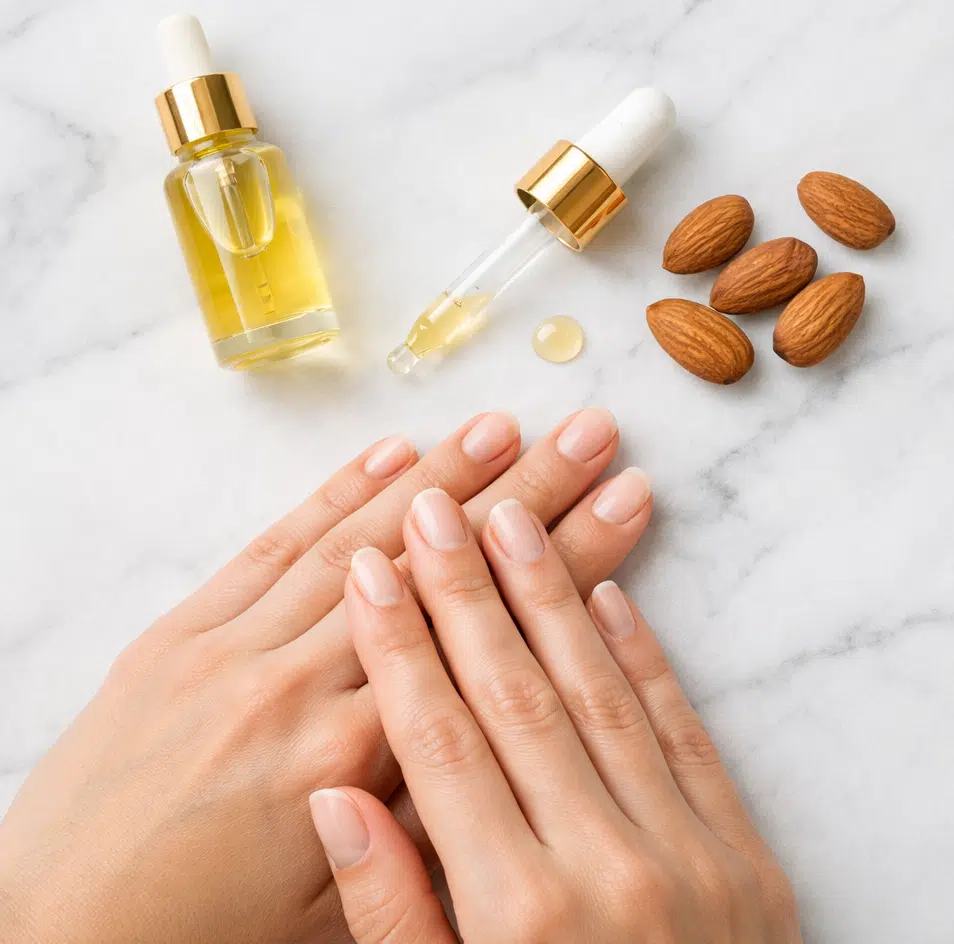
After washing hands, apply a moisturizing hand cream or cuticle oil to the nail beds and cuticles while skin is still slightly damp. This seals in moisture before it evaporates.
Look for products containing:
- Jojoba oil (absorbs quickly, closest to skin’s natural sebum)
- Vitamin E (antioxidant, repairs damaged nail tissue)
- Shea butter (deep, sustained moisture)
- Glycerin (draws water into skin and helps retain it)
4. File in One Direction
Sawing back and forth with a nail file causes micro-fractures at the nail edge.
Always file in a single direction using a fine-grit file. Glass or crystal nail files are gentler than cardboard emery boards and create a smoother edge that is less prone to snagging and tearing.
File nails when dry, not wet. Wet nails are softer and more prone to splitting under pressure.
5. Apply a Protective Base Coat
A strengthening base coat creates a physical barrier between the nail plate and nail polish.
Look for formulas containing keratin, biotin, vitamin E, or calcium. These ingredients support nail structure while the base coat itself prevents direct contact with pigments and acetone.
A base coat also significantly extends how long polish lasts, which means less frequent removal and less acetone exposure overall.
6. Wear Gloves for Wet and Chemical Tasks
Repeated water exposure is one of the biggest causes of weak, splitting nails.
Wear cotton-lined rubber gloves when washing dishes, cleaning, or working with household chemicals. The cotton lining absorbs sweat so your hands do not end up more damp than when you started.
Gardening is another hidden culprit. Soil carries bacteria and fungi, and digging compresses and chips nails. Always wear gloves outdoors when working with your hands.
What You Should Never Do to Your Nails
These habits are the most common reasons healthy nail routines stop working.
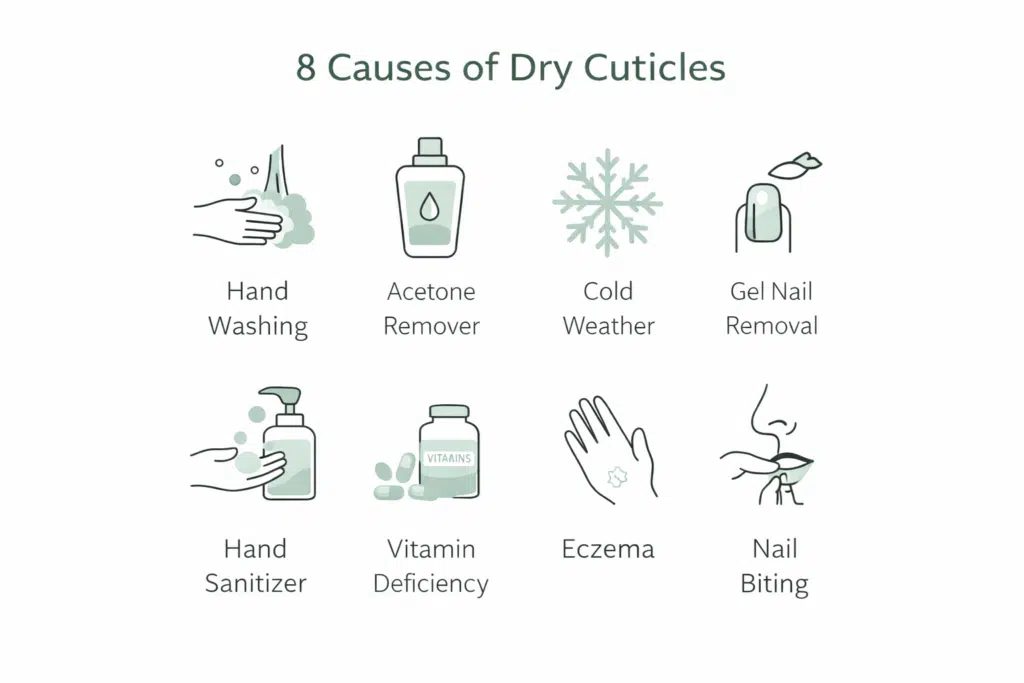
- ⚠️ Do not bite your nails or pick at your cuticles. This damages the nail bed and introduces bacteria from your mouth.
- ⚠️ Do not cut your cuticles. The American Academy of Dermatology warns that cutting cuticles removes the protective seal against bacteria and significantly raises infection risk.
- ⚠️ Do not tear off hangnails. Tearing rips live tissue and causes wounds that can become infected. Clip them cleanly with sterilized scissors.
- ⚠️ Do not use your nails as tools. Opening packages, scraping stickers, and prying lids puts extreme lateral stress on the nail and causes breakage.
- ⚠️ Do not use acetone nail polish remover regularly. Acetone strips oil from the nail plate. Switch to an acetone-free formula for routine use.
- ⚠️ Do not ignore nail changes. Sudden discolouration, new ridges, or thickening that does not resolve on its own warrants a dermatologist visit.
Daily Nail Care Routine for Consistently Healthy Nails
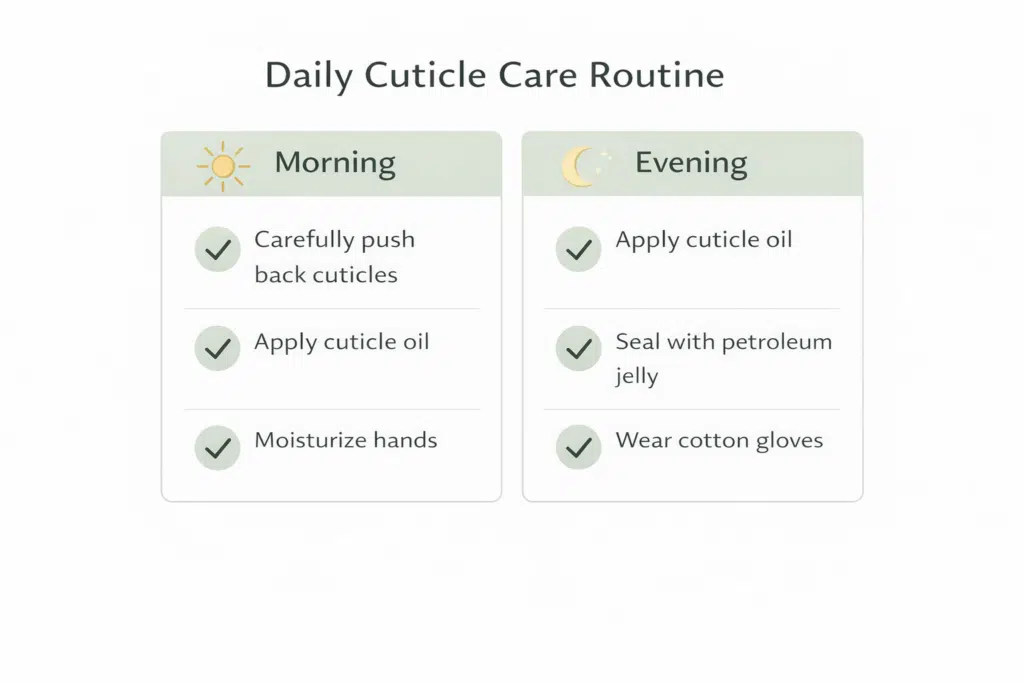
The single biggest factor in nail health is not which product you use. It is whether you use it consistently.
This routine takes under five minutes a day.
Morning (2 Minutes)
- Wash hands with a gentle, fragrance-free soap and dry thoroughly.
- Apply one drop of cuticle oil to each nail bed and massage for 30 seconds.
- Allow 2 minutes to absorb before getting dressed.
Evening (3 Minutes)
- Wash hands and dry completely.
- Apply cuticle cream or a nourishing hand cream to nails and cuticles.
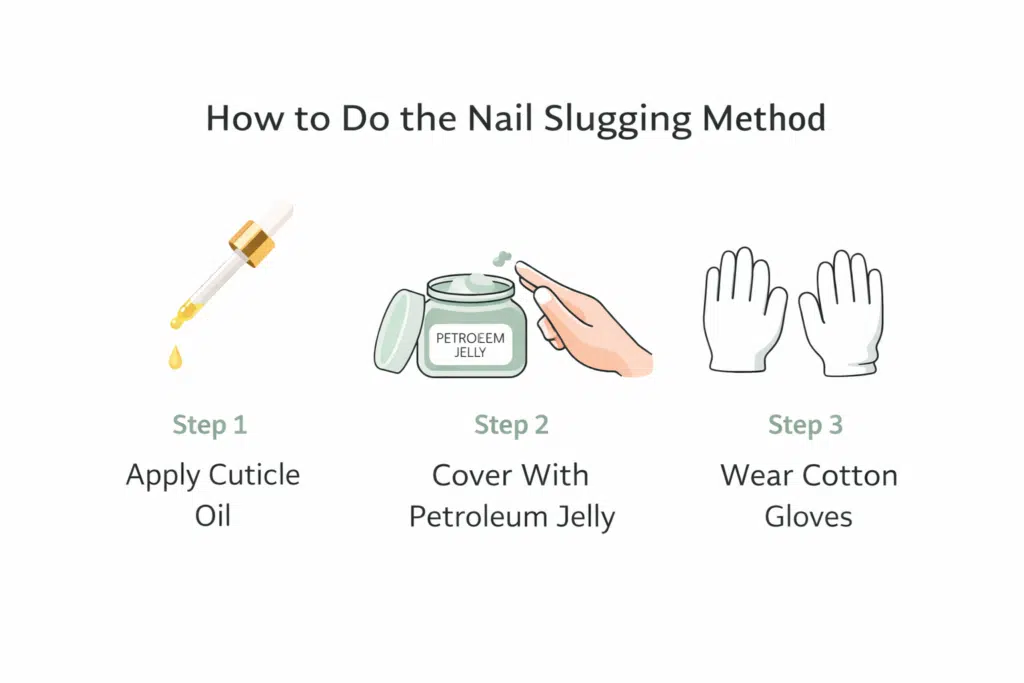
- On alternate nights, seal with petroleum jelly and sleep in cotton gloves for an intensive overnight treatment.
Weekly (10 Minutes)
- Trim nails straight across and file edges in one direction.
- Do a warm coconut oil or olive oil soak for 10 minutes.
- Gently push back cuticles with a rubber-tipped pusher after softening.
If you are supplementing for nail health, our guide on biotin for brittle nails covers how to use it effectively and what results to expect.
Best Vitamins and Foods for Nail Health
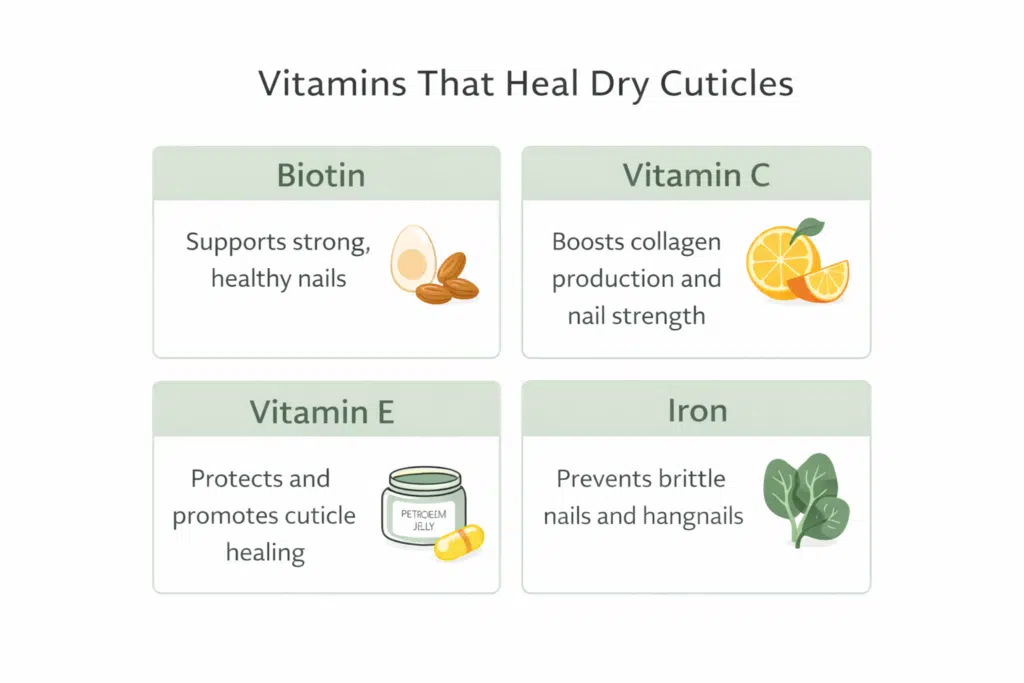
Topical treatments can only go so far. What you eat directly affects how your nails grow.
Board-certified dermatologist Dr. Beth Goldstein recommends prioritizing biotin-rich foods including eggs, nuts, seeds, sweet potatoes, spinach, and omega-3 sources like salmon and flaxseed.
Here is the full breakdown of key nutrients:
Biotin (Vitamin B7)
Biotin supports keratin production, the structural protein that makes up your nails. Clinical research confirms biotin supplementation can increase nail thickness and reduce brittleness in people with fragile nails [1].
Food sources: Eggs (cooked), almonds, sunflower seeds, sweet potatoes, salmon, avocado
Vitamin C
Vitamin C is essential for collagen synthesis. Collagen supports the structure of the nail bed and surrounding skin.
Food sources: Bell peppers, strawberries, kiwi, broccoli, citrus fruits
Iron
Iron deficiency impairs oxygen delivery to the nail matrix and can cause spoon-shaped nails (koilonychia) and pronounced vertical ridges.
Food sources: Spinach, lentils, red meat, fortified cereals, pumpkin seeds
Zinc
Zinc supports nail cell growth and repair. White spots and slow growth can sometimes indicate low zinc levels.
Food sources: Oysters, chickpeas, pumpkin seeds, cashews, beef
Omega-3 Fatty Acids
Omega-3s strengthen the skin’s lipid barrier and help nails retain moisture. They reduce brittleness and improve nail flexibility.
Food sources: Fatty fish, walnuts, flaxseed, chia seeds
If you are on a vegan diet and concerned about getting enough biotin, our guide on biotin deficiency in vegans covers plant-based sources and supplementation strategies in detail.
How to Strengthen Brittle and Weak Nails
Brittle nails affect up to 20% of the population, according to clinical estimates. They are one of the most common nail complaints and one of the most fixable.
The most effective approach combines external care with internal nutrition.
- Reduce water exposure. Wear gloves for dishwashing and cleaning. Water causes nails to swell and contract, which weakens the nail plate over time.
- Switch to acetone-free remover. Acetone strips essential oils from the nail. Even occasional use contributes to long-term brittleness.
- Apply a nail hardener. Look for formulas with keratin or calcium as primary strengthening ingredients.
- Check your biotin intake. Supplementing with 2.5mg of biotin daily has been shown to increase nail plate thickness in clinical studies [1].
- Check for iron or B12 deficiency. Both impair nail cell turnover. Ask your doctor for a blood panel if brittle nails persist despite consistent topical care.
- Give nails a polish-free break. Keeping polish on continuously prevents you from seeing changes and denies the nail plate time to breathe and recover.
What Your Nails Are Telling You About Your Health
Your nails are one of the most visible indicators of what is happening inside your body.
Dr. Christine Poblete-Lopez, a dermatologist at Cleveland Clinic, states that nail health is a very good reflection of overall health, and many things in the nails can signify systemic or skin problems.
Here is what common nail changes may indicate:
- Pale or white nails: Possible iron deficiency anaemia or liver disease
- Yellow nails: Fungal infection, chronic use of dark nail polish, or in some cases respiratory or thyroid conditions
- Vertical ridges (pronounced): Common with age, but may signal iron or vitamin B12 deficiency
- Horizontal ridges (Beau’s lines): Indicate a temporary pause in nail growth caused by illness, high fever, surgery, or malnutrition
- White spots (leukonychia): Usually harmless trauma to the nail matrix, but can indicate zinc or calcium deficiency
- Spoon-shaped nails (koilonychia): Strongly associated with iron deficiency anaemia
- Bluish nails: May indicate low blood oxygen levels; see a doctor promptly
- Dark streaks under the nail: Always consult a dermatologist, as this can indicate melanoma
- Pitting (small dents): Commonly associated with psoriasis or alopecia areata
If you notice changes affecting most or all of your nails at the same time, the cause is more likely internal (nutritional or systemic) than external. Single-nail changes are more often from trauma or infection.
Always consult a dermatologist if nail changes are persistent, spreading, or accompanied by other symptoms.
How to Care for Nails After Gel or Acrylic Removal
Gel and acrylic removal is one of the most damaging things you can do to your nails.
The prolonged acetone soaks, UV lamp exposure, and filing involved all dehydrate the nail plate and strip the cuticle barrier. Many women notice their nails are thinner, more flexible, and highly prone to peeling after removal.
Follow this two-week intensive recovery protocol:
- Apply cuticle oil at least three times daily, every day
- Keep nails bare (no polish) for the first seven days minimum
- Do a warm oil soak every other evening for 10 minutes
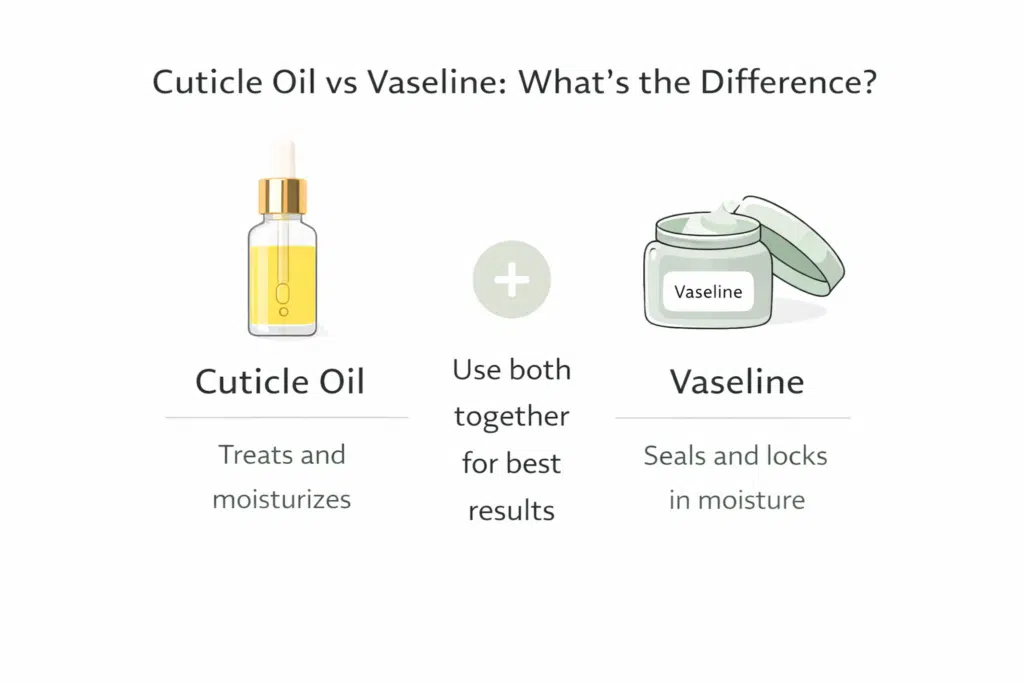
- Use the overnight slugging method (cuticle oil followed by petroleum jelly and cotton gloves) every night for the first week
- Avoid acetone of any kind during recovery
- Apply a strengthening base coat from week two onwards before returning to colour
Nails grow approximately 3mm per month. Full recovery from gel damage typically takes 3 to 6 months of consistent care. Patience and consistency matter more than any single product.
Safe Manicure and Pedicure Tips
Manicures are not inherently harmful. The practices around them often are.
Whether you go to a salon or do your own manicures at home, these guidelines protect your nails from common damage:
- Never let a technician cut your cuticles. This removes the protective seal and dramatically raises your risk of nail infection.
- Confirm all tools are sterilized. Unsterilized tools spread fungal and bacterial infections between clients.
- Check the salon licence. Only use salons that display a current state board licence.
- Bring your own tools if concerned. This is a simple, practical precaution.
- Ask how foot baths are cleaned. They should be disinfected between every client.
- Avoid MMA (methyl methacrylate) acrylics. This chemical causes severe nail damage and is banned in several countries.
Take breaks from gel and acrylics. Let your natural nails breathe for at least 2 to 4 weeks between applications
Frequently Asked Questions About Nail Care
What are the most important nail care tips for beginners?
Start with three habits: moisturize daily with cuticle oil, trim every one to two weeks with sharp clippers, and wear gloves for wet or chemical tasks. These three changes alone will produce visible improvement in nail strength within 3 to 4 weeks.
How do I make my nails healthy and strong naturally?
Focus on nutrition first. Eat biotin-rich foods like eggs, almonds, and sweet potatoes. Increase omega-3 intake from fatty fish or flaxseed. Stay hydrated. Topically, apply cuticle oil daily and avoid acetone removers. Consistent daily habits outperform any single product.
What vitamin deficiency causes brittle nails?
Biotin (vitamin B7), iron, vitamin B12, vitamin C, and zinc deficiencies all affect nail strength and appearance. Biotin deficiency is the most directly linked to brittle, splitting nails. If nail brittleness persists despite good topical care, ask your doctor to check your nutrient levels.
Should you cut or push back cuticles?
Always push back, never cut. The American Academy of Dermatology recommends only pushing cuticles back after softening with warm water or oil, using a rubber-tipped pusher. Cutting removes the protective seal and raises the risk of bacterial and fungal nail infections.
How often should you cut your nails?
Fingernails should be trimmed every one to two weeks depending on your growth rate. Toenails grow more slowly and typically need trimming every three to four weeks. Shorter nails reduce the risk of trauma, breakage, and debris accumulation under the nail.
Is it bad to leave nail polish on for a long time?
Yes. Keeping nail polish on continuously for weeks prevents you from monitoring nail changes, and the pigments in some polishes can stain or weaken the nail plate over time. Give your nails at least one week bare between applications, especially after gel or acrylic removal.
How do I stop my nails from breaking?
Reduce water exposure by wearing gloves. Switch to acetone-free remover. Apply a strengthening base coat. Check your biotin and iron levels. File in one direction only with a fine-grit file. Brittleness is almost always a combination of external damage and internal deficiency.
What do your nails say about your health?
Nail changes can signal nutritional deficiencies, infections, thyroid issues, anaemia, and in rare cases, skin cancers. Pale nails may indicate iron deficiency. Yellow nails often point to fungal infection. Dark streaks under a nail should always be evaluated by a dermatologist. Check your nails regularly between manicures.
Is it better to file nails wet or dry?
Dry. Wet nails are softer, more pliable, and more vulnerable to splitting and tearing under the friction of a file. Always file nails when completely dry, using a fine-grit glass or crystal file rather than a coarse cardboard emery board.
What foods make nails grow faster and stronger?
Eggs, salmon, almonds, sweet potatoes, spinach, lentils, sunflower seeds, and walnuts are the most effective foods for nail growth and strength. They provide biotin, iron, zinc, omega-3 fatty acids, and protein, all of which directly support keratin production and nail cell growth.
Final Thoughts: Your Action Plan for Healthy Nails
Healthy nails do not happen by accident. They are the result of consistent, simple habits applied every day.
I spent years trying to fix my nails with individual products without ever addressing the full picture. Once I built a proper routine, stopped overexposing my hands to water, and fixed a biotin deficiency I did not know I had, the difference was noticeable within weeks.
Start with what you control today. Moisturize after every hand wash. Switch to a gentle soap and an acetone-free remover. Add one biotin-rich meal to your diet daily. These small changes compound quickly.
Apply these nail care tips for healthy nails consistently for four weeks and your nails will tell the difference.
If you want to go deeper on nail nutrition, read our article on biotin for brittle nails. If you are concerned about supplementing, our guide on biotin side effects covers everything you need to know before starting.
Related Reads
- Biotin for Brittle Nails: Benefits and Results Timeline – How biotin supplementation strengthens nails from the inside out.
- Biotin Deficiency in Vegans: Signs, Sources and Prevention Guide – How to get enough nail-supporting nutrients on a plant-based diet.
Medical Disclaimer: This article is for informational purposes only and does not constitute medical advice. It is not a substitute for professional medical diagnosis or treatment. Consult a licensed dermatologist if you notice persistent or unusual nail changes.
About the Author
Syma Hussain | Women’s Health and Beauty Writer, wellInfinity.com
Syma Hussain is the founder and lead writer at WellInfinity, a holistic health platform empowering women through research-backed wellness advice. After years of navigating her own skin and nail health challenges, she turned her personal experience into a resource that cuts through generic advice and delivers what actually works.