
Biotin Hair Care Routine: How to Combine Oil, Shampoo and Diet for Real Results
If you’ve been dealing with thinning hair, excess shedding, or slow growth, you’ve probably heard about biotin. But taking a supplement alone isn’t enough. The real results come when you build a complete biotin hair care routine one that works from the inside out, combining the right oils, shampoos, and foods into a system that actually delivers.
This guide breaks down exactly how to do that step by step, with no fluff.
QUICK ANSWER A biotin hair care routine is a multi-step approach that combines biotin-rich oils, biotin shampoo, and a diet high in Vitamin B7 to support hair growth from both inside and outside. It works by strengthening the keratin structure of your hair while creating a healthy scalp environment for new growth. For best results, all three elements — topical, cleansing, and nutritional — need to work together consistently.
What Is Biotin and Why Does Your Hair Need It?
Biotin (Vitamin B7) is a water-soluble B vitamin that plays a central role in keratin production, the protein your hair is literally made of. Without sufficient biotin, your body cannot build strong, healthy hair strands efficiently.
In simple terms: biotin is the raw material your follicles need to produce hair. When levels are adequate, hair grows stronger, thicker, and faster. When levels drop, the first signs usually show up in your strands.
According to the National Institutes of Health Office of Dietary Supplements, the adequate daily intake of biotin for adults is 30 mcg. Many women don’t reach this through diet alone especially those following restrictive or plant-based diets.
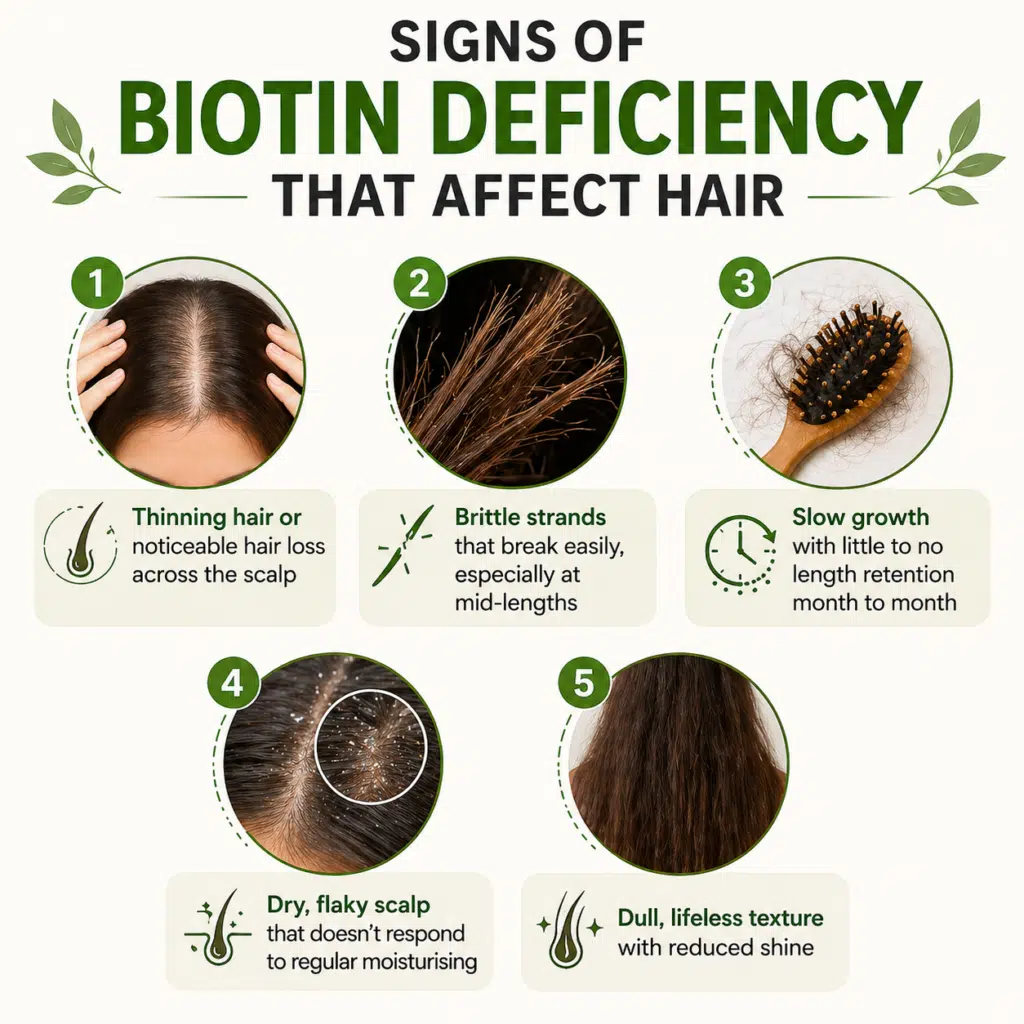
Signs of Biotin Deficiency That Affect Hair
- Thinning hair or noticeable hair loss across the scalp
- Brittle strands that break easily, especially at mid-lengths
- Slow growth with little to no length retention month to month
- Dry, flaky scalp that doesn’t respond to regular moisturising
- Dull, lifeless texture with reduced shine
If you’re noticing more than one of these symptoms, you may be dealing with a deficiency. Learn more about the warning signs you’re not getting enough biotin before starting any routine.
Evidence note
A 2017 study in the International Journal of Trichology found biotin deficiency in 38% of women experiencing hair loss, confirming biotin deficiency as a real, measurable driver of hair thinning.
How to Build a Biotin Hair Care Routine Step by Step
A strong biotin hair care routine has three pillars: topical application (oils), cleansing (shampoo), and nutrition (diet + supplements). Here’s how to structure it across your day:
✅ Biotin Morning Hair Routine
- Take your biotin supplement with breakfast — fat-soluble co-factors in food improve absorption
- Apply biotin oil for scalp — focus application on thinning areas and the part line
- Massage for 3–5 minutes using circular motions to stimulate blood flow to follicles
- Style as usual — no need to rinse scalp oil before styling
✅ Biotin Wash Day Routine (2–3x per week)
- Wet hair thoroughly with lukewarm water — hot water strips scalp oils
- Apply biotin shampoo — work into scalp with fingertip pads, not nails
- Leave shampoo on for 2 minutes before rinsing — contact time matters for absorption
- Follow with a moisturising conditioner — focus on mid-lengths and ends only
- Pat dry gently — never rub with a towel (friction causes breakage)
- Reapply scalp oil while hair is still slightly damp for better penetration
✅ Biotin Nighttime Hair Routine (3–4x per week)
- Apply a light biotin-infused serum or oil directly to the scalp
- Braid or loosely twist hair to reduce overnight friction
- Sleep on a satin or silk pillowcase — cotton pulls moisture and causes mechanical breakage
Best Biotin Oil for Scalp Routine
Not all scalp oils are equal. The best ones either contain biotin directly or are formulated with ingredients that significantly boost its effectiveness at the follicle level.
Top Oils That Work in a Biotin Scalp Routine
| Oil | Why It Works | Best For |
| Castor oil | Thickens strands; promotes scalp circulation via ricinoleic acid | Fine, thinning hair |
| Rosemary oil | Shown in a 2023 clinical trial to match 2% minoxidil for hair growth | All types, androgenic loss |
| Biotin-infused serum | Delivers vitamin B7 directly to the scalp surface | Anyone adding topical biotin |
| Peppermint oil (diluted) | Increases blood flow; menthol activates follicle growth signalling | Sluggish growth |
| Argan oil | Seals moisture into the cuticle; reduces breakage at strand level | Damaged, colour-treated hair |
| Jojoba oil | Mimics scalp sebum — balances oily and dry scalps | Sensitive or reactive scalps |
How to Use Biotin Oil for Scalp Correctly
- Dilute essential oils (rosemary, peppermint) in a carrier oil ,2–3 drops per tablespoon maximum
- Section your hair into 4 parts before applying for even, full-coverage application
- Use a dropper bottle for mess-free, precise delivery directly to the scalp
- Massage in for at least 4 minutes — research shows scalp massage alone increases hair thickness
- Never apply direct heat immediately after oiling as it causes scalp burns and deeper irritation
Castor oil + biotin serum combo Pro tip: Mix 1 tablespoon castor oil with 5–6 drops of a biotin serum. Apply to scalp 3x per week before bed. Castor oil improves circulation while biotin feeds the follicle directly — one of the most effective DIY topical combinations for thinning hair.
How to Use Biotin Shampoo Correctly
Knowing how to use biotin shampoo correctly is just as important as choosing the right formula. Most people apply shampoo incorrectly reducing how much active ingredient actually reaches the scalp.
Step-by-Step: How to Use Biotin Shampoo Correctly
- Wet hair fully — dry or damp hair reduces lather and limits product spread
- Apply a 50p-sized amount to the palm first, not directly onto the scalp
- Emulsify in your hands before applying — pre-lathering distributes formula evenly
- Work in with fingertip pads in circular motions — never scratch with nails
- Leave on for 90 seconds to 2 minutes — biotin needs contact time to absorb
- Rinse thoroughly with cool water to seal the cuticle after cleansing
What to Look for on the Label
- ✓ Biotin (Vitamin B7) listed in active or key ingredients
- ✓ Keratin or hydrolyzed proteins for structural strand support
- ✓ Caffeine or niacinamide — both independently stimulate follicle activity
- ✓ Gentle, sulfate-free formula — sulfates cancel out biotin’s work on the scalp
Biotin Shampoo Ingredients to Avoid
- ✗ Sulfates (SLS/SLES) — strip natural oils and disrupt the scalp’s microbiome balance
- ✗ Silicones (dimethicone, cyclomethicone) — build up and physically block scalp absorption
- ✗ Parabens — linked to hormonal disruption with prolonged use
- ✗ Artificial fragrance (parfum) — one of the most common scalp irritants
Pro Tip: The Clarifying Reset
Rotate your biotin shampoo with a clarifying shampoo once every 3–4 weeks. Product buildup even from good products creates a barrier that prevents biotin from reaching the follicle. A monthly clarifying wash resets the scalp and restores absorption.
Biotin Diet for Hair Growth Women — Foods That Actually Work
Your scalp absorbs topical biotin but your follicles are ultimately fed by what you eat. The biotin diet for hair growth in women is the foundation that everything else builds on. No topical product fully compensates for a nutritional gap.
Top Biotin-Rich Foods (With Approximate Values)
| Food | Biotin Content | Easiest Way to Eat It |
| Cooked egg yolk | 10 mcg per egg | Scrambled, boiled, in omelettes |
| Beef liver | 30–35 mcg per 3 oz | Pan-fried, in pâté |
| Salmon | 5 mcg per 3 oz | Grilled, baked, smoked |
| Sunflower seeds | 2.6 mcg per ¼ cup | Salad topping, trail mix |
| Sweet potato | 2.4 mcg per ½ cup | Baked, mashed, roasted |
| Almonds | 1.5 mcg per ¼ cup | Snack, almond butter |
| Spinach | 0.5 mcg per ½ cup | Smoothies, cooked in meals |
| Avocado | 1.85 mcg per ½ fruit | Toast, salads |
⚠️ Important: Raw egg whites contain avidin, a protein that actively blocks biotin absorption. Always eat eggs cooked. For a deeper look, explore biotin in eggs — raw vs. cooked.
For plant-based eaters, getting enough biotin through diet alone can be challenging. See the full list of biotin-rich foods for hair growth to build a complete hair-supportive diet around whole foods.
Building a Weekly Biotin Diet for Hair Growth
Aim to include biotin-rich foods in at least 5 meals per week. A practical weekly template:
- Monday / Thursday: Eggs (2 cooked yolks = 20 mcg)
- Tuesday / Friday: Salmon + side of spinach (≈5.5 mcg)
- Wednesday / Saturday: Sweet potato + almonds as a snack (≈4 mcg)
- Daily: Sunflower seeds as a topping — easiest consistent biotin source
This pattern gets most women to 20–30+ mcg from food alone, before any supplementation.
Can You Use Biotin Supplements Alongside Topical Products?
Yes and for most women, the combination approach delivers the best results. Oral biotin works through the bloodstream to feed follicles from within. Topical biotin (oils, shampoos, serums) creates the ideal scalp environment externally. They don’t compete, they complement.
Oral vs. Topical Biotin: Key Differences
| Oral Biotin | Topical Biotin | |
| Works via | Bloodstream → follicle | Direct scalp absorption |
| Takes effect in | 3–6 months | 4–8 weeks (surface-level) |
| Best for | Deficiency-related loss | Scalp health + thickness |
| Safe to combine? | ✓ Yes | ✓ Yes |
| Measurable impact? | Yes, when deficient | Yes, on scalp environment |
Dosage Guidance
Most supplements contain 1,000–10,000 mcg far above the 30 mcg daily requirement. Higher doses aren’t proven to work faster and can interfere with thyroid and cardiac lab test results. For a science-backed breakdown, read how much biotin you should take daily.
If you’re exploring other supplement options, it’s worth understanding how biotin compares to keratin supplements for hair growth they work through different mechanisms and can be used effectively together.
Signs Your Biotin Routine Is Actually Working — And How Long It Takes
One of the most common questions about any biotin hair care routine step by step is: how long does it take for biotin to work for hair? The answer depends on which part of the routine you’re measuring.
Hair grows roughly ½ inch (1.25 cm) per month on average. Hair growth cycles are 3–6 months long. That means visible results require patience but there are earlier signals that confirm your routine is working.
How Long Does Biotin Take to Work for Hair? — Timeline
- Weeks 2–4: Less shedding in the shower; scalp feels less dry and irritated
- Month 2: Baby hairs (new vellus hairs) visible at the hairline and along the part
- Month 3–4: Noticeable improvement in strand thickness, density, and overall texture
- Month 5–6: Measurable length retention, significantly reduced breakage
Signs Biotin Is Working for Your Hair ✓
- New growth along the hairline — fine baby hairs that weren’t there before
- Daily shed count drops below 100 strands (normal shedding is 50–100/day)
- Hair feels stronger when wet — less elastic stretch means less breakage risk
- Scalp feels balanced — not overproducing oil or excessively dry
- Existing strands feel thicker between your fingers
When to Reassess ⚠️
If you’ve followed a consistent routine for 6 months with no improvement, investigate:
- Blood test for ferritin (iron stores), vitamin D, and zinc all affect hair growth
- Consulting a dermatologist or trichologist about scalp health
- Reviewing your diet for protein intake biotin alone can’t compensate for low protein
Common Mistakes to Avoid in a Biotin Routine
Even the right products fail when applied incorrectly. These are the most common errors that prevent women from seeing results:
- Inconsistency — biotin works cumulatively; skipping 3–4 days breaks the compound effect
- Mega-dosing supplements — more biotin doesn’t mean faster results; it creates lab test interference
- Ignoring diet — topical biotin cannot compensate for a nutrient-poor diet; food comes first
- Using sulfate shampoos — they strip exactly what your biotin oil routine builds
- Expecting results in weeks — hair growth cycles are 3–6 months; early quitting is the #1 failure point
- Skipping scalp massage — circulation is what physically carries biotin to the follicle
- Applying oil on a dirty scalp — buildup blocks absorption; apply to a clean or freshly cleansed scalp
- Using too many products at once — layering multiple actives causes product interference, not better results
Best Biotin Hair Care Routine for Your Hair Type
Biotin works for all hair types but how you apply it should match your hair’s specific structure and needs.
Fine or Thinning Hair
- Shampoo: Lightweight, volumising biotin shampoo — avoid heavy moisturising formulas
- Biotin oil for scalp routine: Apply biotin serum or diluted rosemary oil to scalp only — skip mid-lengths
- Diet focus: Prioritise eggs, salmon, and almonds , biotin-dense without heavy fats
- Key tip: Scalp massage is critical , thin follicles need circulation more than any other type
Thick or Coarse Hair
- Shampoo: Biotin shampoo with added keratin or hydrolyzed protein
- Oil: Castor oil mixed with biotin serum — heavier consistency penetrates coarse strands
- Diet focus: Sweet potatoes and sunflower seeds support biotin and internal moisture
- Key tip: Deep condition after every wash — thick hair needs moisture alongside strength
Curly or Textured Hair
- Shampoo: Sulfate-free biotin shampoo only ,curly hair cannot handle harsh cleansers
- Oil: Argan oil infused with biotin serum from roots to ends
- Diet focus: Biotin-rich foods combined with omega-3s (walnuts, flaxseeds) to reduce frizz internally
- Key tip: Wash no more than twice a week , over-washing strips scalp oils that support biotin absorption
Dry or Damaged Hair
- Shampoo: Biotin shampoo with added hyaluronic acid or aloe vera , hydration and repair together
- Oil: Argan or jojoba oil with biotin serum focus on ends where damage concentrates
- Diet focus: Beef liver and cooked egg yolk, the two highest biotin food sources
- Key tip: Add a supplement alongside topical products damaged hair almost always signals a nutritional gap.
FAQ (Frequently Asked Questions)
What is a biotin hair care routine?
A biotin hair care routine is a structured daily and weekly system that combines oral biotin supplements, biotin-infused topical products (oils and shampoos), and a biotin-rich diet. Together, these three layers support hair growth from both inside and outside by strengthening keratin production and creating a healthy scalp environment for follicles to thrive.
How long does it take for biotin to work for hair?
Most women notice reduced shedding within 4–8 weeks. Visible new hair growth typically appears by month 2–3. Full thickness and length improvements take 5–6 months of consistent daily use, because hair follicles operate on slow 3–6 month biological cycles. Early quitting is the most common reason women don’t see results.
Can I use biotin oil and take biotin supplements at the same time?
Yes — combining biotin oil for scalp with oral supplements is safe and recommended. They work through different pathways: supplements feed follicles via the bloodstream, while topical oils support scalp health and surface absorption. There is no known interaction or risk in using both together.
How much biotin should I take for hair growth?
The NIH recommends 30 mcg daily for adults. Most hair supplements contain 1,000–5,000 mcg, significantly above requirement. Higher doses are not proven to produce faster results and can interfere with thyroid, cardiac, and hormone lab tests. Start at the lowest effective dose and consult your doctor if you take medications
How do you use biotin shampoo correctly for best results?
Apply biotin shampoo to wet hair, emulsify in your hands first, then work into the scalp with fingertip pads. Leave on for 90 seconds to 2 minutes before rinsing — contact time significantly improves ingredient absorption. Follow with conditioner on mid-lengths and ends only, never on the scalp.
What is the best biotin diet for hair growth for women?
The most effective biotin diet for hair growth in women includes cooked egg yolks, beef liver, salmon, sunflower seeds, sweet potatoes, almonds, and avocado. Aim to include 3–5 of these in your weekly meals. Avoid raw egg whites — they contain avidin, which blocks biotin absorption entirely.
What are the signs biotin is working for your hair?
The key signs biotin is working for your hair include: visible baby hairs appearing at the hairline, reduced daily shedding (under 100 strands/day), strands that feel stronger and less stretchy when wet, and a scalp that feels balanced rather than dry or oily. These signs typically appear between weeks 4 and 8 of a consistent routine
Can biotin deficiency cause hair loss?
Yes. Biotin deficiency is a documented cause of hair thinning. A 2017 study in the International Journal of Trichology found biotin deficiency in 38% of women with hair loss. However, true deficiency is uncommon in women eating varied diets. A blood test can confirm whether low biotin is the root cause before starting supplementation.
Is a biotin nighttime hair routine necessary?
It’s not mandatory, but a biotin nighttime hair routine significantly improves results. Hair cell division peaks during sleep, so applying biotin oil at night means the active ingredients are present during the follicle’s most active repair window. Even just scalp massage with a few drops of oil 3–4 nights per week makes a measurable difference.
Does castor oil and biotin work well together for hair?
Yes — the castor oil and biotin combination is one of the most effective topical pairings for thinning hair. Castor oil’s ricinoleic acid improves scalp circulation, while biotin serum feeds the follicle directly. Mix 1 tablespoon castor oil with 5–6 drops of biotin serum, apply 3x per week before bed, and massage in for 4 minutes.
Conclusion
Building an effective biotin hair care routine isn’t about doing one thing perfectly, it’s about layering the right things consistently. Use biotin oil for your scalp, apply biotin shampoo correctly, build your biotin diet for hair growth around whole foods, and supplement if needed. Then give your body the 3–6 months it takes to respond.
Start with whichever layer feels most accessible – diet, topical, or supplement and build from there. The results compound when every element supports the next.
Ready to go deeper? Explore these related reads:
→ Does biotin really work for hair growth?