
Can You Take Biotin on an Empty Stomach? What Actually Happens
You grab your biotin supplement first thing in the morning , coffee not even brewed yet and wonder: should I be eating something first?
You’re not alone. This is one of the most Googled questions about biotin, and honestly, the answer isn’t as simple as “yes” or “no.”
Taking biotin at the wrong time, or in the wrong way, can affect how well your body absorbs it and whether you experience any uncomfortable side effects. And if you’re taking it to support your hair, nails, or skin, you deserve to know you’re actually getting the benefit.
In this guide, we’ll break down exactly what happens when you take biotin on an empty stomach, what science says about absorption, and the smartest way to take it for real results.
What Is Biotin and Why Do People Take It?
Biotin also called Vitamin B7 or Vitamin H is a water-soluble B vitamin that plays a critical role in your body’s metabolic processes.
It helps convert carbohydrates, fats, and proteins into usable energy. But most people know it for one thing: hair, skin, and nail health.
Women under 40 often turn to biotin when they notice thinning hair, brittle nails that chip easily, dry or dull skin, or unexplained fatigue. If you’ve been wondering whether biotin is actually behind your hair shedding, our guide on biotin deficiency signs you might be missing is worth a read before you buy another bottle.
Because biotin is water-soluble, your body doesn’t store it for long. That means consistent, daily intake from food and supplements matters.
Quick Fact: The National Institutes of Health (NIH) lists the Adequate Intake (AI) for biotin at 30 mcg/day for adult women. Most supplements contain 1,000–10,000 mcg which is far more than the daily requirement.
Can You Take Biotin on an Empty Stomach?
Short answer: Yes, you technically can but it’s not ideal.
Biotin is water-soluble, which means it doesn’t require dietary fat to be absorbed the way fat-soluble vitamins (like A, D, E, and K) do. So unlike vitamin D or omega-3s, you don’t need a fat-containing meal to absorb biotin.
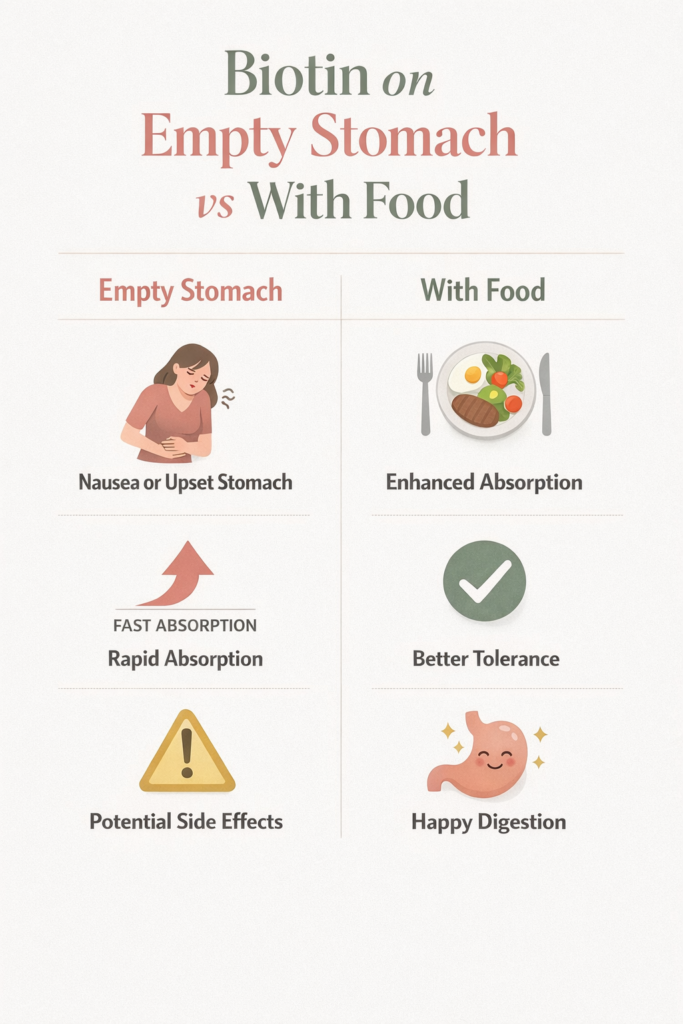
However, taking biotin on an empty stomach can still cause problems for some people, particularly digestive discomfort, and may not be the most effective strategy for consistent absorption.
The smarter approach? Take biotin with a light meal or snack. Even something small, like a banana or a few crackers, can make a real difference in how your body tolerates it.
What Actually Happens in Your Body
When you swallow a biotin supplement on an empty stomach, here’s what unfolds:
Step 1 — Dissolution in the stomach
The capsule or tablet breaks down in your stomach acid. Without food present, this process is faster, which sounds good but can sometimes be too fast, irritating the stomach lining.
Step 2 — Absorption in the small intestine
Biotin is primarily absorbed in the small intestine via a sodium-dependent multivitamin transporter (SMVT). This process works whether or not you’ve eaten, but food can help slow gastric emptying, giving your intestines more time to absorb the nutrient.
Step 3 — Transport through the bloodstream
Once absorbed, biotin binds to proteins in the blood and is carried to tissues that need it, including your hair follicles, nail beds, and skin cells. This is why biotin is often marketed for hair growth; the connection is real, even if results vary.
Step 4 — Excretion of excess
Because biotin is water-soluble, whatever your body doesn’t use is excreted through urine. This is why toxicity is rare, but it also means you need to take it consistently, every day.
Side Effects of Taking Biotin Without Food
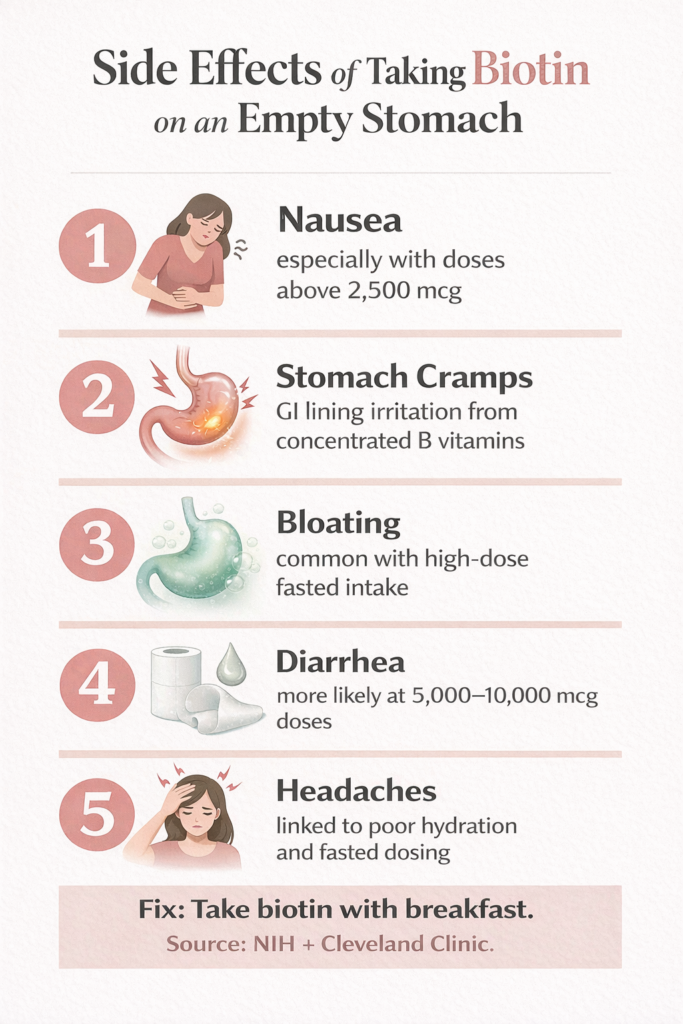
Taking biotin on an empty stomach doesn’t cause serious harm for most people. But some women do report:
- Nausea — the most common complaint, especially with high-dose supplements
- Stomach cramping — particularly with doses over 5,000 mcg
- Mild digestive upset — bloating or loose stools in sensitive individuals
- Headaches — less common, but reported with very high doses
These side effects are more likely with mega-dose biotin supplements (5,000–10,000 mcg) taken without food. One thing that’s less talked about: very high doses have also been linked to skin breakouts in some women. If that’s something you’re concerned about, we’ve covered whether biotin causes acne in detail.
Real-life insight:Many women report that switching from taking biotin on an empty stomach to taking it with breakfast eliminated their nausea within a few days. Small change, big difference.
Does Food Affect Biotin Absorption?
This is where it gets interesting.
Unlike fat-soluble vitamins, biotin’s absorption isn’t dependent on food. But certain foods can either help or hinder how well biotin works in your body.
Foods That Support Biotin Absorption
Taking biotin alongside foods that contain healthy fats or B-vitamin cofactors may support overall metabolism and utilization:
- Eggs (cooked — not raw)
- Avocado
- Nuts and seeds
- Greek yogurt
- Whole grains
If you want to get more biotin from your diet alongside your supplement, our list of top biotin-rich foods for hair growth is a practical place to start.
Foods and Substances That Block Biotin
This one surprises a lot of people:
- Raw egg whites contain avidin, a protein that binds to biotin and blocks absorption. Cooking deactivates avidin completely — which is why cooked eggs are always the better choice. The difference between raw and cooked eggs when it comes to biotin is actually significant; we broke it down in our post on biotin in eggs: raw vs. cooked.
- Alcohol depletes biotin stores over time
- Certain medications (like anticonvulsants and antibiotics) can interfere with biotin metabolism
What About Coffee?
Good news for coffee lovers: black coffee on its own doesn’t appear to significantly impair biotin absorption. But if you’re taking biotin with just coffee and nothing else, adding a small snack is still worthwhile to buffer your stomach.
The Best Time to Take Biotin for Maximum Results
The best time to take biotin isn’t about a magic hour on the clock. It’s about consistency + context.
✅ Take It With a Meal (Ideally Breakfast or Lunch)
Taking biotin with your morning meal or lunch offers two benefits:
- Reduces the chance of stomach upset
- The presence of food slows gastric emptying, allowing more time for absorption
There’s genuine debate about morning vs. night dosing, and whether it matters. If you want the full comparison, we cover it in our guide on the best time to take biotin.
✅ Take It at the Same Time Every Day
Because biotin is water-soluble and excreted quickly, consistency is key. Your body benefits from steady, daily levels more than sporadic high doses.
✅ Avoid Taking It With Raw Egg Whites or Alcohol
If your breakfast includes a raw-egg smoothie, wait to take your biotin. The avidin in raw whites will bind to it and significantly reduce how much your body absorbs.
How Much Biotin Should You Take?
This depends on your goal and your current intake from food.
| Goal | Suggested Daily Dose |
| General wellness | 30–100 mcg |
| Hair & nail support | 1,000–5,000 mcg |
| Deficiency correction | As directed by a doctor |
Most over-the-counter supplements range from 1,000–10,000 mcg. Higher doses aren’t necessarily more effective — and they can interfere with certain lab tests. For a complete breakdown of dosing by age, goal, and health status, see our guide on how much biotin you should take daily.
⚠️ Important: High-dose biotin can skew thyroid test results. If you’re having bloodwork done, pause biotin supplements 3–5 days before. This is a widely underreported issue, we cover exactly How biotin can affect thyroid test results and what to tell your doctor
Signs Your Biotin Routine Isn’t Working
If you’ve been taking biotin for 3–6 months and haven’t noticed results, your routine might need adjusting. Look for these signs:
- You’re taking it inconsistently (skipping days)
- You’re taking it on a completely empty stomach and feel nauseous, so you skip doses
- Your diet is low in other B vitamins that work synergistically with biotin
- You may have an underlying deficiency in something else (iron, zinc, vitamin D) that’s masking results
- You’re relying on biotin alone when your hair loss has a hormonal cause (like PCOS or postpartum changes)
Speaking of hormonal hair loss, biotin alone won’t address it. If postpartum shedding is something you’re navigating, there’s a separate conversation worth having. Our post on biotin for postpartum hair loss goes into what new moms actually need to know.
Biotin is one piece of the puzzle, not the whole picture.
FAQ: People Also Ask
Q1: Is it okay to take biotin on an empty stomach?
Yes, it’s generally safe, but some people experience nausea or stomach upset with high-dose biotin taken without food. Since biotin is water-soluble, it doesn’t require fat for absorption but pairing it with a light meal or snack reduces discomfort and supports consistent digestion. For most women, taking it with breakfast works best.
Q2: What happens if you take biotin without eating?
Your body can still absorb biotin without food, but the process may be less comfortable. On an empty stomach, supplements dissolve faster and can irritate the stomach lining, especially in doses above 2,500 mcg. You may experience mild nausea, bloating, or cramping. A small snack alongside your supplement usually resolves this.
Q3: Does taking biotin with food increase absorption?
Food doesn’t dramatically increase biotin’s absorption rate, since it’s water-soluble. However, eating before or with your supplement slows gastric emptying, which gives your small intestine slightly more time to absorb the vitamin. More importantly, food reduces the likelihood of side effects that might cause you to skip doses.
Q4: Can I take biotin with just coffee in the morning?
Black coffee alone isn’t known to block biotin absorption significantly. But taking any supplement on a completely empty stomach — with just coffee — can cause stomach upset in sensitive individuals. Add a light snack like toast, fruit, or yogurt for a smoother experience and better tolerance.
Q5: What should you not take biotin with?
Avoid taking biotin alongside raw egg whites (which contain avidin, a biotin-blocking protein), alcohol, and certain medications like anticonvulsants or antibiotics. Also, be cautious about taking very high-dose biotin before blood tests, as it can interfere with lab results including thyroid panels and cardiac markers.
Q6: How long does it take for biotin to work?
Most people start noticing improvements in nail strength within 4–6 weeks. Hair growth results typically take longer around 3–6 months because hair growth cycles are slow. Consistency matters more than dose. Daily supplementation at a moderate dose (2,500–5,000 mcg) over several months is more effective than sporadic high doses.
Q7: Can too much biotin cause side effects?
Biotin is considered very safe even at high doses because excess is excreted in urine. However, very high doses (above 10,000 mcg) have been associated with skin breakouts in some people, and can significantly interfere with lab test accuracy. Always check with your doctor if you’re on medications or due for bloodwork.
Q8: Is biotin better as a pill or gummy?
Both deliver biotin effectively. Gummies are easier to take and more enjoyable, which may support consistency but they often contain added sugars and lower biotin doses. Pills and capsules tend to offer higher doses with fewer additives. The “best” form is the one you’ll actually take every day. For a full comparison, see do biotin gummies actually work?
Conclusion: The Bottom Line
Can you take biotin on an empty stomach? Yes, but with a caveat.
Taking biotin with a small meal or snack is the smarter, more comfortable approach. It reduces the risk of nausea, supports a consistent daily habit, and ensures you’re getting every bit of benefit from your supplement.
The real key to biotin results isn’t when you take it down to the minute, it’s consistency, the right dose, and supporting it with a balanced diet.
Your hair, skin, and nails didn’t change overnight. Give your routine 90 days of daily, consistent effort and take it with breakfast.
Medical Disclaimer:
This article is for informational purposes only and does not constitute medical advice. It is not a substitute for professional medical diagnosis or treatment. Consult a licensed dermatologist if you notice persistent or unusual nail changes.
About the Author
Syma Hussain | Women’s Health and Beauty Writer, wellInfinity.com
Syma Hussain is the founder and lead writer at WellInfinity, a holistic health platform empowering women through research-backed wellness advice. After years of navigating her own skin and nail health challenges, she turned her personal experience into a resource that cuts through generic advice and delivers what actually works.