
Healthy Hair Growth: Science-Backed Tips for Stronger Hair
Healthy hair growth is not about quick fixes or trending products. It is a result of consistent care, proper nutrition, and a healthy scalp environment. Many people try oils, supplements, or treatments without understanding what actually drives healthy hair growth , which leads to slow results or disappointment.
If you want stronger, thicker hair, you need to focus on what truly works: supporting the hair growth cycle, improving scalp health, and avoiding the common mistakes that block progress. This guide covers everything , from the science of hair phases to nutrition, daily habits, natural remedies, and when to see a doctor.
What Healthy Hair Growth Really Means
Hair grows in a natural cycle that includes three main phases:
- Anagen (growth phase) , actively growing hair, lasting 2 to 6 years
- Catagen (transition phase) , hair follicle shrinks over 2 to 3 weeks
- Telogen (resting phase) , old hair sheds and new hair begins
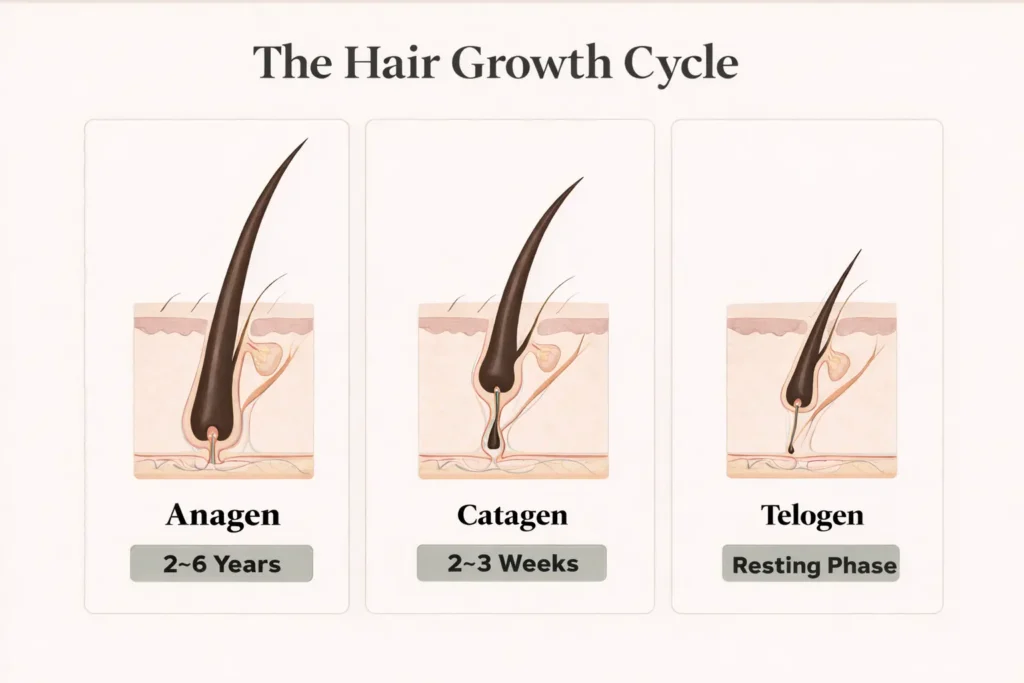
On average, hair grows about 1 to 1.5 cm per month. No product can dramatically speed up this natural rate. Instead, healthy hair growth means:
- Supporting hair follicles so they stay in the anagen phase longer
- Preventing breakage so hair retains its length
- Maintaining a balanced, healthy scalp environment
When these factors are optimized, hair appears thicker, stronger, and healthier over time.
Why Scalp Health Is Essential for Healthy Hair Growth
Hair growth starts at the scalp. If your scalp is unhealthy, hair follicles cannot function properly. A PubMed review of over 20 epidemiological studies confirmed a direct cause-and-effect link between scalp condition and hair quality , and found that improving scalp health visibly reverses hair damage.
Common scalp issues that affect growth
- Excess oil or dryness that disrupts the follicle environment
- Dandruff or fungal imbalance causing inflammation
- Product buildup blocking follicles and slowing growth
- Irritation or chronic inflammation weakening hair roots
Signs your scalp may be blocking growth
- Persistent itching or tightness across the scalp
- Visible flakes or redness
- Greasy roots within 24 hours of washing
- Noticeably increased hair fall
Improving scalp health is often the fastest way to improve healthy hair growth naturally.
Dry Scalp vs Dandruff vs Buildup: Know the Difference
Many people treat the wrong scalp condition, which slows their progress. Understanding what you are actually dealing with helps you choose the right treatment.
Dry scalp
- Small white flakes that fall easily
- Tight, itchy feeling caused by lack of moisture
- Worsened by cold weather, over-washing, or harsh shampoos
Dandruff
- Yellow or oily flakes that stick to the hair shaft
- Often linked to an overgrowth of Malassezia, a naturally occurring yeast
- Responds to antifungal shampoos containing zinc pyrithione or ketoconazole
Product buildup
- Heavy, greasy roots that look flat
- Follicles blocked by silicones, oils, or styling products
- Resolved with a clarifying shampoo used once or twice a month
Scalp Massage: A Simple Habit Backed by Science
Scalp massage is one of the most evidence-supported habits for healthy hair growth. A clinical study published on PubMed (PMC4740347) found that just 4 minutes of daily scalp massage over 24 weeks led to measurably increased hair thickness. Participants showed a 10% improvement in hair thickness compared to the untreated side.
The mechanism is mechanical: massage applies gentle stretching forces to dermal papilla cells , the structures responsible for controlling the hair cycle. This activates growth-related genes (NOGGIN, BMP4, SMAD4) while reducing the hair-loss-linked gene IL6.
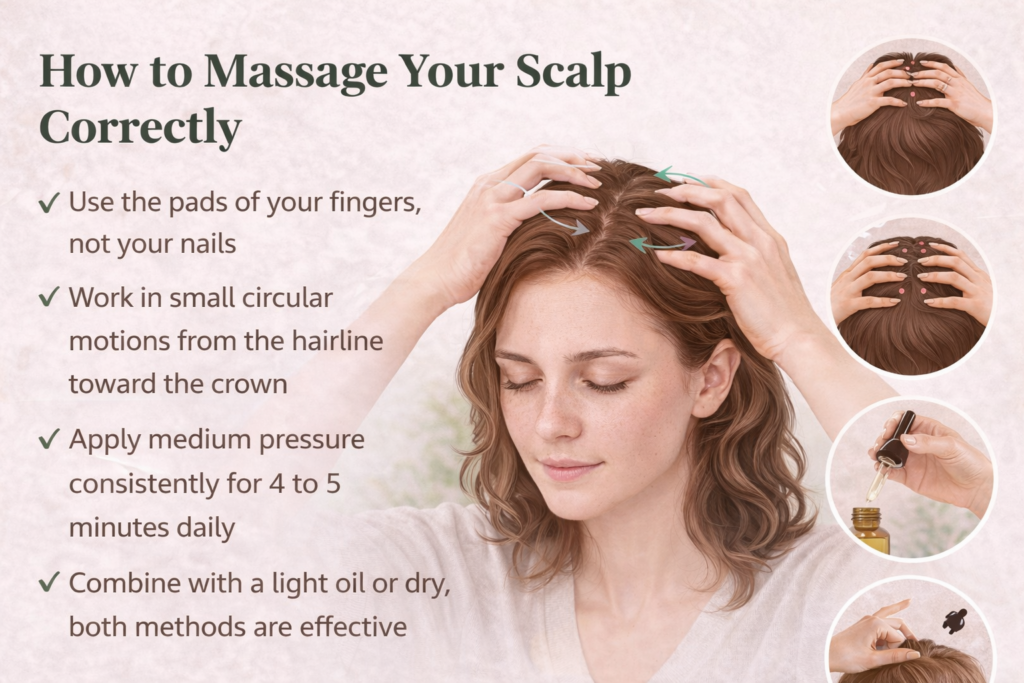
How to massage your scalp correctly
- Use the pads of your fingers, not your nails
- Work in small circular motions from the hairline toward the crown
- Apply medium pressure consistently for 4 to 5 minutes daily
- Combine with a light oil or dry , both methods are effective
For more detail, read the full PubMed scalp massage study to understand the clinical evidence behind this habit.
Nutrition for Healthy Hair Growth
Hair is made primarily of keratin, a structural protein. This means diet directly determines hair quality. Deficiencies in key nutrients are one of the most common and overlooked causes of slow or weak hair growth.
Key nutrients for hair growth
- Protein , the primary building block of every hair strand. Aim for 0.8g per kg of body weight daily.
- Biotin (Vitamin B7) , supports keratin production. Found in eggs, nuts, and seeds.
- Iron , carries oxygen to follicles. Low iron is a leading cause of hair shedding, especially in women.
- Zinc , critical for follicle repair and oil gland regulation. Found in pumpkin seeds and chickpeas.
- Vitamin D , regulates the hair cycle. A deficiency is directly linked to telogen effluvium (excessive shedding).
- Omega-3 fatty acids , maintain scalp moisture and reduce follicle inflammation. Found in oily fish and walnuts.
Best foods to include in your diet
- Eggs , complete protein and biotin in one food
- Spinach and leafy greens , iron and folate
- Sweet potatoes , beta-carotene, which converts to vitamin A for scalp health
- Fatty fish (salmon, mackerel) , omega-3s and vitamin D
- Nuts and seeds , zinc, biotin, and vitamin E
If you follow a plant-based diet, explore our guide on vegan foods high in biotin for hair to support your intake naturally.
Do Supplements Really Help Healthy Hair Growth?
Supplements are heavily marketed for hair growth but are widely misunderstood. They are only effective when a nutritional deficiency is the root cause. Taking biotin supplements when your levels are already normal does not accelerate growth , it simply adds excess to an already sufficient system.
When supplements are worth considering
- You have a confirmed iron, zinc, or vitamin D deficiency via blood test
- You follow a restrictive diet that limits key nutrient sources
- You are recovering from postpartum hair loss or illness-related shedding
When supplements are not needed
- Your diet already includes a variety of whole foods
- Blood tests show levels are within the normal range
- You are looking for faster growth without addressing the root cause
Read our in-depth guide on biotin for hair growth: does it really work to understand when supplementation is useful. You can also compare biotin vs keratin supplements for hair growth to choose what suits your needs.
Daily Routine for Healthy Hair Growth
Consistency matters far more than expensive treatments. A simple, well-structured daily and weekly routine is more effective than any single product or intervention.
Daily habits to follow
- Wash hair 2 to 3 times per week using a gentle, sulfate-free shampoo
- Massage your scalp for 4 to 5 minutes, ideally in the evening
- Avoid tight hairstyles (ponytails, braids) that strain roots daily
- Limit heat styling tools to 2 to 3 times per week maximum
- Drink at least 8 glasses of water daily to maintain scalp hydration
Weekly habits to build in
- Deep conditioning treatment to restore moisture and reduce breakage
- Scalp exfoliation to remove buildup and dead skin cells
- Natural oil application once or twice (coconut or castor oil on scalp and ends)
- Clarifying shampoo once a month to remove product buildup
Natural Remedies: What Works and What Doesn’t
Natural treatments are popular, but results vary significantly depending on the remedy and your specific scalp condition. Here is an honest breakdown based on available evidence.
Remedies with good evidence
- Coconut oil , reduces protein loss from hair shafts when applied before washing. Most effective for fine, chemically treated hair.
- Castor oil , improves the appearance of thickness. Contains ricinoleic acid, which has mild anti-inflammatory properties that benefit a dry or irritated scalp.
- Aloe vera , soothes scalp irritation, reduces dandruff, and helps maintain scalp pH. Best used as a leave-on treatment after washing.
Remedies with limited or mixed evidence
Onion juice , a few small studies show potential, but the evidence is weak and the effect inconsistent. Strong odour is a significant drawback.
Rosemary oil , some evidence suggests it may be comparable to minoxidil for mild hair thinning, but research is early-stage and more trials are needed.
Natural remedies work best when used as part of a complete routine alongside proper nutrition and scalp care , not as standalone solutions.
Advanced Methods That Support Hair Growth
Beyond daily habits and nutrition, some advanced techniques can enhance healthy hair growth when used correctly and consistently.
Microneedling (Derma Rolling)
Microneedling involves rolling fine needles across the scalp to create controlled micro-injuries that stimulate collagen production and improve the absorption of topical hair treatments. Research shows it can be an effective support tool when combined with minoxidil or growth serums.
Learn exactly how it works and how to use it safely in our derma roller for hair growth guide.
Low-Level Laser Therapy (LLLT)
FDA-cleared LLLT devices (laser combs, helmets) stimulate follicle activity by delivering photonic energy to scalp tissue. They are most effective for androgenetic alopecia and require consistent use over 3 to 6 months to show results.
Common Mistakes That Slow Healthy Hair Growth
Avoiding these mistakes can significantly improve your results , often without adding a single new product:
⚠️ Overwashing or underwashing , strips natural oils or allows buildup to accumulate. Stick to 2 to 3 times per week.
⚠️ Using harsh sulfate shampoos on a dry or sensitive scalp , disrupts the moisture barrier.
⚠️ Tight hairstyles worn daily , cause traction alopecia, a form of hair loss from continuous follicle strain.
⚠️ Ignoring scalp health and focusing only on hair products.
⚠️ Brushing wet hair aggressively , wet hair is highly elastic and prone to snapping.
⚠️ Taking supplements without a diagnosed deficiency , excess fat-soluble vitamins can cause toxicity.
Postpartum Hair Loss and Getting Growth Back on Track
Hair loss after pregnancy is extremely common and temporary. It is caused by the sudden drop in oestrogen after delivery, which pushes a large portion of follicles into the telogen (shedding) phase simultaneously. This is medically known as telogen effluvium.
In most cases, shedding peaks around 3 to 4 months postpartum and resolves naturally within 6 to 12 months as hormone levels stabilise. Ensuring adequate iron, protein, and vitamin D intake during this period supports faster recovery.
For targeted guidance on managing this phase safely, read our guide on biotin for postpartum hair loss.
When to See a Doctor About Hair Growth
Not all hair loss responds to lifestyle changes. Some cases require medical evaluation and treatment. Consult a dermatologist or trichologist if you notice:
✓ Sudden or severe hair loss that is not explained by diet or stress
✓ Hair falling out in distinct patches (possible alopecia areata)
✓ Persistent scalp irritation, pain, or scarring
✓ Thinning that continues for more than 3 to 4 months without improvement
✓ Family history of significant hair loss starting in your 20s or 30s
Early diagnosis prevents long-term follicle damage and expands your treatment options significantly.
Expert Tips for Sustaining Healthy Hair Growth Long-Term
✓ Maintain a balanced, protein-rich diet as your foundation
✓ Stay hydrated , scalp moisture directly reflects internal hydration
✓ Manage chronic stress through sleep, exercise, or meditation , stress is a proven trigger for telogen effluvium
✓ Get 7 to 9 hours of sleep nightly , tissue repair and growth hormone release peak during deep sleep
✓ Avoid excessive chemical processing , bleaching and perming weaken the shaft and increase breakage
✓ Track progress with monthly photos to objectively assess improvement
Conclusion
Healthy hair growth is not about shortcuts or miracle products. It is built on understanding your scalp, supporting your body with proper nutrition, and following a consistent, evidence-based routine. The results are not instant , but they are real and lasting.
Start with the basics: improve your scalp health, address any nutritional gaps, and add scalp massage to your daily routine. These three changes alone can produce visible improvement within 2 to 3 months.
Frequently Asked Questions
How can I improve healthy hair growth naturally?
Focus on a balanced diet rich in protein, biotin, iron, and zinc. Add daily scalp massage, use gentle products, and manage stress levels. Results typically appear within 2 to 3 months of consistent effort.
Does scalp health directly affect hair growth?
Yes. A healthy scalp supports follicle function, while inflammation, buildup, or fungal imbalance can slow or block growth. Improving scalp condition is one of the fastest ways to see improvement in healthy hair growth.
How long does it take to see visible results?
Hair grows slowly , approximately 1 to 1.5 cm per month. Visible improvement in thickness and reduced shedding usually takes 2 to 3 months of consistent care.
Are biotin supplements necessary for hair growth?
Only if you have a confirmed biotin deficiency. Otherwise, eating biotin-rich foods like eggs, nuts, and seeds provides sufficient amounts. Supplementing unnecessarily offers minimal benefit.
Which oil is best for hair growth?
Coconut oil is best for reducing protein loss and strengthening fine or damaged hair. Castor oil can improve the appearance of thickness. Combine with scalp massage for the best results.
Can stress really cause hair loss?
Yes. Chronic stress triggers telogen effluvium, pushing follicles prematurely into the resting phase. Managing stress through sleep, exercise, and mindfulness supports the hair growth cycle.
How often should I wash my hair for optimal growth?
2 to 3 times per week is ideal for most scalp types. Washing too frequently strips natural oils; washing too rarely allows product buildup to block follicles.
Does trimming hair make it grow faster?
No. Growth occurs at the follicle, not the ends. Trimming removes split ends, which prevents breakage and makes hair appear fuller and healthier , but it does not change the growth rate.
Is postpartum hair loss permanent?
No. Postpartum hair loss is temporary and caused by hormonal changes after delivery. It typically resolves within 6 to 12 months. Proper nutrition and scalp care speed recovery.
What is the fastest way to stimulate hair growth at home?
Daily scalp massage (4 to 5 minutes) combined with a protein-rich diet and consistent sleep is the most effective home approach. Add a derma roller if you want to enhance absorption of topical treatments.
Medical Disclaimer:
This article is for informational purposes only and does not constitute medical advice. It is not a substitute for professional medical diagnosis or treatment. Consult a licensed dermatologist if you notice persistent or unusual nail changes.
About the Author
Syma Hussain | Women’s Health and Beauty Writer, wellInfinity.com
Syma Hussain is the founder and lead writer at WellInfinity, a holistic health platform empowering women through research-backed wellness advice. After years of navigating her own skin and nail health challenges, she turned her personal experience into a resource that cuts through generic advice and delivers what actually works.