
Can Biotin Work Without Other Nutrients? The Truth About Biotin Absorption
You have been taking your biotin supplement every single day. Maybe for weeks, maybe for months. But your hair is still shedding, your nails are still brittle, and you are starting to wonder: is biotin even doing anything?
Here is what most supplement labels will not tell you: biotin cannot work without other nutrients. It is not a standalone miracle vitamin. It is one piece of a very specific nutritional puzzle, and if the other pieces are missing, biotin simply cannot do its job.
A Real Scenario: A 28-year-old woman starts taking 5,000 mcg of biotin daily for hair shedding. Three months pass and nothing changes. She doubles her dose. Still nothing. A blood test finally reveals her ferritin (iron stores) is at 18 ng/mL, well below the 70 ng/mL threshold linked to optimal hair growth. Her biotin was never the issue. This situation is far more common than most supplement brands would like you to know
If you are under 40 and frustrated with slow results from biotin supplements, this guide is for you. We are breaking down the science of how biotin works with other nutrients, which co-factors are non-negotiable, and what you can do right now to make your biotin actually effective. (Not sure if you are even deficient? Start here: Biotin Deficiency Signs You Might Not Be Getting Enough
Want to know if biotin alone is enough for healthy hair growth? Your nutrient needs can vary based on age, diet, lifestyle, and deficiencies. Take our quick and free Biotin Dosage Calculator & Quiz to discover the right dosage and supporting nutrients for your hair goals.
What Is Biotin and What Does It Actually Do?
Biotin (also called vitamin B7 or vitamin H) is a water-soluble B-vitamin your body cannot make on its own. You have to get it from food or supplements every single day.
Biotin acts as a cofactor for five key carboxylase enzymes that control critical steps in:
- Fatty acid synthesis: building the lipids that nourish your scalp and hair follicles
- Amino acid metabolism: processing the protein building blocks your hair is literally made of
- Glucose metabolism: converting carbohydrates into cellular energy
Beyond that, biotin plays a role in gene regulation and cell signaling, meaning it affects how your hair follicle cells turn genes on and off during the growth cycle.
What does biotin do? Biotin (vitamin B7) is a water-soluble B-vitamin that acts as a cofactor for five enzymes controlling fatty acid synthesis, amino acid metabolism, and glucose metabolism. It also regulates gene expression in hair follicle cells. Biotin does not directly build hair or nails. It enables the metabolic reactions that support their growth.
What Biotin Does NOT Do Alone
Biotin does not directly build hair strands. It does not produce keratin by itself. And it cannot compensate for deficiencies in other nutrients your follicles need. Understanding this distinction is the key to finally getting results. If you are weighing biotin against other supplements, see: Biotin vs. Collagen: Which Is Better for Hair and Nails?
Can Biotin Work Without Other Nutrients?
The short answer: No, not effectively.
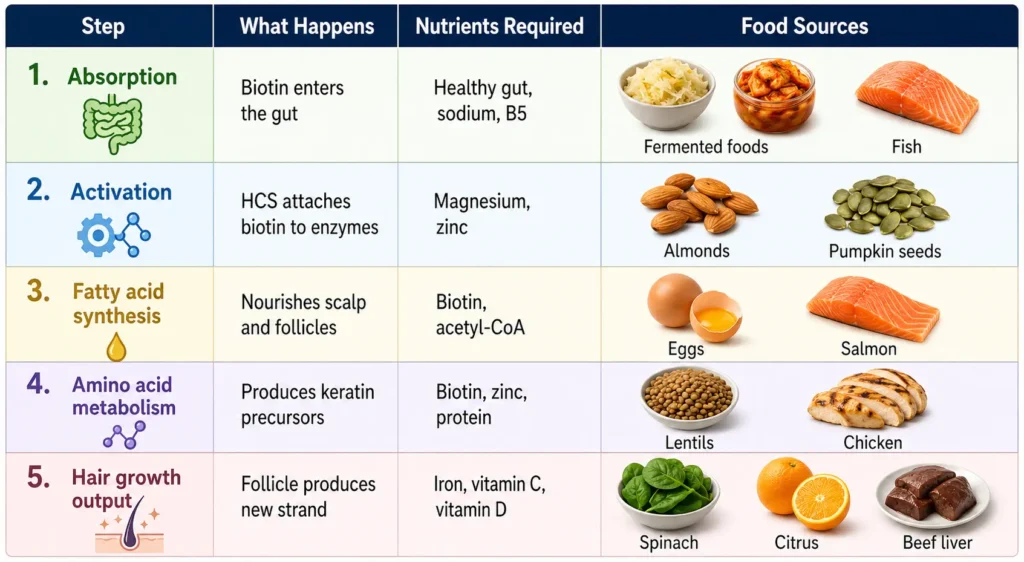
Can biotin work without other nutrients? No. Biotin requires zinc and magnesium for enzyme activation, vitamin B5 for intestinal absorption, iron and vitamin C for downstream hair growth, and adequate dietary protein as raw material. Without these co-nutrients in place, biotin cannot complete the biological chain needed to support hair, skin, and nail health, regardless of dose.
Biotin works through a chain of biochemical reactions that depend heavily on other vitamins and minerals being present. Think of biotin as a key. It can only unlock a door if the door exists and is in the right condition. Without the right nutritional environment, biotin has nothing to unlock.
Biotin’s absorption itself depends on other nutrients. Biotin is absorbed in the small intestine through a sodium-dependent multivitamin transporter (SMVT), the same transport system used by pantothenic acid (vitamin B5) and lipoic acid. If your gut health is compromised, biotin absorption drops.
Biotin’s carboxylase activity requires enzyme support. The enzyme holocarboxylase synthetase (HCS) must attach biotin to carboxylase proteins for biotin to become biologically active. This enzyme’s function depends on adequate magnesium and zinc levels in the body.
Hair structure requires keratin, and keratin requires amino acids plus vitamin C. Biotin helps metabolize amino acids, but without sufficient protein, vitamin C for collagen support, or iron for oxygen delivery to follicles, the downstream effects of biotin are limited
The Key Nutrients Biotin Needs to Function
Zinc
Zinc is arguably the most important co-nutrient for biotin. It supports the enzymatic reactions biotin activates and is independently essential for hair follicle cell division and protein synthesis. Zinc deficiency is directly associated with hair loss and zinc supplementation produced significant improvement in patients with alopecia. Without adequate zinc, your hair follicles cannot grow new cells fast enough to replace shed strands.
Signs of zinc deficiency that mimic biotin deficiency:
- Hair thinning and shedding
- Slow nail growth
- Dull, dry skin
- Delayed wound healing
If brittle nails are your main concern alongside hair loss, read: Biotin for Brittle Nails: Does It Actually Work?
Vitamin C
Vitamin C is critical for collagen synthesis, the structural protein that forms the hair follicle sheath and supports nail beds. It also significantly enhances non-heme iron absorption . Without vitamin C, even adequate biotin will not produce visible hair improvements.
Iron
Iron deficiency is one of the most prevalent nutritional causes of hair loss in women. Iron delivers oxygen to hair follicle cells. Without it, follicles enter a resting phase (telogen), causing increased shedding. Biotin cannot reverse iron-deficiency hair loss no matter the dose.
The research is clear: A 2022 systematic review and meta-analysis of 10,029 women by Trueb et al., Skin Appendage Disorders found that women with nonscarring alopecia had significantly lower ferritin levels than women without hair loss (mean difference: 18.51 ng/dL, p less than 0.01).
This means if you are a woman under 40 who menstruates, there is a meaningful chance your hair loss has more to do with ferritin than with biotin.
Vitamin D
Vitamin D receptors are expressed directly in hair follicle keratinocytes and dermal papilla cells.
Does vitamin D affect biotin? Vitamin D does not directly affect biotin metabolism, but low vitamin D impairs the hair follicle cycle independently by disrupting VDR signaling needed to restart the anagen growth phase. Both nutrients are required for healthy hair growth, and deficiency in either produces similar symptoms of increased shedding and thinning.
B-Vitamin Complex (B5, B6, B12)
Biotin is one of the B vitamins, and B vitamins work synergistically. Vitamin B5 (pantothenic acid) shares the same intestinal transporter (SMVT) as biotin. If you are deficient in B5, it competes with biotin for absorption, reducing how much biotin your body actually uses. B12 supports red blood cell production that feeds scalp circulation, and B6 assists in amino acid metabolism alongside biotin.
Protein (Amino Acids)
Hair is approximately 95% keratin, a fibrous structural protein. Biotin helps metabolize the amino acids that build keratin, but if you are not consuming adequate dietary protein (at least 0.8g per kg of body weight), biotin has no raw materials to work with. This is especially common in women following restrictive diets.
Magnesium
Magnesium supports the HCS enzyme that activates biotin in the body. It also modulates cortisol pathways, the stress hormone associated with hair shedding, and supports hundreds of other enzymatic reactions. Magnesium is a cofactor in over 300 enzymatic processes, including those central to B-vitamin metabolism. Chronic magnesium deficiency quietly undermines biotin’s effectiveness at the enzyme level.
How Nutrient Deficiencies Block Biotin’s Effects
You can take 10,000 mcg of biotin daily and still see zero results if you have underlying deficiencies in other nutrients. Here is exactly how each deficiency creates a bottleneck:
Iron Deficiency: Follicle Shutdown
When iron is low, your body prioritizes delivering oxygen to vital organs and the scalp is last in line. Hair follicles go dormant. Biotin cannot restart follicles that have shut down due to oxygen deprivation
Zinc Deficiency: Blocked Enzyme Activation
Zinc deficiency impairs the enzymes biotin depends on. The result: biotin is present but cannot be used efficiently. It is like having fuel in a car with a broken engine
Protein Deficiency: No Building Material
Biotin metabolizes amino acids but cannot create them from nothing. Without adequate dietary protein, there are no building blocks for keratin, the protein your hair is made of.
Gut Dysbiosis: Poor Absorption
Your gut microbiome synthesizes biotin as a byproduct of healthy bacterial activity. Research by Magnusdottir et al., Frontiers in Genetics (2015) found that approximately 40 to 65% of the 256 common human gut bacteria assessed have the capacity to synthesize B-vitamins including biotin. Poor gut health, antibiotic use, or a highly processed diet can reduce both this microbial biotin production and your absorption of supplemental biotin.
Important: Before increasing your biotin dose, consider getting a blood panel that checks ferritin (iron stores), vitamin D, zinc, and B12 levels. Many women discover their biotin problem is actually an iron or vitamin D problem in disguise.
Biotin and the Hair Growth Cycle: A Team Effort
Hair does not grow continuously. It cycles through three phases:
- Anagen (Growth Phase): Lasts 2 to 7 years. Active cell division in follicles. Biotin, iron, zinc, and protein are most critical here.
- Catagen (Transition Phase): 2 to 3 weeks. Follicle shrinks. Nutrient needs decrease.
- Telogen (Resting and Shedding Phase): About 3 months. Old hair sheds. Vitamin D receptor signaling and biotin help push follicles back into anagen
For biotin to visibly lengthen and thicken your hair, your follicles need to spend more time in anagen. That requires the full nutritional team, not biotin alone. Supplementing with biotin but skipping iron, vitamin D, and zinc is like hiring one teammate and expecting them to win the game alone.
For a complete approach to hair growth, read our guide: Healthy Hair Growth: Science-Backed Tips for Stronger Hair
Foods That Deliver Biotin and Co-Nutrients Together
The smartest way to support biotin effectiveness is through whole foods that naturally combine biotin with its co-nutrients:
Raw egg whites contain avidin, a protein that binds biotin in the gut and prevents its absorption. Always cook eggs before eating. Learn the full science:
How to Stack Biotin with Other Nutrients Correctly
If you are supplementing, synergy matters. Here is how to build a smart, effective stack:
Step 1: Start with a comprehensive blood panel
Before adding any supplements, check ferritin, serum iron, vitamin D (25-OH), zinc, B12, and folate. This tells you exactly what is missing.
Step 2: Prioritize foundational deficiencies first
If your ferritin is below 70 ng/mL, address iron first. No amount of biotin will overcome iron-deficiency hair loss. Also revisit your dosage as most women take far more biotin than needed. Find the right amount: How Much Biotin Should I Take Daily?
Step 3: Take biotin with a balanced meal
Biotin is water-soluble and absorbs best when taken with food that contains fat and protein, not on an empty stomach. Learn more: Can You Take Biotin on an Empty Stomach?
Step 4: Pair biotin with zinc and vitamin C
Take your biotin supplement alongside foods rich in zinc (pumpkin seeds, oysters) and vitamin C (bell peppers, citrus). This supports both the enzymatic activation of biotin and collagen synthesis downstream.
Step 5: Support your gut microbiome
A healthy gut produces biotin naturally and absorbs supplemental biotin more efficiently. Include fermented foods (yogurt, kefir, kimchi) and prebiotic fiber in your daily diet.
Step 6: Add a complete biotin hair care routine
Topical and internal biotin work differently. Combining both approaches maximizes results. See: Biotin Hair Care Routine: How to Combine Oil, Shampoo and Diet for Real Results
Signs Your Biotin Supplement Is Not Working
If you have been taking biotin for 3 or more months without results, look for these warning signs that a co-nutrient deficiency is blocking its effects:
- Continued hair shedding: Check ferritin and vitamin D
- Slow nail growth despite supplementing: Check zinc and protein intake
- Fatigue alongside hair loss: Check B12 and iron
- Brittle nails and dry skin: Check zinc and essential fatty acid intake
- Hair loss worsening under stress: Check magnesium and cortisol
The honest truth: Most women who do not respond to biotin are not biotin-deficient. They are deficient in one of biotin’s co-nutrients. Addressing the root deficiency is always more effective than increasing the biotin dose (Patel et al., Skin Appendage Disorders, 2017
Conclusion
So, can biotin work without other nutrients? Biologically and practically, no. Biotin needs a supportive nutritional environment to be absorbed, activated, and used effectively by your body. Zinc, iron, vitamin C, vitamin D, B-vitamins, protein, and magnesium all play essential roles in making biotin work.
The good news: once you understand this, you have real power to fix what is not working. Start with a blood panel. Eat nutrient-dense whole foods. Build a supplement stack based on your actual deficiencies. And combine internal nutrition with a consistent topical hair care routine.
Your hair, skin, and nails do not need more biotin. They need better biotin nutrition.
Ready to go deeper? Explore our Skin and Beauty Tips for more science-backed guides to healthy hair, nails, and glowing skin.
Frequently Asked Questions
Does biotin need other vitamins to work?
Yes. Biotin requires zinc and magnesium for enzymatic activation, vitamin C and iron to support downstream hair growth processes, and vitamin B5 for efficient intestinal absorption. Without these co-nutrients, biotin cannot perform its full role in hair, skin, and nail health, regardless of dose.
Can biotin work alone for hair growth?
No, not effectively. Biotin activates enzymes involved in keratin production but cannot build hair on its own. Iron delivers oxygen to follicles, zinc drives cell division, vitamin C supports collagen, and dietary protein provides the structural material. A deficiency in any one of these creates a bottleneck biotin cannot overcome alone
Why is my biotin supplement not working?
The most common reasons are deficiencies in iron (ferritin), zinc, vitamin D, or B12, all of which are needed for biotin to function downstream. Taking biotin on an empty stomach, poor gut health, or a low-protein diet can also reduce effectiveness significantly. Get a blood panel before increasing your dose. Read: Biotin for Hair Growth: Does It Really Work?
What happens if you take biotin without enough protein?
Biotin helps metabolize the amino acids that build keratin, the protein your hair is made of. Without adequate dietary protein (at least 0.8g per kg of body weight), biotin has no raw material to work with. The result is that biotin is present in the body but hair growth remains limited because the structural building blocks are absent
Can I take biotin with vitamin C?
Yes, and it is a smart pairing. While vitamin C does not directly boost biotin absorption, it supports collagen synthesis and significantly enhances non-heme iron absorption. Together, biotin and vitamin C create a more complete nutritional environment for hair and nail growth than either does alone.
Can I take biotin and zinc together?
Yes, and you should. Zinc supports the holocarboxylase synthetase (HCS) enzyme activation process that makes biotin biologically functional, as noted by Mock, Journal of Nutrition (2017). Taking both together with food can meaningfully improve results for hair thickness, nail strength, and skin clarity compared to biotin supplementation alone
Does biotin interact with other vitamins or minerals?
Biotin’s primary nutritional interaction is with vitamin B5 (pantothenic acid), which competes for the same intestinal SMVT transporter. High doses of B5 can reduce biotin absorption. At high doses (5,000 to 10,000 mcg), biotin can also interfere with thyroid hormone blood tests, so always inform your doctor before testing. Read: Can Biotin Affect Thyroid Test Results?
Is biotin better absorbed with food or alone?
With food. Biotin is water-soluble and absorbs best when taken with a balanced meal that includes fat and protein. Taking it on an empty stomach may reduce absorption efficiency and can occasionally cause mild stomach upset. For maximum effectiveness, take biotin with your largest meal of the day.
What is the best time to take biotin?
The best time to take biotin is with your largest meal of the day, as food (particularly fat and protein) enhances water-soluble vitamin absorption. Morning or midday with breakfast or lunch is most practical for most women. Avoid taking biotin on an empty stomach, as this can reduce absorption and occasionally cause nausea in sensitive individuals.
Should I take a biotin complex or just biotin alone?
A B-complex supplement is often a better choice than isolated biotin. Because B vitamins including B5, B6, B7 (biotin), and B12 work synergistically and share transport mechanisms (Journal of Nutrition), a full B-complex supports more complete absorption and utilization than isolated high-dose biotin. Look for a formula that includes at least 30 to 100 mcg of biotin alongside the full B spectrum.
Can too much biotin cause hair loss?
There is no direct evidence that excess biotin causes hair loss. However, high-dose biotin (5,000 to 10,000 mcg) can interfere with thyroid and hormone lab tests, potentially masking conditions like hypothyroidism that do cause hair loss.The NIH adequate intake for biotin is only 30 mcg daily, making mega-doses unnecessary for most women.
Does biotin have side effects?
Biotin is generally well tolerated because it is water-soluble and excess is excreted in urine. However, high doses (above 5,000 mcg) can cause acne breakouts in some women by disrupting absorption of vitamin B5, which is essential for sebum regulation, as reported by. High-dose biotin can also skew thyroid and troponin blood test results. Most side effects resolve when dosage is reduced to physiological levels.
How long does it take for biotin to work for hair growth?
When biotin is taken alongside adequate co-nutrients (especially iron, zinc, and protein), most women notice reduced shedding within 4 to 8 weeks and visible growth improvements within 3 to 6 months. Biotin alone, without addressing co-nutrient deficiencies, may show little to no change even after 6 months of consistent use (Skin Appendage Disorders ).
Can biotin deficiency cause hair loss?
True biotin deficiency is rare in adults eating a varied diet but it does cause hair thinning, brittle nails, and skin rash when it occurs. More commonly, hair loss attributed to biotin deficiency is actually caused by iron, zinc, or vitamin D deficiency. See: Biotin Deficiency Signs You Might Not Be Getting Enough
What nutrients should I take with biotin for hair growth?
For optimal hair growth, pair biotin with iron (if ferritin is below 70 ng/mL), zinc, vitamin D, vitamin C, B12, magnesium, and adequate dietary protein. This combination supports the full hair growth cycle including absorption, enzyme activation, keratin production, and follicle cycling
Is 10,000 mcg of biotin too much?
The NIH adequate intake for biotin is only 30 mcg daily. High-dose supplements (5,000 to 10,000 mcg) are not proven more effective than lower doses for people without a true deficiency, and they can produce false results on thyroid and hormone blood tests (NIH Office of Dietary Supplements). Focus on addressing co-nutrient deficiencies and optimizing absorption rather than mega-dosing. Read: How Much Biotin Should I Take Daily?
Medical Disclaimer:
This article is for informational purposes only and does not constitute medical advice. It is not a substitute for professional medical diagnosis or treatment. Consult a licensed dermatologist if you notice persistent or unusual nail changes.
About the Author
Syma Hussain | Women’s Health and Beauty Writer, wellInfinity.com
Syma Hussain is the founder and lead writer at WellInfinity, a holistic health platform empowering women through research-backed wellness advice. After years of navigating her own skin and nail health challenges, she turned her personal experience into a resource that cuts through generic advice and delivers what actually works.